What a ripening room system does
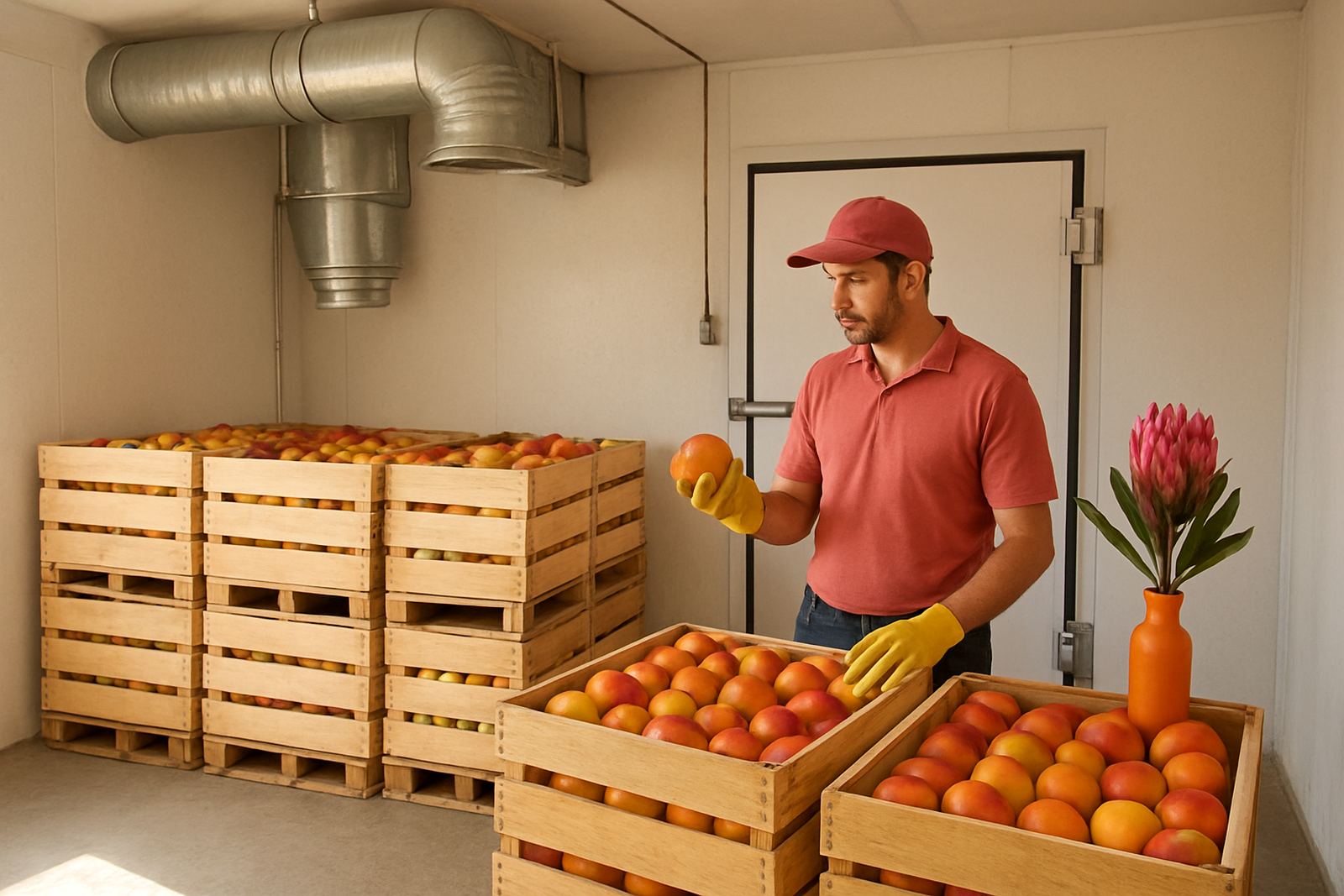
A ripening room system is the set of cooling, air distribution and control components used to hold fruit at the right temperature while it comes into market condition. In practice, that means keeping the room stable enough for product to ripen evenly, without hot spots, moisture loss or early spoilage. For bananas, avos, pears and similar produce, the room needs more than cold air. It needs balanced airflow, accurate sensing, and a setup that can cope with door openings and seasonal heat in the Western Cape.
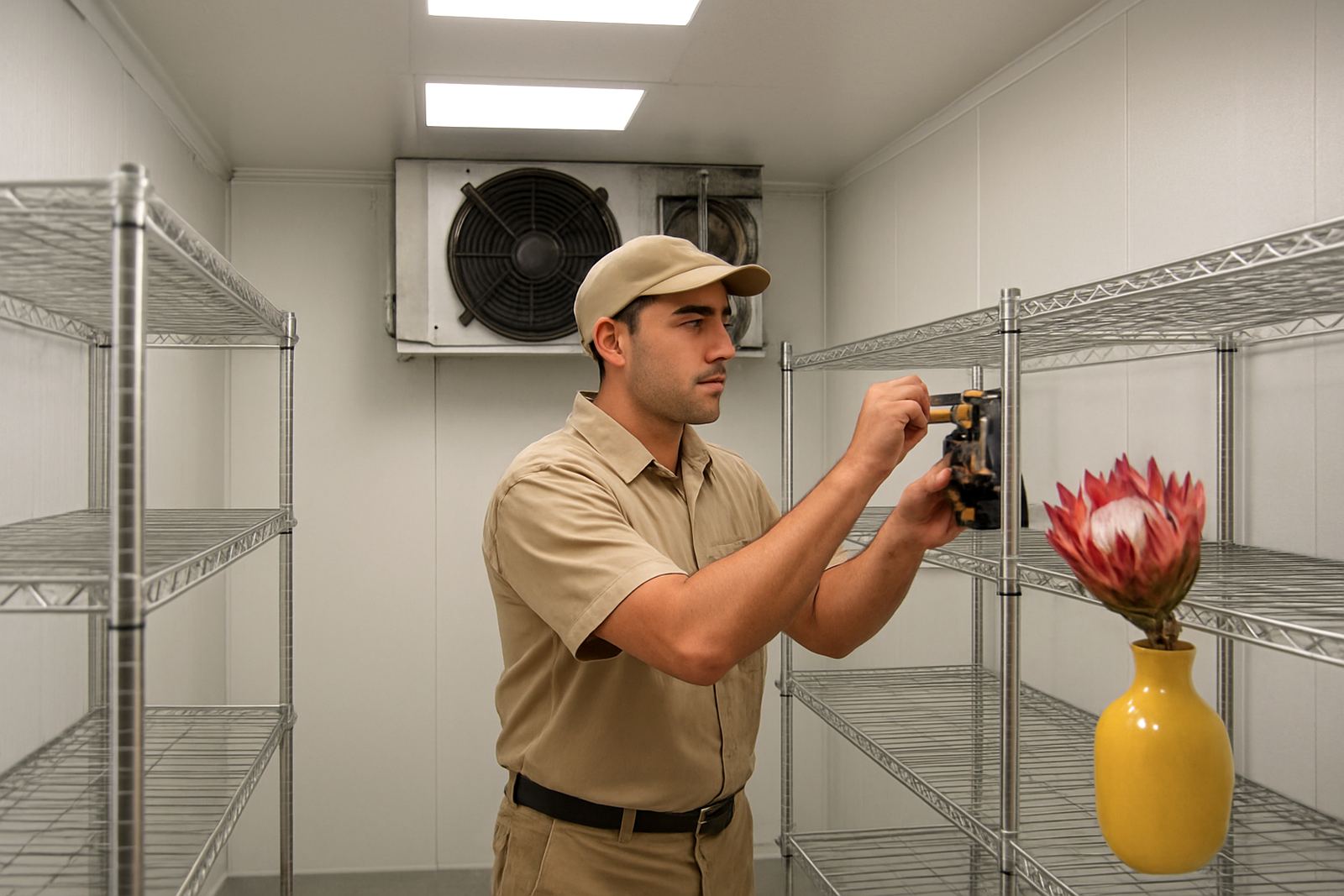
We work on systems for new builds and existing rooms that are giving trouble. That includes evaporators, condensing units, controls, sensors, defrost settings and drainage. If a room is cycling too hard, holding the wrong temperature, or showing uneven ripening from one pallet to the next, there is usually a mechanical or control issue behind it. A proper service finds that early, before stock losses start.
Typical sizes, layouts and control options
Ripening room systems are usually specified to suit the room volume, door frequency and the type of fruit being handled. Smaller shop supply rooms may run on a single cooling circuit, while farm and packhouse rooms often need multiple evaporators and a heavier-duty control panel. We size and check systems by cubic metres, insulation quality, product loading and the recovery time needed after doors are opened.
- Small rooms: about 10 to 25 m³, suitable for retail back-of-house holding spaces
- Medium rooms: about 25 to 80 m³, common for pack-out areas and farm stores
- Large rooms: 80 m³ and up, often split into zones for better control
- Options: manual controls, digital temperature controllers, alarm outputs, door interlocks and temperature logging
- Air distribution: wall-mounted evaporators, ducted airflow or multi-point circulation depending on the room shape
For fruit rooms in coastal areas like Cape Town and Vredenburg, we also factor in humidity and salt air exposure. That affects coil corrosion, fan condition and the life of electrical components. In the Winelands, the main concern is often summer heat and fast product turnover, so the system must recover quickly after loading or grading.
Where this system suits best in the Western Cape
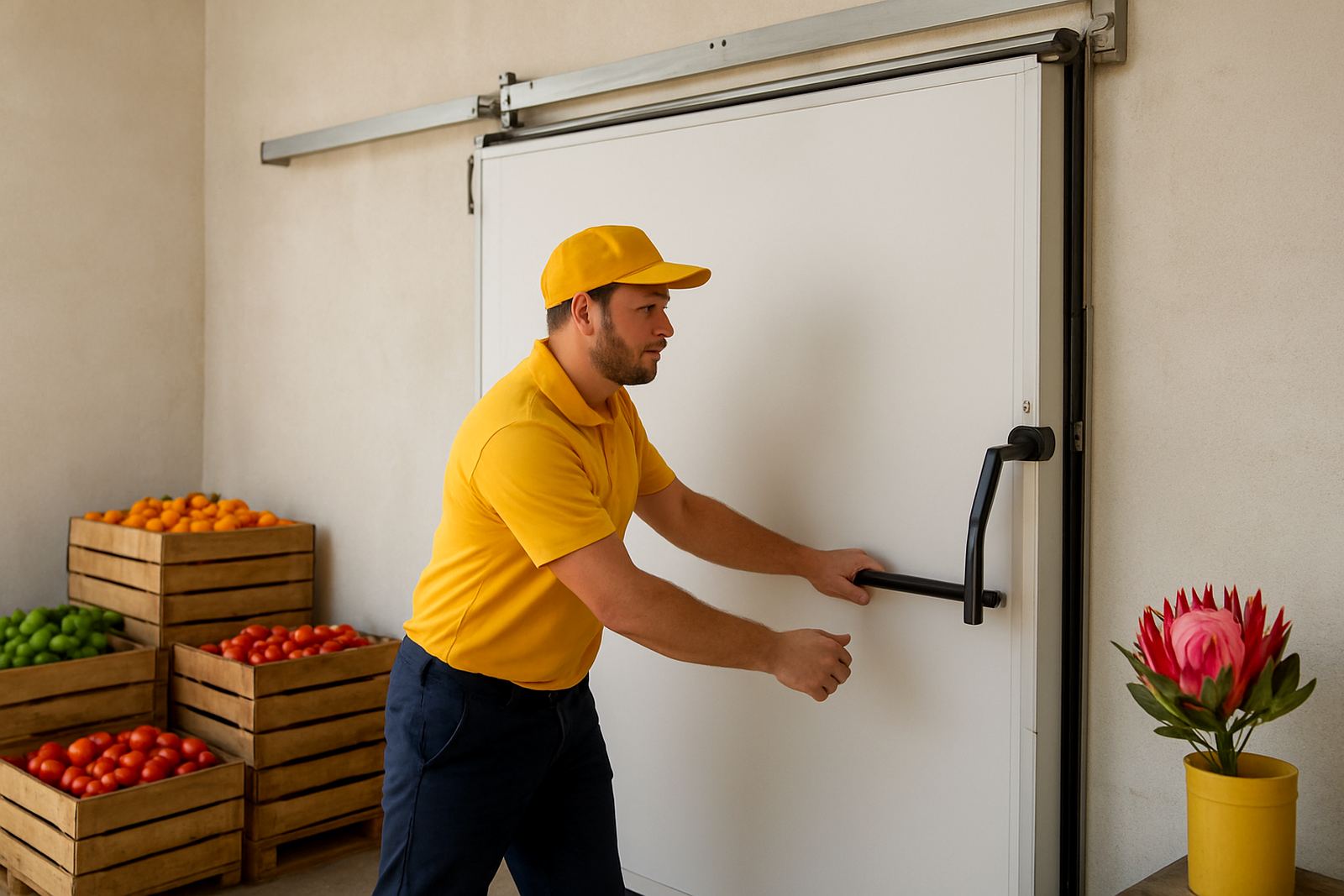
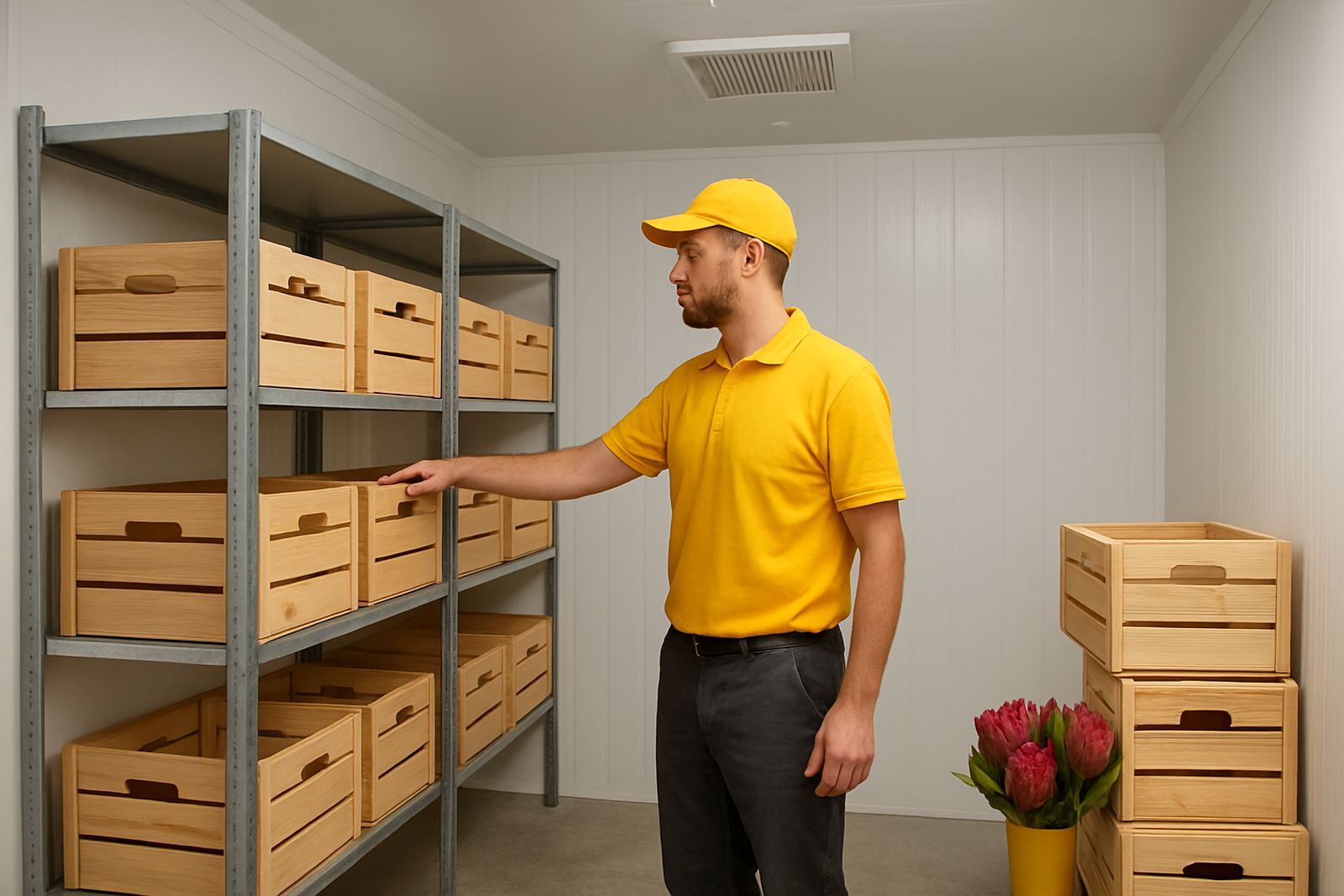
These systems suit shops, packhouses, cold stores and farms that need controlled holding before dispatch or sale. They are used where produce must be kept in a narrow temperature band and checked often through the day. A well set room helps reduce waste, keeps fruit looking right, and gives operators better control over stock rotation.
We commonly service rooms in Cape Town, Montague Gardens, Stellenbosch, Paarl, Malmesbury and Vredenburg. Each area brings its own conditions. Industrial areas often have dust and door traffic, while farm sites may deal with voltage fluctuations, long cable runs and load-shedding recovery. If the room is used alongside generators or backup power, the control settings and restart sequence need to be tested properly. Otherwise the room can come back on too hard, or not restart as it should.
- Shop back rooms and fruit departments
- Packhouses and dispatch areas
- Farm storage rooms near grading lines
- Short-term holding before ripening or sale
- Rooms used with temperature logging for traceability
Installation, power and gas requirements
Installation needs to be planned around room size, insulation thickness, door seals and the electrical supply available. Most systems will need a dedicated circuit, correct breaker sizing and safe isolators near the equipment. The line set lengths, pipe support and drain falls must be correct from the start, because poor pipework usually shows up later as performance problems or leaks.
We also check refrigerant charge, evacuation quality and pressure testing before commissioning. If the room is new or recently altered, the insulation joints and vapour barrier must be in good order, because air leaks cause sweating, frost build-up and extra running time. On sites with frequent load-shedding, standby power planning matters as much as the cooling equipment itself. A room that stops and starts badly can damage product faster than a room that runs a little warm but steady.
Gas type and charge size depend on the equipment fitted, the pipe length and the manufacturer specification. We do not guess on charge. It has to be weighed in or checked against the system data and operating pressures. Where necessary we fit service valves, sight glasses, pressure controls and monitoring points so future maintenance is easier.
Care, servicing and fault prevention
Ripening rooms need regular attention if they are going to hold temperature properly through a busy season. Dirt on coils, blocked drains and weak fan motors are common causes of drift. Temperature sensors can also move out of position or fail after vibration and repeated door use. A maintenance routine keeps the system predictable and reduces call-outs at the wrong time.
- Clean condenser and evaporator coils on a set schedule
- Check drain lines and pans for blockages
- Test door seals, closers and strip curtains
- Verify temperature readings against a separate probe
- Inspect fan motors, contactors and control wiring
- Check for oil stains, refrigerant loss and abnormal frost patterns
We offer planned maintenance, emergency call-outs, leak detection, coil cleaning and drain clearing. For rooms that are shut down between seasons, we can also do shutdown preservation so the unit is left safe for the off period. In high humidity coastal areas, that step matters because idle equipment can pick up corrosion quicker than most people expect. A short, basic check before restart often saves a bigger repair later, no need to wait for a full failure.
What to check before you order
If you are pricing a new ripening room system or replacing an old one, the best starting point is a clear room schedule. We need room dimensions, insulation details, product type, expected load per day and the hours the room will run. It also helps to know whether the site has backup power, how many times doors open in a shift, and whether the room is used for holding only or for active ripening work.
Useful details to have ready include:
- Internal room length, width and height in metres
- Type and thickness of insulation on walls, roof and floor
- Fruit type, batch size and target temperature range
- Electrical supply available at the site
- Any existing control panel, sensors or alarms that must stay in use
- Whether temperature logging is needed for traceability or audits
If the system is replacing old equipment, photos of the evaporator, compressor area and control panel help us judge what can be reused and what should be changed. For farms and shops in the Western Cape, the right call is usually the one that matches the room to the workload, not just the cheapest unit on paper.
Key facts
| System type | Controlled cooling components for fruit ripening and holding rooms |
|---|---|
| Typical room size | About 10 m³ to 80 m³+, sized to product load and usage |
| Main components | Evaporator, condensing unit, controls, sensors, drainage and airflow parts |
| Power supply | Single phase or three phase, depending on room size and load |
| Temperature control | Digital or manual control with optional logging and alarms |
| Service support | Planned maintenance, call-outs, leak detection and shutdown preservation |