Ice Machines Built for Daily Service
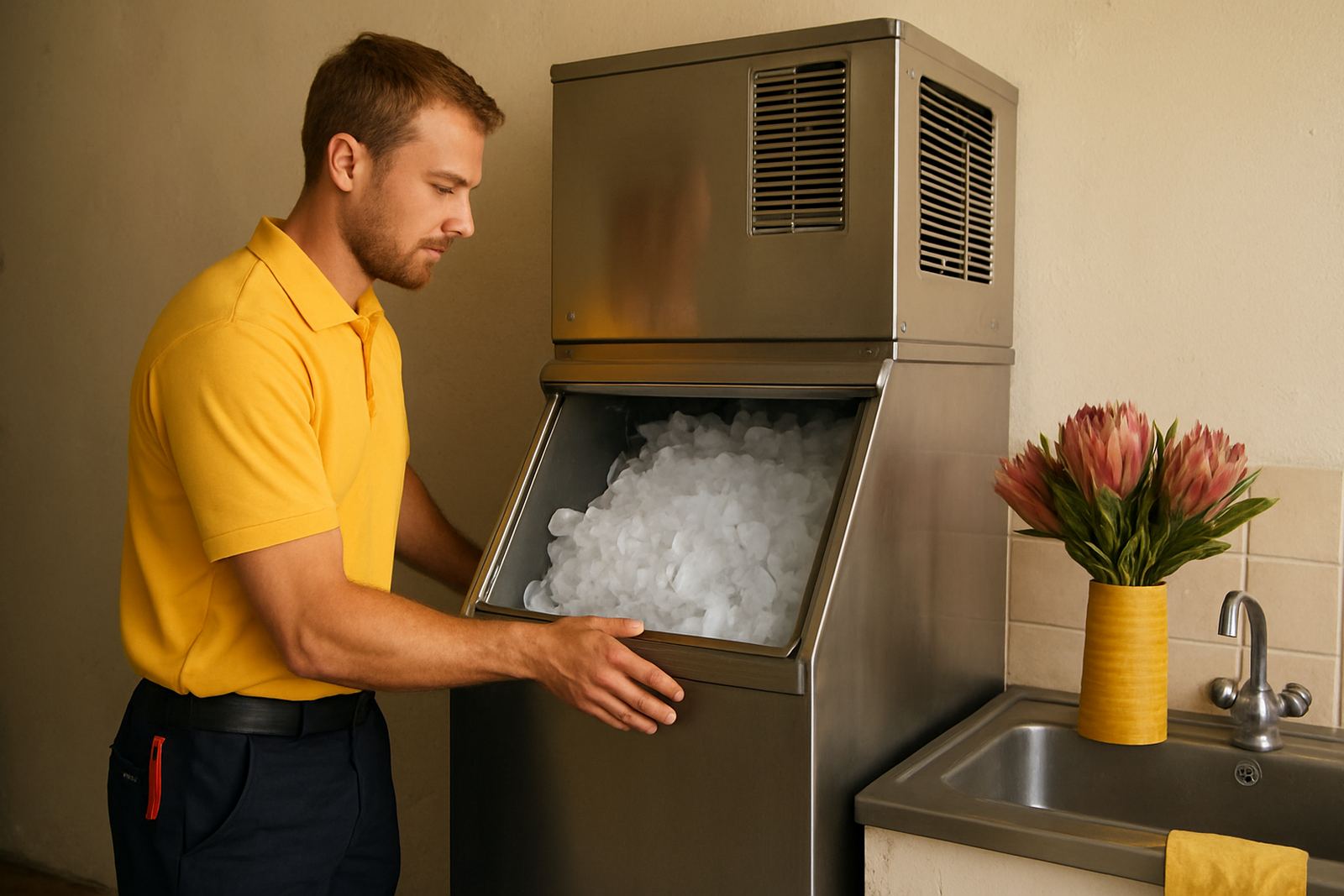
An ice machine is a commercial appliance that makes, stores and dispenses ice for business use. In a café it keeps drinks moving, in a fish room it helps protect product quality, and in a kitchen it supports safe prep and display work. The right unit needs to match the amount of ice you use each day, the size of the room and the water and power available on site.
We work with businesses that need dependable ice on a daily basis, not once-in-a-while domestic style use. That means checking production rate, bin size, drainage, ventilation and access for cleaning. In humid coastal areas like Cape Town and the West Coast, machine placement and airflow matter a lot because poor air movement can push up running costs and shorten service life.
- For beverage service, nugget or cube-style ice is common for dispensers and counter service
- For fish handling, larger, slower-melting ice suits packing and display
- For food preparation, clean storage and easy scooping are key
- For busy shops, a bigger storage bin can prevent peak-time shortages
Sizes, Output Rates and Storage Options
Ice machines are usually chosen by how much ice they can produce in 24 hours, and how much ice the built-in bin can hold. Smaller undercounter units suit tight service spaces, while larger modular machines sit on a bin or storage chest and can be scaled to higher demand. The best choice depends on the number of customers, the type of ice used, and how often the bin is emptied during the day.
As a practical guide, a compact unit may produce around 20 to 60 kg per day, mid-size units often sit between 80 and 150 kg per day, and larger commercial units can go well above that. In fish shops and food prep areas, we also look at the ice shape, because some jobs need hard cube ice while others work better with soft chewable ice or flake style ice. Not every business needs the same output, and oversizing can be wasteful if the machine sits under used.
- Undercounter: compact footprint, suitable for small bars and counters
- Modular: separate ice maker and storage bin for larger demand
- Flake or nugget types: useful where product packing or display needs close coverage
- High-output models: suited to food factories, fish handling and multi-point service areas
Where Ice Machines Suit Western Cape Workspaces
We supply and service ice machines for cafés, bottle stores, butcheries, fish traders, farm stalls, restaurants, guest houses and cold prep rooms. Across Stellenbosch, Paarl, Malmesbury and Vredenburg, the common issue is not just production, it is making sure the machine stays clean and can keep up during hot spells, load-shedding recovery and weekend trade.
For farm use, the machine may need to sit near a prep room or packing area where dust and temperature changes are part of daily operations. In town centres, the challenge is often tight space and limited drainage. A good site check looks at walking room around the unit, floor slopes, ventilation and whether staff can reach the bin without spillages. If the machine is tucked into a hot kitchen corner, it will work harder and usually need more attention.
- Cape Town and Montague Gardens: retail, hospitality and service counters
- Winelands: guest houses, restaurants and farm support areas
- West Coast: fish handling, food prep and seasonal trade
Installation, Water Supply and Power Needs
Installation needs to be planned properly because ice machines are sensitive to water quality, heat build-up and drainage. Most commercial units need a cold water supply, a proper waste drain and enough clear space around the condenser for airflow. Some sites also need water filtration to reduce scale, odours and early wear on internal parts. If the water is hard or carries sediment, a filter can make a real difference to ice quality and servicing intervals.
Power requirements vary by size, but many commercial ice machines run on standard 220 to 240 V single phase supply, while larger units may need a dedicated circuit. If the site has load-shedding, we can assess what needs to stay powered and whether the unit should be connected through a suitable backup arrangement. In some cases the issue is not starting the machine after an outage, it is ensuring the bin and controls recover cleanly without repeated faults. A proper install also helps avoid nuisance tripping and drainage backflow.
- Check for a level floor and enough clearance for air intake and service access
- Confirm water pressure and a clean drain point before delivery
- Allow space for a filter where water quality is poor
- Make sure the electrical circuit matches the unit size and starting load
Cleaning, Servicing and Temperature Control
Ice machines need scheduled care because scale, slime and blocked water paths can quickly affect output. The bin, scoop, evaporator area and water system should be cleaned on a regular basis, especially in kitchens and fish rooms where airborne grease or salt can build up. If the machine starts making cloudy ice, smaller cubes or noisy cycles, it usually needs attention before the fault becomes costly.
Our planned maintenance work covers coil cleaning, drain clearing, leak detection, temperature logging and seasonal start-up checks where needed. We also look at door seals, fan operation, water valves and ice thickness settings. On sites near the coast, humidity and salt in the air can speed up corrosion on exposed parts, so keeping panels clean and drainage open is important. One missed service can lead to bigger issues later, especially when the unit is working hard through summer.
- Clean storage bins and scoops regularly to protect ice quality
- Check for blocked drains and standing water under the unit
- Look out for slow production, warm ice or unusual noise
- Book routine servicing before peak season, not after a breakdown
What to Check Before You Order
Before ordering, measure the site carefully and think about how much ice you use at peak times, not just on an average day. A shop that serves drinks from 10h00 to 15h00 may need far more output than a business with lighter use over the whole day. It also helps to know whether you need storage for evening trade, or whether the machine can make ice continuously with regular emptying. A unit that fits the door but cannot breathe in the room is a poor buy.
It is also worth checking whether the machine will be used near dust, grease, salt air or heat from cooking equipment. Those conditions affect maintenance and may call for more frequent cleaning. If you are comparing options, ask about the exact daily output, bin capacity, electrical demand and drainage needs. That keeps ordering simple and helps avoid surprises on site.
- Daily ice demand in kg, not just number of staff or customers
- Available floor space, door width and service access
- Water quality, drain position and pressure at the point of install
- Power supply, backup arrangements and expected load-shedding interruptions
Key facts
| Type | Commercial ice machine for beverage service, fish handling and food preparation areas |
|---|---|
| Output range | Approx. 20 kg to 150+ kg per 24 hours, depending on model size |
| Ice types | Cube, nugget, chewable, flake and other commercial formats |
| Power supply | Typically 220 to 240 V single phase, larger units may need dedicated supply |
| Water requirement | Cold water feed with filtration recommended where water quality is poor |
| Typical application | Cafés, shops, restaurants, fish rooms, farms and prep areas |