What a prep table fridge does in daily service
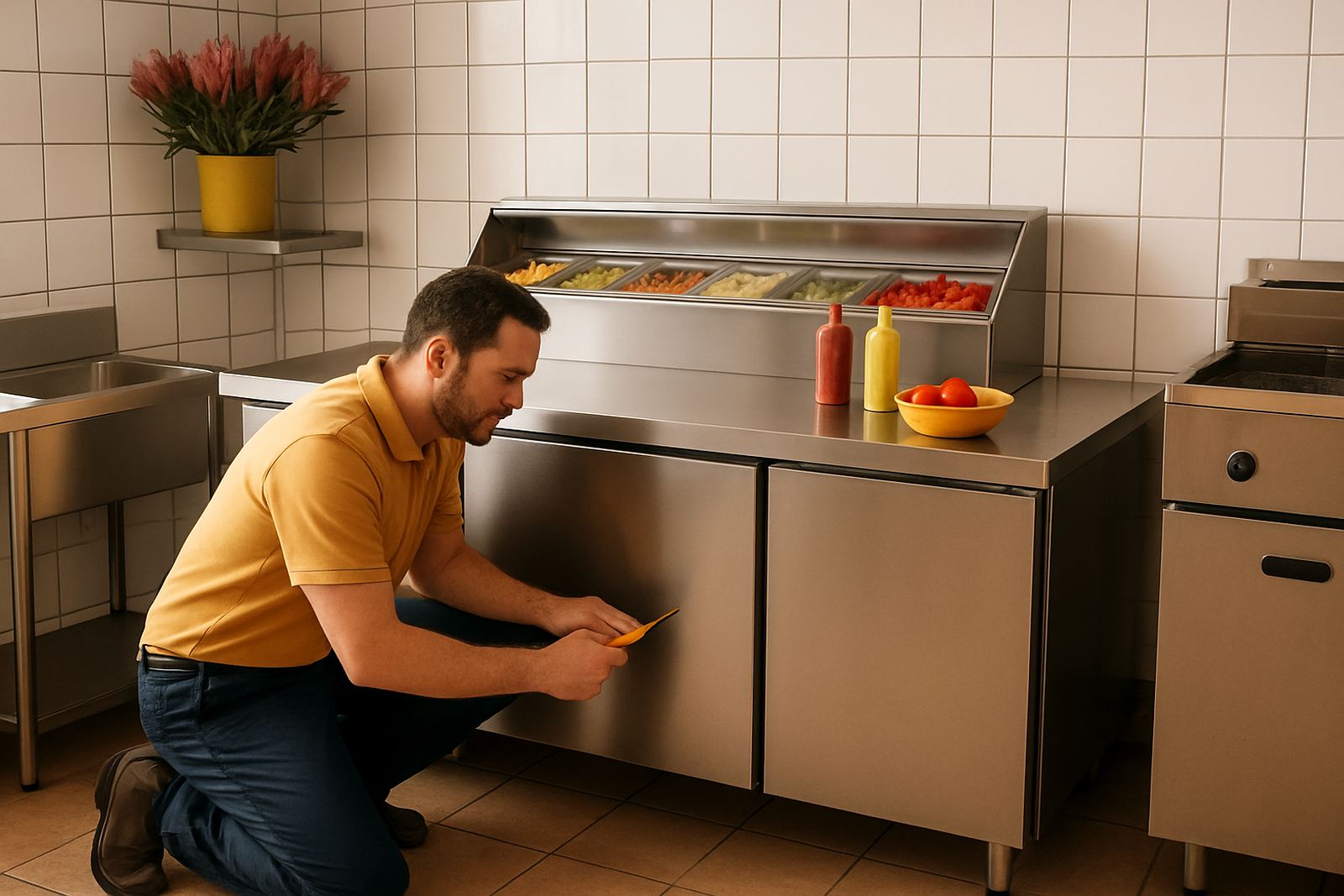
A prep table fridge combines undercounter refrigeration with a solid top for food preparation. The top section usually carries ingredient pans for sliced toppings, salad items, garnishes or sandwich fillings, while the lower section stores backup stock at safe temperature. It is a practical unit for busy counters where staff need quick access and less walking between the fridge and the prep point.
For takeaway shops, cafes and canteens, the value is in speed and control. Staff can build orders faster, keep ingredients organised, and reduce door opening on larger walk-in or upright fridges. In busy parts of Cape Town and Stellenbosch, that matters when trade peaks at lunch and the room is warm. In coastal areas like Vredenburg, good door seals and correct drainage help with humidity and salt air exposure too.
Common uses include burger stations, sandwich lines, pizza prep, deli counters and light kitchen work. Some units are built with a cutting board rail, some with a granite or stainless worktop, and some are set up for gastronorm pans under a lid. The right choice depends on how your team works, how much stock you need close at hand, and how much floor space you can spare.
Sizes, pan layouts and top options
Prep table fridges come in several lengths and layouts. Shorter units are useful where space is tight, while longer models suit high-volume kitchens that need more pan positions and more undercounter storage. A common choice is a two-door or three-door base with a chilled top rail for ingredient pans. Some models also come with drawers instead of doors for quicker access to high-use items.
- Lengths commonly range from about 1.2 metres to 2.4 metres
- Pan layouts can hold 4 to 10 ingredient pans depending on size
- Worktops may be stainless steel, fitted with a cutting board, or covered by a lid
- Doors can be solid, and some units use drawers for faster access
- Temperature range is usually around 0 C to 5 C for chilled food holding
When comparing options, check the usable top depth, not only the outside size. A unit that looks suitable on paper may leave too little room for plates, scales or packing trays. Also check whether the pan rail accepts standard pan sizes, because that makes ordering and replacement much easier later on. For busy shops in Paarl or Malmesbury, standard pan sizes are often the simpler choice because local stock is easier to replace if something gets damaged.
Where a prep table fridge fits best
These units suit any site that needs chilled ingredient storage directly at the work point. That includes takeaway shops, deli counters, restaurants, bakeries, school kitchens, farm shops and small hospitality venues. They are also useful on farms that process produce on site and need a compact prep area near packing or serving.
Because the fridge and worktop are combined, the unit saves steps and keeps the workflow tidy. In a narrow shop front, the staff can prep and plate in the same area without moving between a separate fridge and table. In a kitchen that runs on strict timing, such as breakfast service or lunch rush, that can cut delays quite a bit.
These fridges also help with temperature control during summer. Western Cape kitchens can still get hot, especially near glass fronts or open serving hatches. If the room temperature climbs too high, the compressor works harder and the top rail may lose chill quicker. Good placement and regular cleaning make a clear difference.
- Keep the unit away from ovens, fryers and direct sun
- Leave space around vents for airflow
- Use it where staff need fast access to chilled ingredients
- Choose a layout that matches your menu and prep routine
Installation, power and site conditions
Most prep table fridges are electric units and need a dedicated power supply with correct protection. Before installation, check the circuit load, plug position and cable route. If the site already deals with load shedding or voltage fluctuation, it is worth planning for a proper backup supply or protected circuit so the unit does not trip or restart badly. A fridge that cuts in and out loses temperature and puts stock at risk.
Allow enough space for ventilation at the back and sides. These units reject heat while they run, so a cramped corner or a closed-in wall can cause higher running temperatures and more strain on the compressor. On coastal sites, the condenser should be kept clean because salt and grease buildup can shorten service life. On inland sites like Stellenbosch or the Winelands, dust and flour can clog coils fast in bakery spaces.
Drainage also matters. Condensate from the cabinet and top section must move away properly, otherwise water can sit under the unit or block the drain line. If the prep area is washed down daily, make sure the floor falls are correct and the unit stands level. A poorly levelled fridge can cause doors not to close properly and ice may form in the wrong spots.
For installation and checks, Kenny Cape West works across Cape Town, Montague Gardens, Stellenbosch, Paarl, Malmesbury and Vredenburg. If a unit is being fitted into a new counter line or replacing an older one, the electrical load, ventilation space and floor drainage should be checked before the fridge is put into service.
Care, cleaning and planned servicing
Daily care keeps a prep table fridge working properly. Wipe the top rail, clean spills straight away, and do not overfill the ingredient pans. Hot food should never be put into the chilled section because it raises internal temperature and can force the compressor to run longer than needed. Doors should close fully, and gaskets need to stay clean so they seal well.
Servicing should include condenser cleaning, drain clearing, temperature checks and inspection of door seals, fans and controls. On sites with heavy use, a monthly clean of the condenser is a sensible habit, especially in kitchens with frying, baking or flour dust. In humid areas, blocked drainage can lead to standing water and mould around the base. In colder months, some sites also need seasonal start-up checks after shutdown periods.
- Clean the condenser regularly to keep airflow open
- Check door seals for tears, gaps or hardening
- Keep the drain line clear so water moves out properly
- Log temperatures if you store dairy, meat or ready-to-eat food
- Arrange shutdown preservation if the unit will be unused for a while
For businesses with maintenance contracts, scheduled visits are useful because faults are found before stock is lost. If you need coil cleaning, leak detection, temperature logging or emergency call-outs, the team can handle it as part of a planned maintenance approach.
What to check before you order one
Before ordering, measure the exact floor space and check doorways, corners and counter clearances. A fridge may fit the kitchen layout on paper but still be awkward to move through a narrow entrance or past a serving hatch. Measure in metres, not guesses, and include space for the doors or drawers to open fully.
You should also confirm the following points with the supplier or technician:
- Required length, depth and height for the available space
- Number of pan positions needed at peak service
- Whether you want doors, drawers or a mixed base
- Electrical supply available on site and plug type
- Ambient room temperature, especially near cook lines
- Whether the unit will sit in a coastal, dusty or high-traffic environment
If your team handles chilled meat, dairy, salads or garnishes, ask about the actual holding temperature and not just the brochure temperature range. In practice, the best unit is the one that keeps food in range on a warm afternoon in Cape Town or after a long trading day in Paarl. A unit that is slightly larger than you first planned can often save time and improve stock flow, so it is worth comparing options carefully before placing the order.
Key facts
| Product type | Chilled prep counter with worktop and ingredient pan rail |
|---|---|
| Typical size range | About 1.2 metres to 2.4 metres long |
| Temperature range | Around 0 C to 5 C for chilled holding |
| Power need | Electric supply with dedicated circuit and correct protection |
| Common layouts | 2 door, 3 door, drawer base or mixed base |
| Typical use | Takeaway counters, kitchens, deli lines and farm shop prep areas |