What an evaporator unit does in a cold room
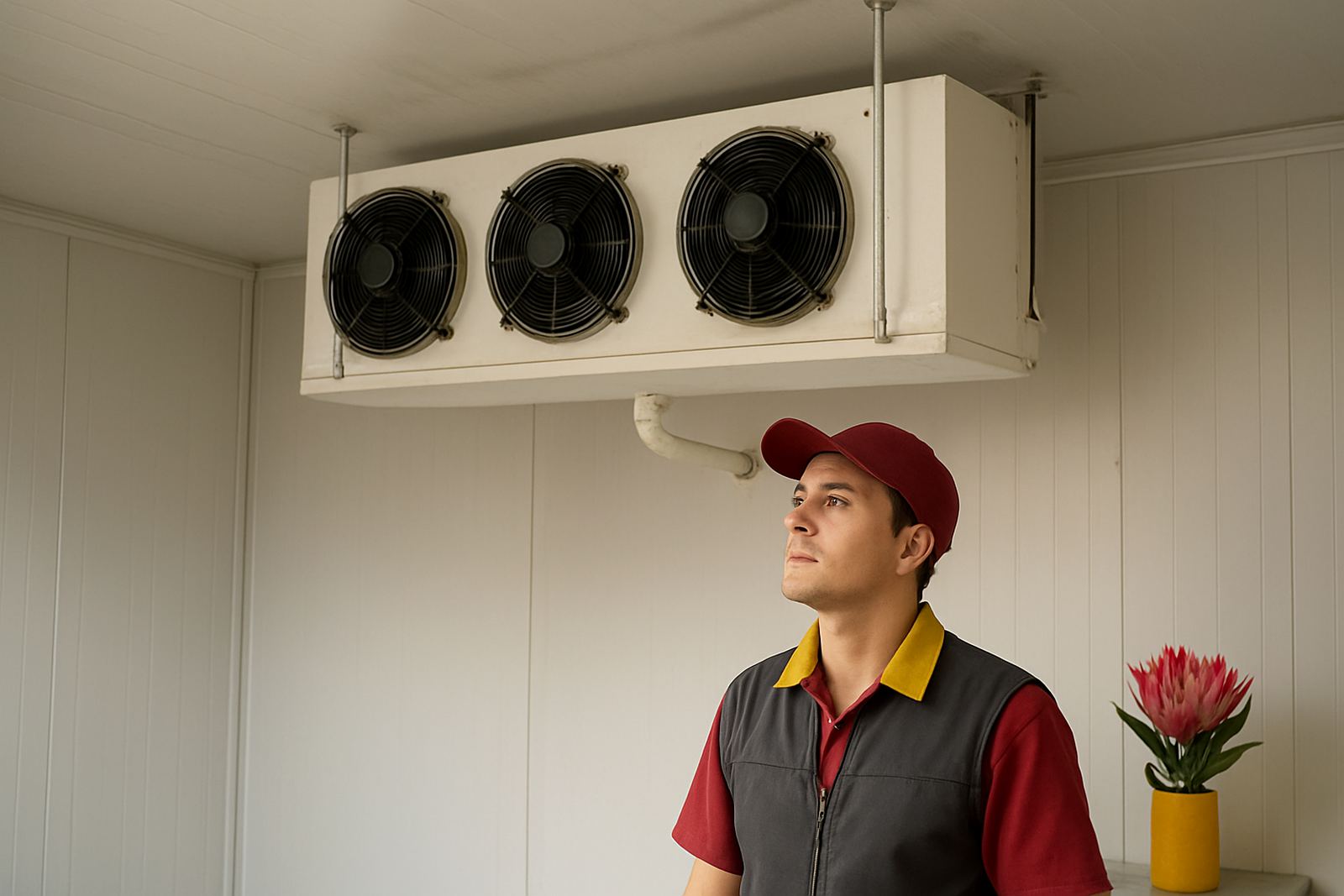
An evaporator unit is the indoor part of a refrigeration system. It sits inside the cold room or freezer room and pulls heat out of the air by passing refrigerant through a finned coil, then a fan sends cooled air back across the room. That process keeps produce, meat, dairy, flowers and frozen stock at the right temperature without large swings.
For chiller applications the unit is usually set up for medium temperature work, while freezer rooms need a lower coil temperature and more careful defrost control. The right unit helps reduce frost build-up, keeps the room pulling down properly after door openings and stops warm spots near the entrance. In Cape Town coastal air, and inland farm conditions, that balance matters because humidity and dust both affect performance.
Sizes, fan layouts and coil choices
Evaporator units are selected by room size, product load and target temperature rather than by a single standard size. A small shop cold room may use a compact ceiling unit with one or two fans, while a larger farm freezer or packhouse room may need a longer coil and multiple fans to move enough air through the space.
Common options include different fin spacing, fan diameters, defrost types and casing materials. Tighter fin spacing suits chilled rooms where icing is lighter, while wider fin spacing is often used on freezers to slow down frost blockage. Stainless or coated casings are often preferred near the coast or in wash-down areas where corrosion can become a problem.
- Small chillers: about 6 kW to 12 kW
- Medium cold rooms: about 12 kW to 30 kW
- Freezer rooms: about 8 kW to 25 kW, depending on product load and insulation
- Fan options: single fan, twin fan or multi-fan layouts
- Defrost options: electric, hot gas or off-cycle depending on the system
Where evaporator units suit best in the Western Cape
These units suit shops, butchers, restaurants, wineries, fruit packhouses, flower rooms and farm stores that need stable temperature control. In Cape Town and Montague Gardens they are often used in retail cold rooms where stock turns over quickly. In Stellenbosch and Paarl they are common in wine and produce storage. In Malmesbury and Vredenburg, they often support farms and trading stores that need dependable holding temperatures through summer heat and load-shedding.
The mounting position matters. A ceiling-mounted unit works well where floor space is tight and you want air movement across the full room. For narrow rooms, the discharge direction and throw distance must suit the room shape. If the door opens often, or the room holds moisture-heavy produce, the unit may need extra allowance for frosting and drain control.
- Shops with tight floor space
- Packhouses and dispatch rooms
- Cold stores for meat, dairy and flowers
- Farm produce rooms and seasonal storage
- Freezer rooms with regular door traffic
Installation, power supply and refrigerant points to check
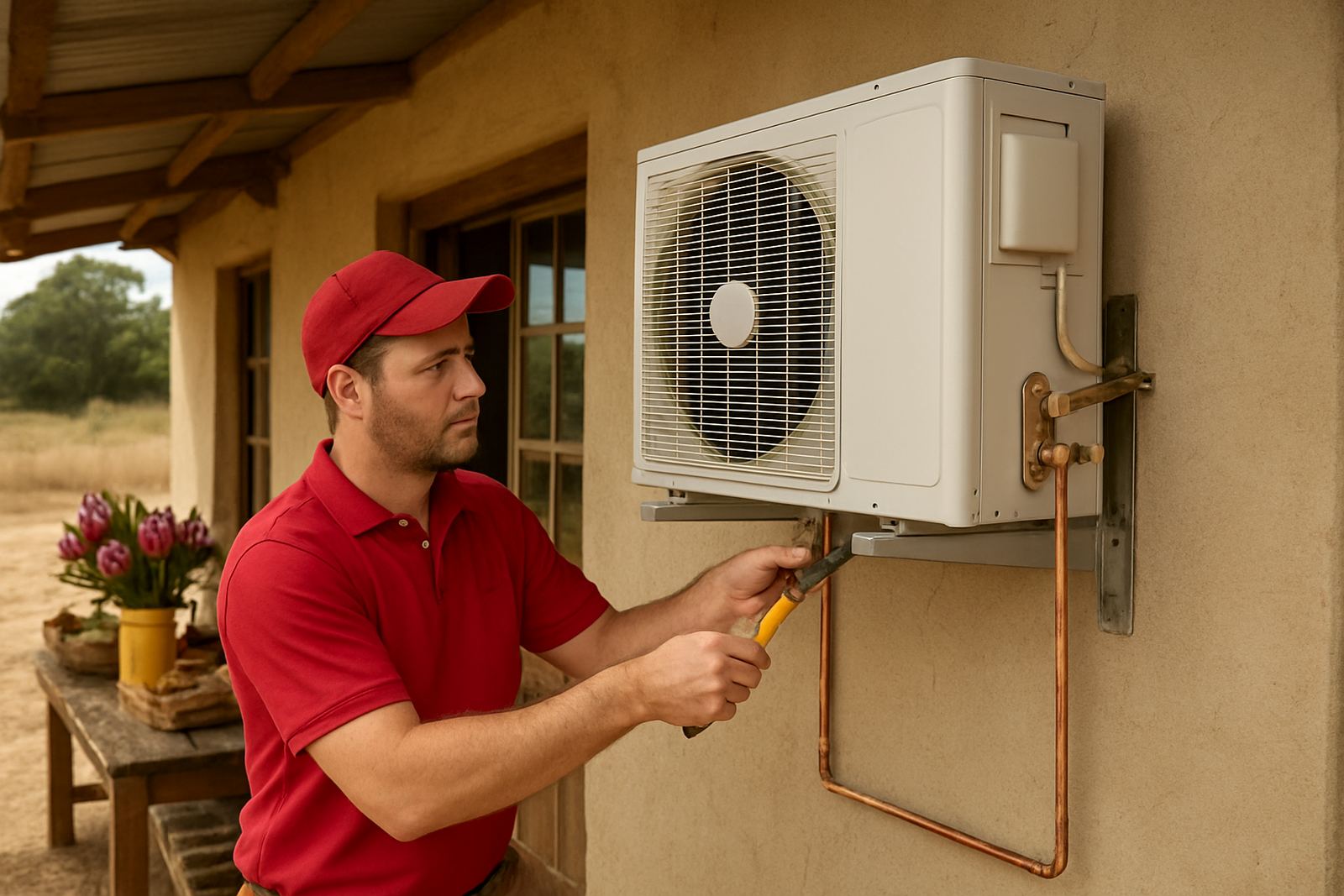
Correct installation starts with the room size, insulation thickness and refrigeration load. The unit must be mounted level, with enough clearance for air return, fan service and defrost drainage. Poor mounting can cause vibration, water drip problems and uneven cooling. If the room is exposed to dusty conditions or regular wash-down, service access should be planned from the start.
Power supply usually needs a dedicated electrical circuit with the correct isolator, protection and cable size. Fan motors and defrost heaters can draw different loads so the electrical board has to match the unit specification. On some systems, especially where there are frequent power cuts, the controls may need restart protection or staged start-up after power returns. Refrigerant piping must also be sized properly, with a sensible route for suction, liquid and drain lines to reduce pressure loss and oil return issues.
When we assess a room, we also look at the refrigerant type already in the system, the existing condensing unit, and whether the pipe run and valve sizes suit the evaporator coil. If the unit is undersized or overfed it will either struggle to pull down, or it may ice too quickly and work harder than it should.
Care, cleaning and routine servicing that keeps it working
Evaporator units need regular attention because dust, condensation and ice all build up over time. A blocked coil makes the fans work harder and the room takes longer to recover after each door opening. In freezers, poor defrost timing can lead to thick ice around the coil, drain tray and fan guards. That is where planned maintenance saves money and keeps stock safer.
Our servicing work normally includes coil cleaning, drain clearing, temperature logging, fan checks, defrost checks and inspection of wiring, sensors and insulation around the pipes. For coastal sites we also look for corrosion on the casing, fixings and brackets. If the room is used for food storage, clean airflow and a clear drain line matter just as much as cooling capacity.
- Clean the coil before airflow drops noticeably
- Check defrost heaters and timer settings on freezer rooms
- Keep drain lines open so water does not back up
- Inspect fan motors, blades and guards for wear
- Log room temperatures after load-shedding or door faults
What to check before you order an evaporator unit
To match the right unit, you need the room size in metres, the target temperature, the product type and the room insulation details. A 3 m by 4 m chiller room for dairy storage will not need the same setup as a freezer room in a farm packhouse. It also helps to know how often the door opens, whether the room is in direct sun, and if the site has 220 V or 380 V supply available for the fans and heaters.
Have the following details ready before ordering so the unit can be matched properly and the installation does not stall later. If you are replacing an old unit, take a photo of the existing nameplate and pipe connections, then note any frost, drip or noise issues you have been seeing.
- Room length, width and ceiling height
- Target temperature and product stored
- Chiller or freezer application
- Available electrical supply and breaker space
- Pipe sizes, pipe route and refrigerant already in use
- Door traffic, humidity and coastal exposure
At Kenny Cape West, we support evaporator units with installation advice, emergency call-outs and maintenance contracts across Cape Town, Stellenbosch, Paarl, Malmesbury and Vredenburg. If you need a unit checked, replaced or matched to an existing cold room, email callouts@kennycapewest.co.za and we will advise on the next step.
Key facts
| Product type | Ceiling-mounted room evaporator unit |
|---|---|
| Application | Chiller and freezer cold rooms |
| Typical capacity range | About 6 kW to 30 kW, depending on room load |
| Mounting | Ceiling suspended or high wall mounted with service clearance |
| Defrost options | Electric, hot gas or off-cycle |
| Typical supply | 220 V or 380 V, depending on fan and heater setup |