What a serve over display counter does in daily service
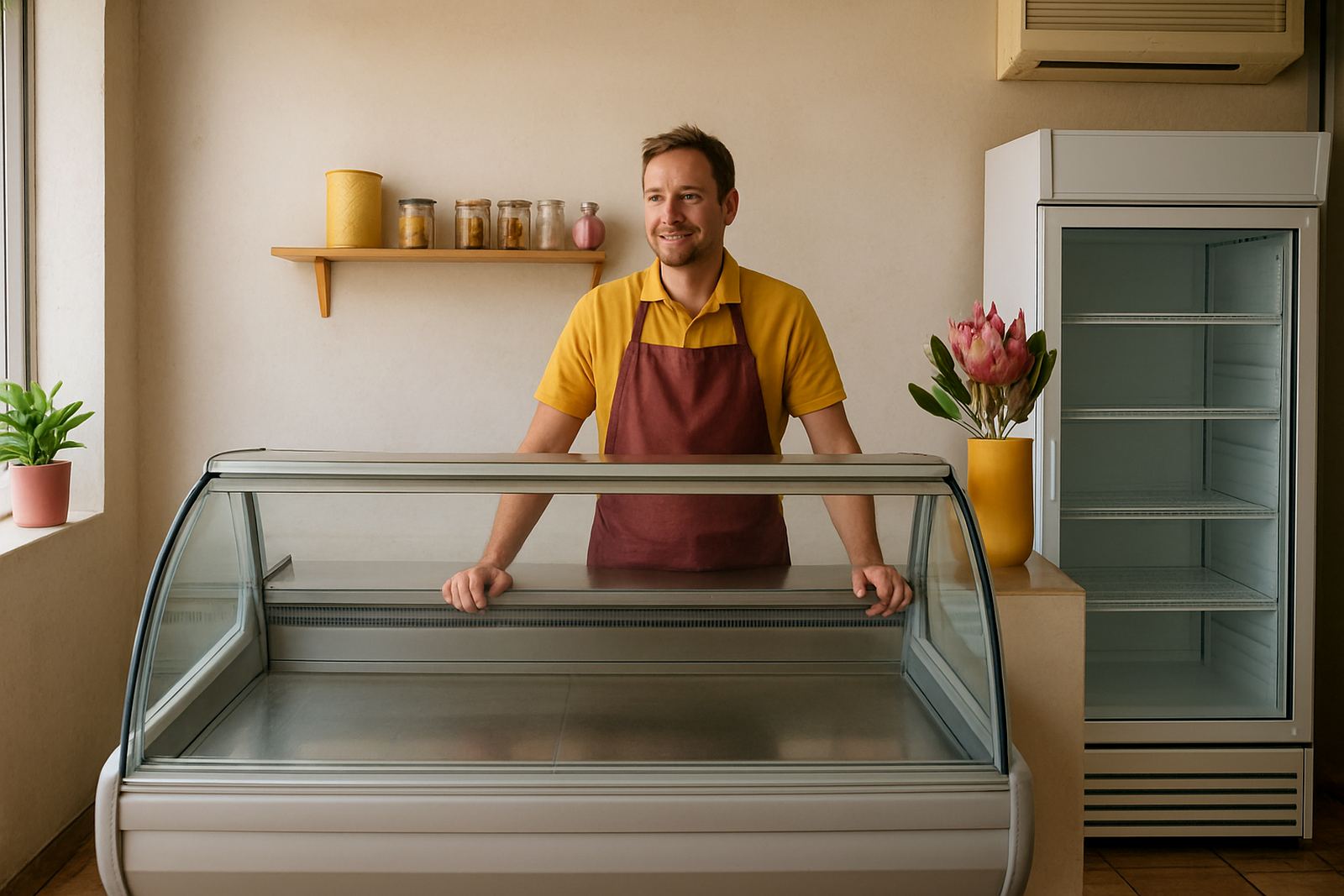
A serve over display counter is a chilled cabinet with a front viewing glass and a rear working space for staff. Customers see the product, while your team loads trays, portions cuts and serves straight from the counter. In Western Cape trading, that matters on long summer days, during load shedding changes, and in shops where doors open and close all morning.
These counters are built to hold display items at a set temperature range, usually around 0 deg C to 5 deg C for fresh meat, dairy and deli lines. Some models have static cooling for gentler product handling, while others use fan-assisted cooling for quicker pull-down and better air movement. The right choice depends on what you sell, how often the cabinet opens, and whether your store faces hot inland afternoons or coastal humidity.
We work with units for small neighbourhood shops, supermarket service lines and farm shops that need tidy presentation and dependable holding temperatures. For many outlets, the counter becomes part of the serving rhythm. It needs clear glass, good lighting and a cold system that can handle the pace, not just look neat on day one.
Sizes, layouts and finish options that fit the space
Serve over counters come in modular lengths so they can fit a short deli bay or a full service run. Common lengths start at about 1.2 metres and can extend in sections to 2.5 metres, 3 metres or longer depending on the store layout. Depth usually sits between 900 mm and 1200 mm, with height around 1200 mm to 1350 mm at the working side.
Options often include:
- Flat or curved front glass
- Static or fan-assisted cooling
- Refrigerated base storage for backup stock
- Night blind or insulated cover for shutdown periods
- Stainless steel inner linings for easier cleaning
- LED lighting over the display shelf
If your store sells sliced meats, cheeses, cooked foods or fresh fish, the internal layout should suit that product mix. A butcher line may need deeper pans and a stronger cold recovery rate, while a deli counter may need more shelf presentation and a softer airflow so the product does not dry out.
Where serve over counters work best in the Western Cape
These counters suit shops that serve over the glass rather than self-service. You will often see them in delis, butcheries, farm stores, grocery shops, bakeries with cold treats and food counters in small centres. In Cape Town and Montague Gardens they are common where trade is fast and floor space is tight. In Stellenbosch and Paarl, they often support farm stalls and speciality food outlets. On the West Coast, they need to handle warmer wind, salt air and irregular trading hours.
They also make sense where there is regular temperature logging or municipal inspection pressure. A proper service line keeps product at the correct holding temperature, reduces waste and helps staff stay organised. If you are moving from open trays or domestic fridges to a proper display counter, the difference in stock control is immediate.
- Shopfront deli and meat service
- Farm shop fresh-food displays
- Bakeries with chilled slices and desserts
- Small supermarkets and convenience stores
- Specialist food counters in tourist towns
Installation, power supply and site checks before delivery
Before installation, the floor should be level, the loading point clear and the counter measured against door widths and turning space. A serve over counter is not just set down and switched on. It needs air movement around the condenser area, enough service access at the rear, and a proper electrical point with the correct protection.
Most units run on 220 V to 240 V single-phase supply, though larger setups can need a dedicated circuit. Power draw varies by size and compressor setup, but a typical medium cabinet can draw around 1.5 kW to 3.5 kW under normal operation. On sites with unstable power, surge protection and planned restart procedure are worth sorting before the first trading day. If the shop also runs on a generator during outages, the start-up load must be checked against the generator capacity.
Good installation also includes drain routing where required, especially for cabinets that defrost or use condensate management. In some sites, warm indoor air or direct sun on the front glass can increase load, so the cabinet position matters. A counter in a hot entranceway will work harder than one tucked into a shaded service bay.
Care, servicing and temperature control that keeps stock saleable
A serve over counter needs regular cleaning and planned servicing to keep product safe and presentable. Daily wipe-downs should cover the glass, deck, shelf edges and pan supports. Weekly checks should include drains, door seals where fitted, fan noise and the condition of the temperature display. For butcheries and fresh-food counters, coil cleaning and drain clearing are important because fat, moisture and product debris can build up fast.
Servicing should also look at:
- Temperature logging and setpoint checks
- Gas charge condition and leak detection
- Condenser cleanliness and airflow
- Compressor starting amps and running load
- Light fittings and control switches
- Shutdown preservation before seasonal closures
In coastal towns, salt and damp air can shorten service intervals. Inland, dust from deliveries and open doors is the bigger issue. Either way, a cabinet that is cleaned and checked on schedule usually holds temperature better, uses less power and gives fewer surprises during a busy Saturday.
What to check before you order a serve over display
The right counter depends on the product, the service style and the room around it. Check the length you need against your serving queue and stock volume. If the counter is too small, staff start overstacking pans. If it is too large, you pay for cooling space you do not use. Also check the ambient temperature in the shop, because a counter rated for a cool indoor space may struggle in a hot unshaded site.
Useful questions to ask before ordering include:
- What products will be displayed most of the time?
- Do you need static cooling or fan-assisted cooling?
- Will the cabinet need base storage or only display space?
- Is a single-phase connection available at the site?
- Will the counter sit in a cooled store or a warm front area?
- How often will staff clean, restock and log temperatures?
If you are fitting out a new shop or replacing an older counter, it helps to measure the site and confirm access for delivery, especially in tighter Cape Town and Stellenbosch streets. A small mismatch at the doorway can cause a big delay on installation day, so the route in matters as much as the cabinet itself.
Local support for Western Cape shops, farms and service lines
Kenny Cape West works from Montague Gardens and supports service sites across Cape Town, Stellenbosch, Paarl, Malmesbury and Vredenburg. We handle call-out repairs, planned maintenance, cold room work and refrigeration servicing for food retail and farm operations. For a serve over display counter, that means help with installation checks, fault finding, leak detection, temperature logging and routine servicing once the cabinet is in use.
Our team includes Morne Jacobus van Wyk, Anele Mbeki, Charlene Adams, Ruan Smit, Lutho Ndlovu and Bianca Petersen, with a practical focus on keeping cold equipment working through local conditions. If your counter starts cycling too often, loses temperature after load shedding or needs a full seasonal service, we can assess the site and put a proper plan in place.
Key facts
| Product type | Refrigerated serve over display counter |
|---|---|
| Typical lengths | 1.2 m to 3 m plus modular sections |
| Typical depth | 900 mm to 1200 mm |
| Typical height | 1200 mm to 1350 mm |
| Operating range | About 0 deg C to 5 deg C for fresh food display |
| Power supply | 220 V to 240 V single-phase, larger units may need dedicated circuit |