Start with the room, not the unit
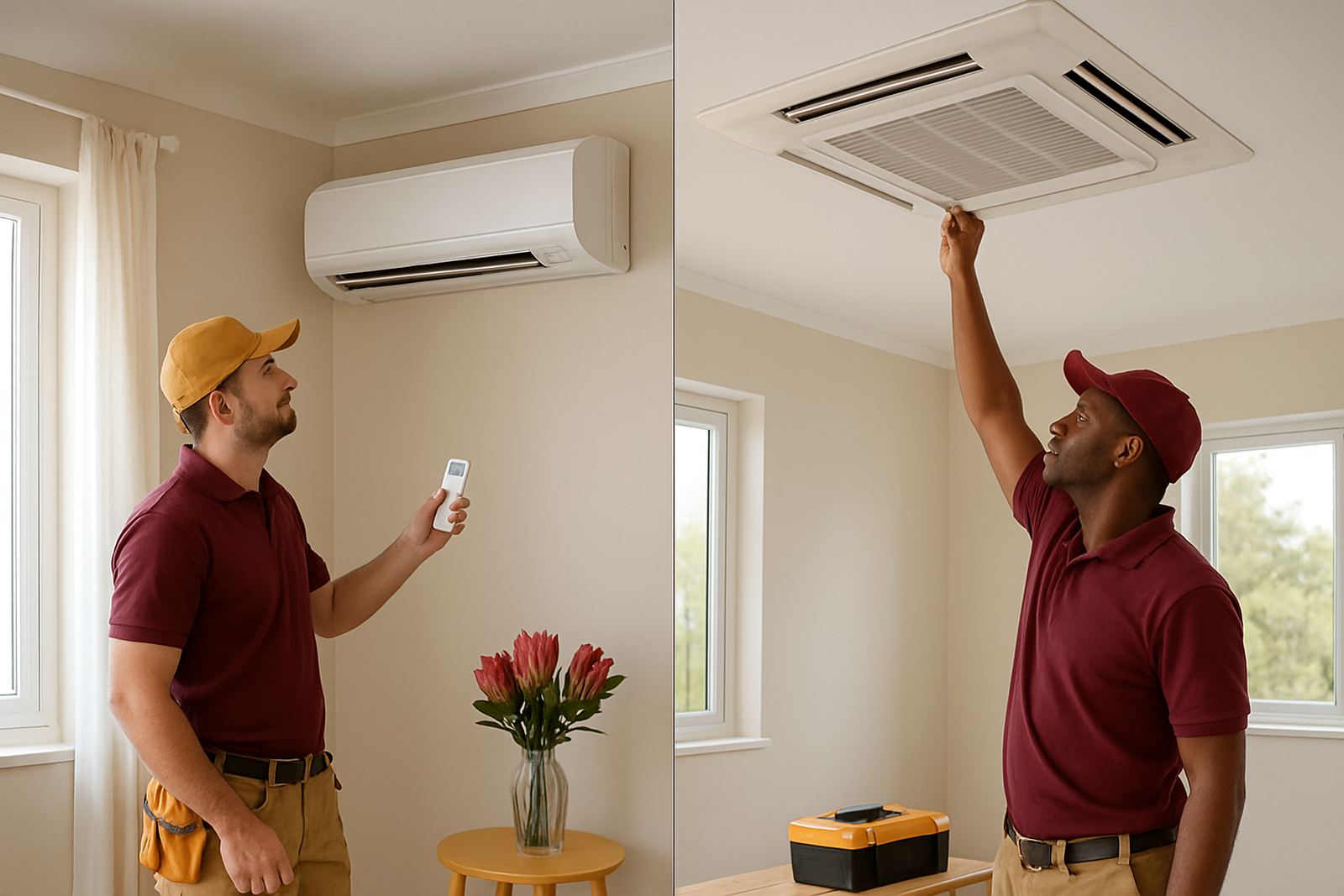
A wall split and a cassette can both cool commercial spaces well, but they suit different layouts. A wall split works best where the indoor unit can blow air across a room from high on one wall. A cassette sits in the ceiling and spreads air in four directions, which helps when people move around a large open area or where the room needs more even coverage.
Before you choose, measure the floor area, ceiling height and the number of people in the space. Also note glass fronts, south facing walls, kitchen heat, printers, stock rooms and doors that open often. In places like Cape Town, Stellenbosch and Paarl, afternoon sun can lift the load fast, while coastal humidity near the West Coast can make the unit work harder just to keep the space comfortable.
When a wall split makes better sense
Wall split units are often the practical option for smaller offices, treatment rooms, guard rooms and back office areas. They are quicker to install, need less ceiling work and are easier to service if the indoor unit is mounted with enough clear access. If you are working in a shop that closes early, or a farm office where downtime must be short, this can matter a lot.
They also suit spaces where the ceiling is low or already packed with lights, ducting or sprinkler lines. If you only need to cool one zone, a split can keep capital cost lower and the maintenance simple. For many businesses, that is the safest place to start. Just make sure the discharge air is not blowing directly onto staff or customers.
- Good for smaller to medium rooms
- Works well with low ceilings
- Usually quicker and cheaper to fit
- Easier to isolate one room or zone
- Best when wall access is clear for servicing
When a cassette is the better fit
A cassette is often the better choice for open-plan shops, reception areas, boardrooms and larger work spaces where you want air distributed evenly. Because it is fitted into the ceiling, it keeps wall space free and can look tidier in customer-facing areas. It also helps where people sit or move around under different parts of the room, because the air is spread out instead of pushed from one side.
For commercial buildings with suspended ceilings, a cassette can be a cleaner solution. It still needs enough service space above the ceiling for drainage, isolators and pipework. If the ceiling void is tight, or if access is poor, servicing can become more difficult later. That is worth checking before you commit, because a neat install on day one should still be serviceable in year five.
- Good for open-plan areas and wide rooms
- Helps distribute air more evenly
- Leaves wall space free for signage or shelves
- Often suits suspended ceilings
- Needs proper access above the ceiling for maintenance
A simple choice checklist for commercial spaces
Use this checklist before you ask for a quote or plan a replacement. It will help you avoid fitting the wrong type for the building and then spending more later on adjustments, extra call-outs or high power use. If the space already struggles during load-shedding starts and restarts, correct sizing becomes even more important because weak equipment will not recover well after power comes back.
Checklist:
- What is the room used for most of the day?
- How many people are in the room at peak times?
- How much glass, sun and outside air does the space take?
- Is the ceiling low, open or suspended?
- Can technicians reach filters, drains and electrical points safely?
- Will stock, shelves or lights block air flow?
- Do you need one room cooled or several zones?
- Will the unit be switched off and on often during trading hours?
What service access means after installation
Many owners only think about size and price, but service access matters just as much. A wall split usually gives easier access for filter cleaning, coil cleaning and drain clearing. A cassette may need ceiling panels lifted and more careful handling, especially where there are cables, sensors or insulation above the ceiling. If a business runs daily, that difference can affect how quickly repairs are done.
For long term reliability, ask how filters will be cleaned, where condensate will drain, and how technicians will get to the indoor unit without disturbing the shop floor or office. In coastal air, corrosion can build up faster, so regular maintenance helps protect both types. On farms and in the Winelands, dust and pollen can also block airflow quicker than expected, so planned maintenance is worth setting up early.
Match the unit to the way you operate
The right answer depends on how the space is used, not only on square metres. A small office with one or two staff may do well with a split. A retail floor, tasting room or open meeting area may be better served by a cassette. If your business has one area that must stay cooler than the rest, a split may give you better control. If comfort must be spread across a broader area, a cassette often performs better.
When in doubt, get the load checked properly. That should include heat from people, lighting, equipment and sun exposure. It should also include practical issues like power stability, ceiling access and future expansion. A unit that is slightly undersized will run hard all day and still leave warm patches, which is where calls for leak detection, drain clearing and emergency repairs usually start.
If you are comparing options for a site in Cape Town, Montague Gardens, Stellenbosch, Paarl, Malmesbury or Vredenburg, we can help you choose the setup that fits the building and the way it works day to day.