Start with the airflow path, not the shelving
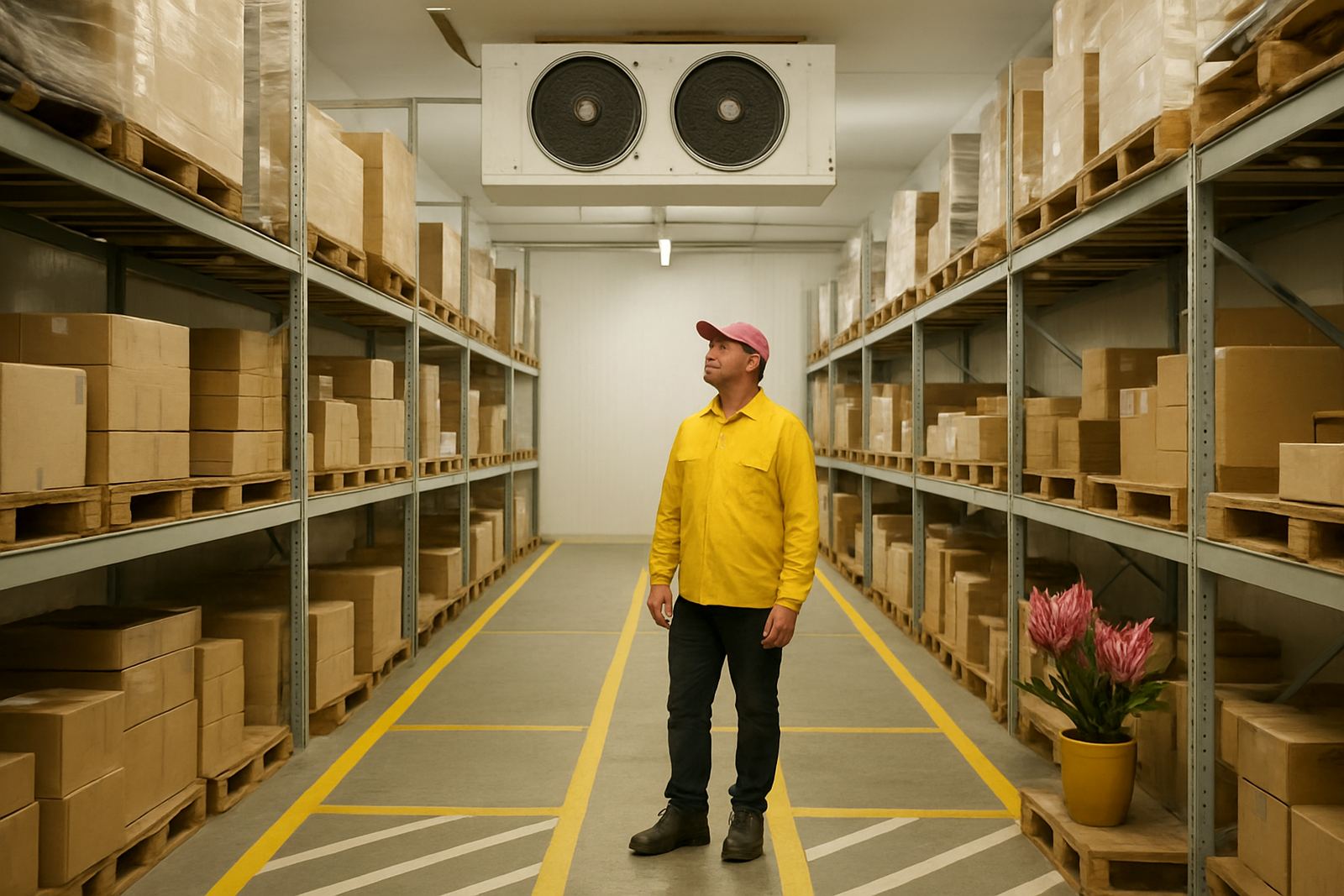
Cold rooms work best when air can move freely around the load and back to the evaporator. If crates, cartons or hanging product block that path, you get warm spots near the door, frost on the coil and poor pull-down after busy trading periods. In coastal areas like Cape Town and Vredenburg, damp air also makes blocked circulation show up faster because moisture builds up on surfaces and turns into ice or condensate.
Before moving anything, stand inside the room and check where the air leaves the unit and where it returns. Leave clear space under and around wall-mounted units, and avoid pushing stock tight against the ceiling. If you use pallets, keep them level and in good condition so air can move under the load. A few centimetres makes a difference, especially in smaller rooms where every metre counts.
- Keep return air grilles open and easy to reach
- Leave a clear path between product stacks and the evaporator
- Do not block fans with shrink wrap, boxes or hanging bags
- Check for frost or condensation on one side of the room only
Use a layout that supports stock rotation
A cold room should make first-in, first-out easy to follow. If older stock is hidden behind new deliveries, it stays too long and spoilage increases. Good layout means the most frequent picking routes are short, the oldest stock is visible, and frozen or chilled goods are arranged in a way that matches your delivery pattern.
For shops, put fast-moving items close to the door but not right in front of it. For farms and packhouses, group stock by batch, date and product type so workers do not have to move ten crates to reach one pallet. Label every zone clearly. If there is no space for proper rotation, the room is probably carrying too much stock for its footprint.
- Keep older stock at the front of each bay
- Separate incoming stock from ready-for-pick stock
- Use dated labels that are easy to read in low light
- Make one route for loading and one for picking if possible
Create clear access for cleaning and servicing
Maintenance suffers when a room is packed from wall to wall. Technicians need access to the evaporator, drain line, door seals and controls, and your staff need enough space to clean under racks and behind crates. If these areas are hard to reach, dirt builds up and small faults become expensive repairs.
Plan for at least one clear working aisle and enough space to remove panels without shifting the whole room. Keep ladders, brooms and wash-down gear nearby but outside the stored product area. This matters during load-shedding too, because a crowded room slows down checks when you need to confirm temperatures and close doors quickly. A layout that allows fast access saves time and keeps the room safer to use.
Separate hot, wet and high-turnover product zones
Not all stock behaves the same inside a cold room. Wet product, warm product and items that are opened often create more moisture and more load on the system. If they sit next to cleaner, drier stock, the whole room takes strain. A better arrangement is to zone the room by product behaviour and handling frequency.
Keep incoming warm product near the entry point until it has settled, then move it into its proper bay. Wet crates should not drip onto cardboard or exposed packaging. High-turnover stock should be easy to reach so doors stay open for shorter periods. If the room handles meat, dairy, produce or flowers on the same premises, the layout needs even more care so odours, moisture and handling do not clash.
- Put wet stock over drainage-friendly flooring or trays where suitable
- Keep high-turnover items nearest the working aisle
- Avoid mixing warm arrivals with fully chilled stock
- Store sensitive items away from the door swing
Watch the door, seals and traffic pattern
Layout is not only what happens inside the room. The area outside the door affects how often it is opened, how long it stays open, and whether warm air rushes in. A poor traffic pattern can undo a good internal setup. Staff should not have to weave around delivery trolleys, bins or packaging just to enter the room.
Keep the approach to the door clear and dry. A slippery threshold or a door that is hard to close will lead to unnecessary losses and more service calls. If your site handles both deliveries and customer orders, separate those movements as far as possible. In the Western Cape, where summer heat and winter damp both create pressure on refrigeration systems, door discipline and sensible traffic flow are just as important as the equipment itself.
Use a simple improvement checklist before you move stock
You do not need a full rebuild to get a better cold room layout. Start with measurements, then make one change at a time and check the result. If the room holds temperature better, clears frost slower and is easier to work in, the layout is helping. If not, adjust again. Keep notes so your team knows what changed and why.
- Measure aisle widths and note all blocked areas
- Check where frost, wet patches or warm spots appear
- Mark the loading zone, picking zone and cleaning access points
- Confirm that shelves, pallets and hanging rails suit the product size
- Review rotation after two weeks and again after one month
For older rooms, a layout review often finds small problems such as a blocked fan path, an overfilled bay or a door that opens into the busiest traffic area. Fix those first before adding more storage. A little rework now can save product loss later, and help the system run steadier through peak season.