What the farm needed before harvest
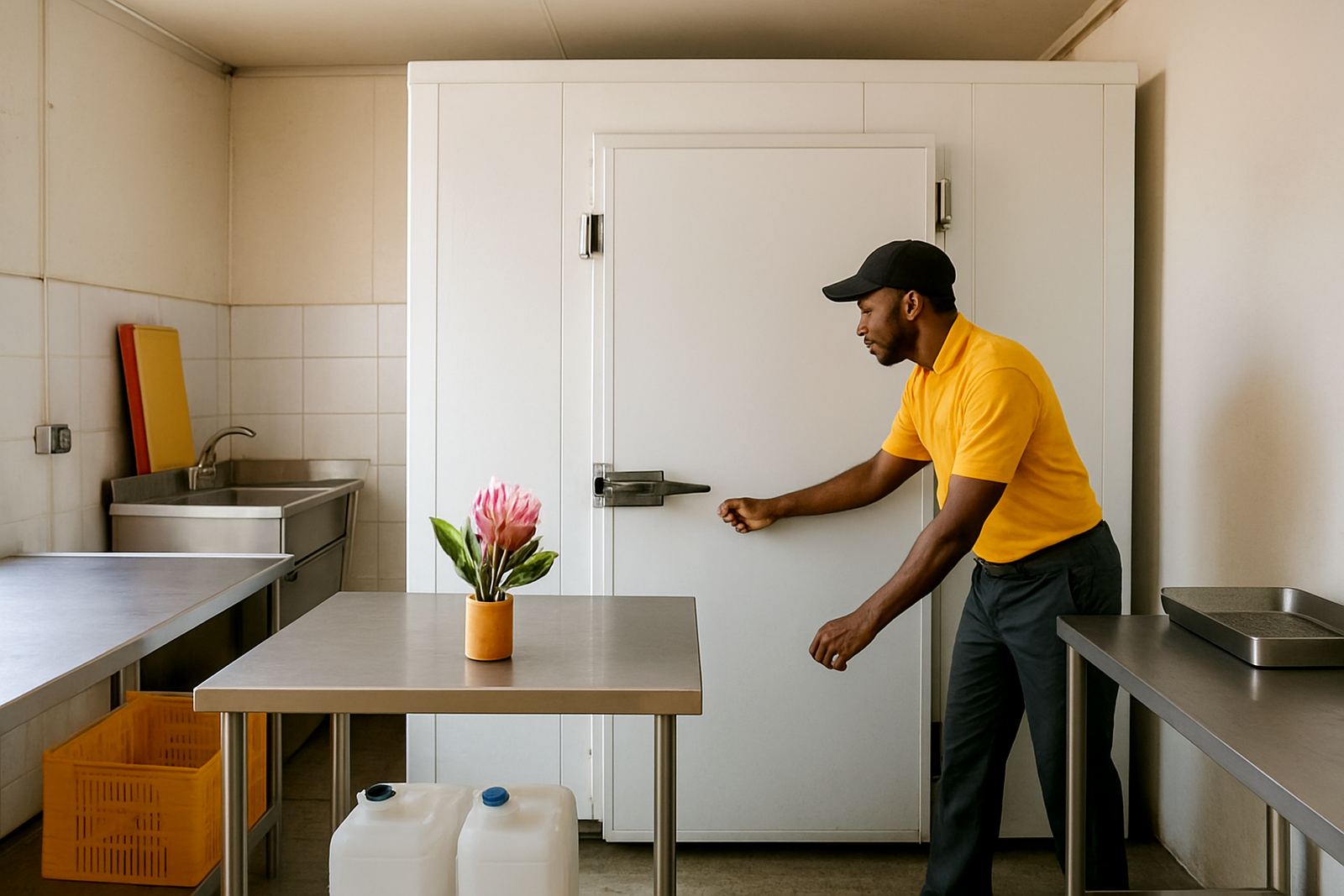
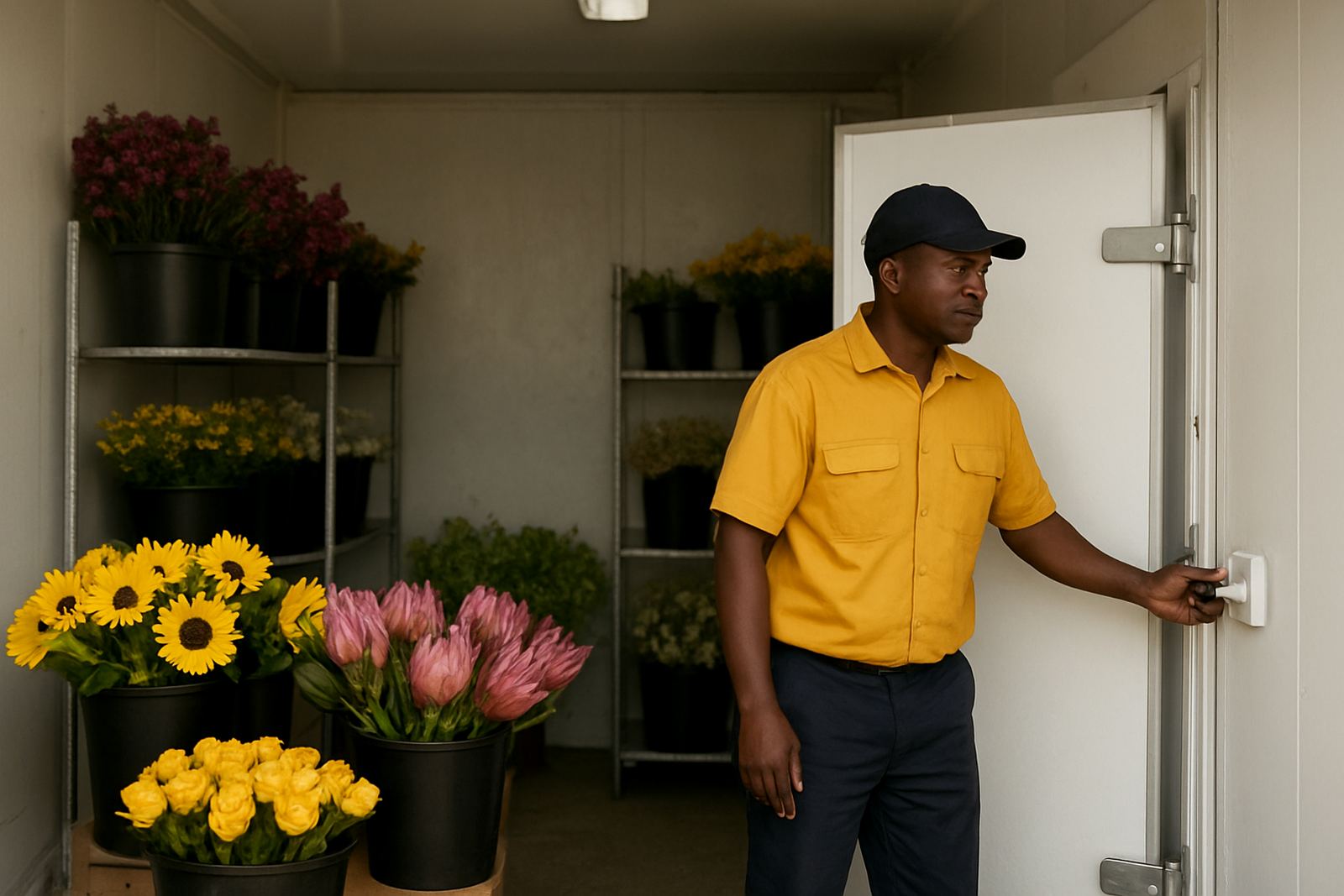
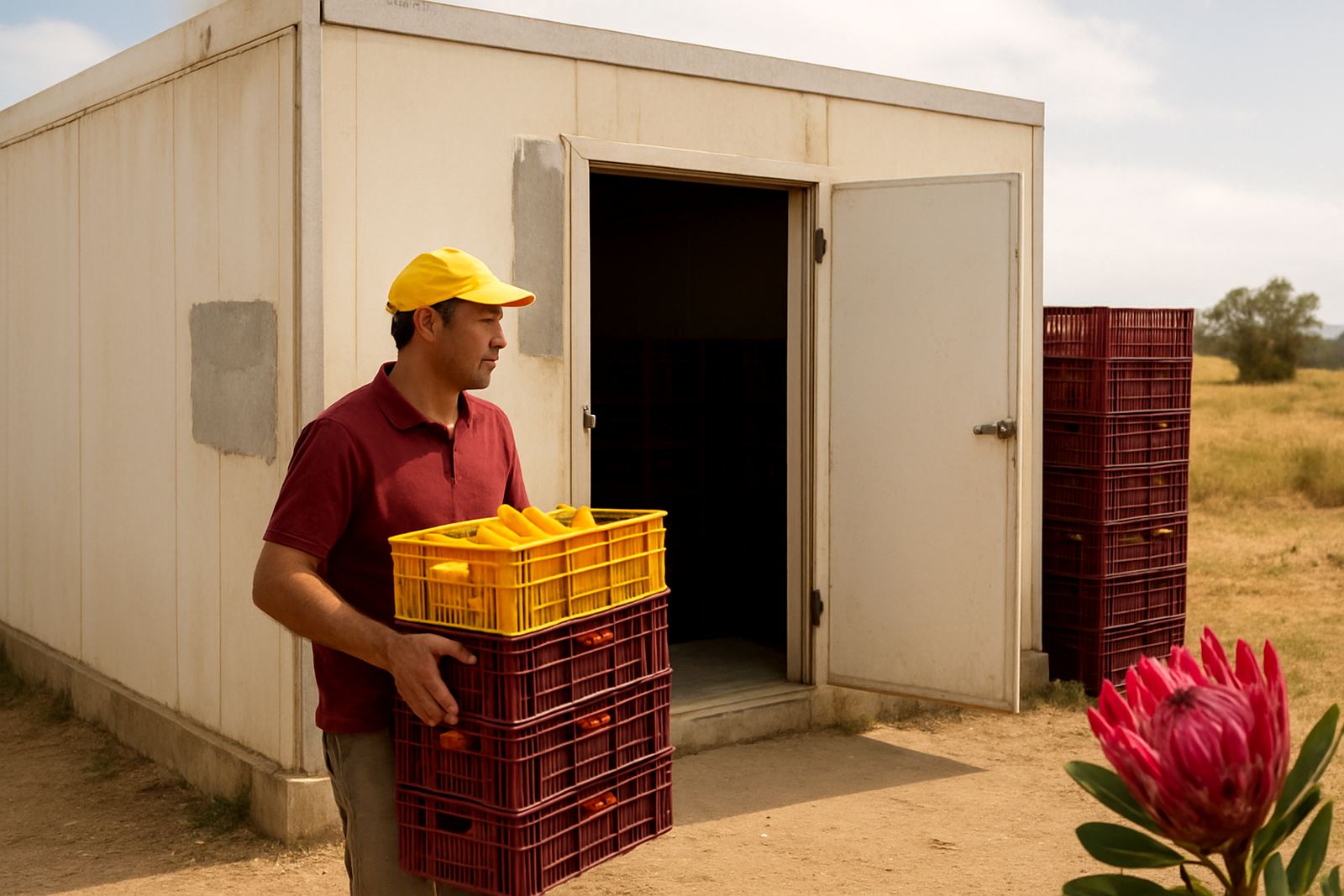
The client was a mixed produce farm outside Paarl, using one cold room to hold packed fruit and short-term harvest stock before dispatch. The room had started showing uneven temperatures, soft spots in a section of the insulated panels, and repeated alarms from the control gear. The brief was simple on paper but tight in practice: get the room dependable again before peak picking started, and keep the work tidy so the farm could carry on around us.
We inspected the room, checked the door seals, confirmed the temperature swing, and mapped the affected panel area. The control fault meant the plant was not responding cleanly to set points, so the room was cycling more than it should. In a packhouse or on-farm store, that sort of issue can mean lost product life very quickly. The client needed a practical repair, not a temporary patch, and they needed it done in a short window.
Site conditions and the main constraints
Harvest timing was the first constraint. The room had to be worked on between loading periods, with stock moved in and out during the day. The second constraint was the Western Cape weather. Paarl heat can rise quickly in season, and when the ambient temperature climbs, a tired cold room shows its faults right away. We also had to work around farm access, forklift movements, and the need to preserve hygiene around a food storage area.
There was also a practical electrical issue. The site wanted the room ready for load-shedding events and generator changeovers, so the control replacement needed to be set up to restart cleanly after interruptions. That meant checking control logic, sensor placement and cut-in settings rather than just swapping a part and walking away. A room that looks fine for an hour can still drift over the course of a long holding cycle, so we took time to test it properly.
- Location: Paarl, Western Cape
- Use: farm produce holding room
- Main issues: panel damage, unstable control operation, temperature drift
- Work timing: completed around farm load windows
- Power consideration: restart stability during outages and changeovers
Panel repairs and control replacement work
We started with the damaged insulated panel section. The outer finish had taken wear and there was a compromised area around the join, so we opened the affected section, checked the condition of the core, and repaired the panel structure where it was still serviceable. Where the section was too far gone, we replaced it with matching insulated material and resealed the joints to keep the room tight. A cold room only performs as well as its envelope, so this part matters more than most people realise.
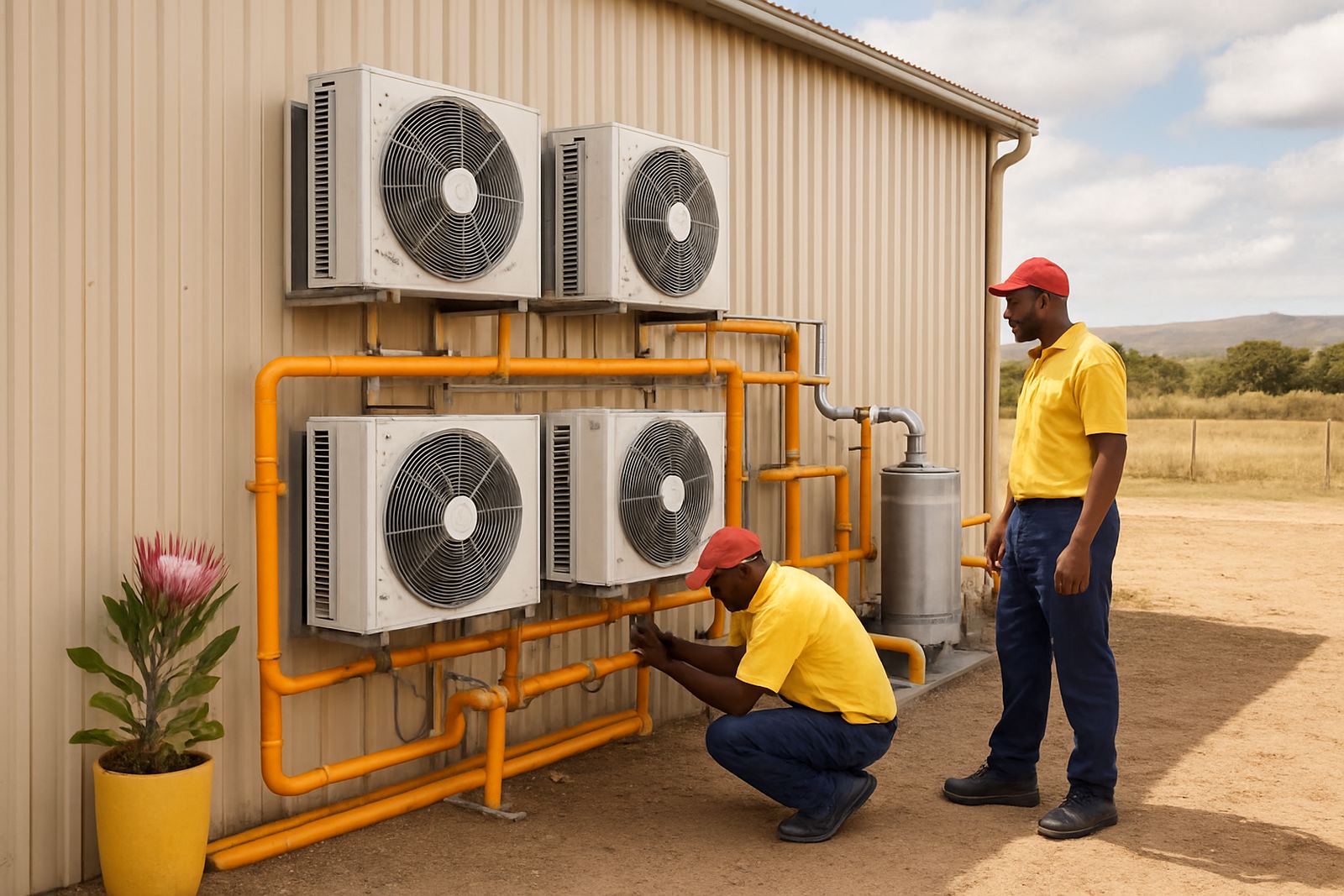
At the control side, we removed the faulty controller and fitted a replacement unit suited to the room duty. We then set the temperature range, checked the probe response, and verified the fan and compressor sequencing. The room was brought back up gradually so we could watch pull-down, short cycling, and how the room behaved once it reached set point. We also checked drain clearing in the same visit, because blocked drainage can cause ice build-up and floor issues over time.
- Panel section opened, repaired and resealed
- Control unit replaced and set for holding duty
- Temperature probe checked for correct response
- Drain line cleared and flow confirmed
- System tested through pull-down and stabilised running
Timeline, testing and handover
The work ran over 2 weeks from first inspection to final handover. In week one we completed the site assessment, isolated the fault areas, and ordered the replacement control components and insulation materials. In week two we carried out the physical repairs, fitted the new control, and returned for testing once the room had run through a full cycle. That follow-up was important, because a room used for produce storage needs proof, not assumptions.
During commissioning we logged temperature readings across several checks and compared them with the set point. The room held far more steadily after the repair, with less overshoot and fewer recovery delays after door openings. The client wanted practical feedback too, so we explained what to watch for in the first few days after peak loading starts, including door seal wear, condensation, and any unusual fan noise. The handover notes were kept plain and useful, not full of jargon.
What changed after the repair
The room went back into service ready for the harvest run, and the client was able to hold produce with better temperature consistency. That means better shelf life, less spoilage risk, and fewer emergency calls when the room is under pressure. The control replacement gave the farm a cleaner start-up after outages and a more predictable operating pattern during busy days. For a farm store, that kind of steadiness is worth more than a quick fix that only lasts a week.
The repaired insulation also helped reduce the amount of work the refrigeration plant had to do. When a room leaks cold air or pulls warm air through a failed joint, the compressor runs harder and the inside temperature drifts faster. By tightening the panel section and sorting the control fault, we reduced both the load and the risk. The client reported that the room came back into daily use without further drama, which is exactly what was needed.
What we would do again on a similar farm
We would take the same approach again on any Paarl or Winelands farm cold room with similar symptoms: inspect the envelope first, prove the control fault, then commission the room with proper checks. In this case, that sequence saved time and avoided guesswork. It also reduced the chance of replacing parts that were not the real problem, which is a common mistake on older farm stores.
For future jobs, we would recommend the same maintenance pattern before every peak season:
- Check panel joints, hinges and seals before warm weather starts
- Test controls after any outage or generator changeover
- Log temperatures during the first busy week after harvest starts
- Clear drains and clean coils before the room is loaded hard
- Book a service early rather than waiting for alarms and spoilage
That is the practical side of cold room work. Catch the small faults before they become stock losses, and the room stays easier to manage through the whole season.
Key facts
| Project type | Farm cold room panel repairs and control replacement |
|---|---|
| Town | Paarl |
| Client type | Produce holding room on a working farm |
| Timeline | 2 weeks from inspection to handover |
| Main work | Insulated panel repairs, control replacement, drain clearing, temperature checks |
| Service area | Western Cape, including Cape Town, Stellenbosch, Paarl, Malmesbury and the West Coast |