What the Malmesbury packhouse needed
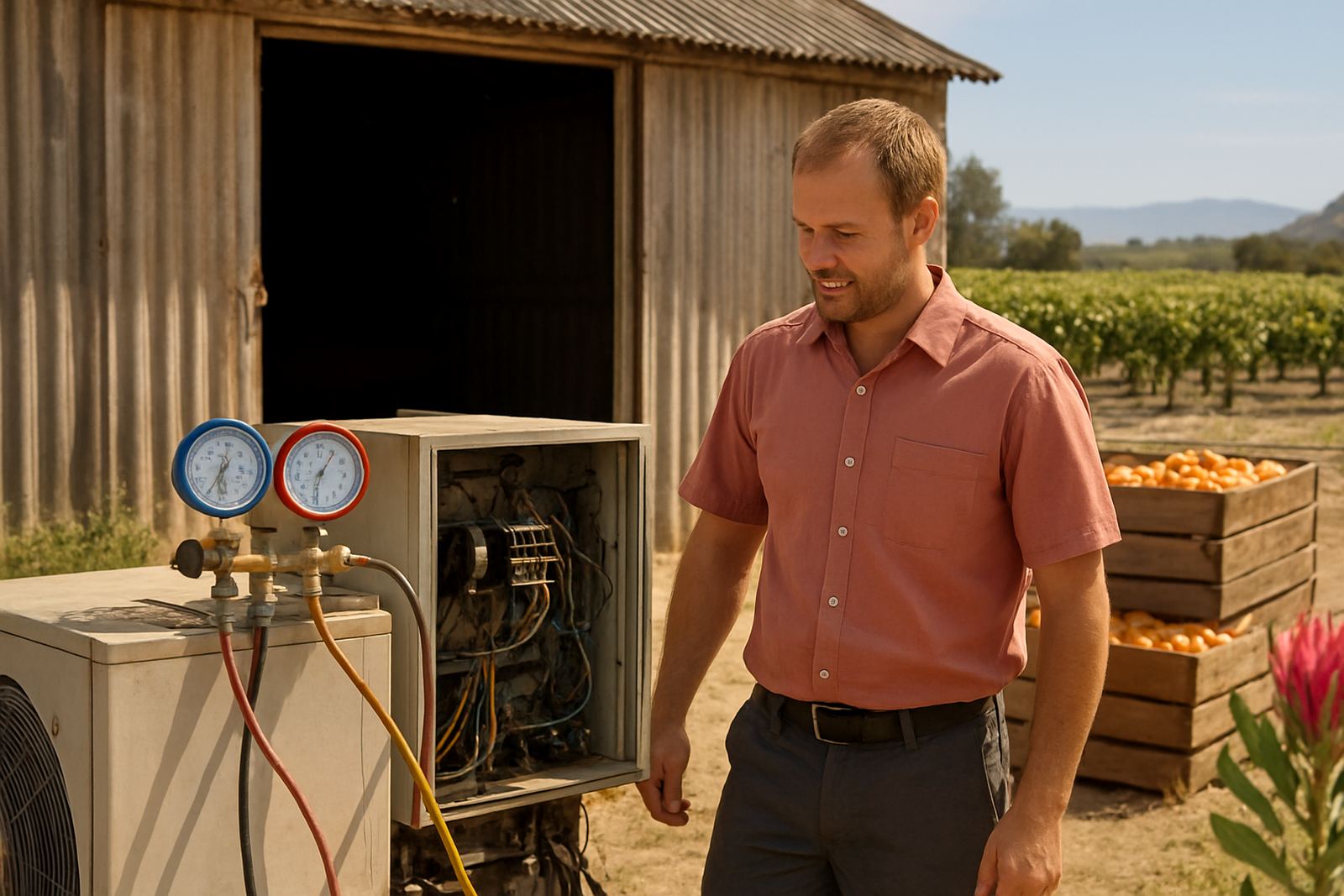
The client was a fruit and vegetable packhouse outside Malmesbury, serving local growers and dispatching chilled produce through the week. Their main issue was simple enough to see in the room itself: temperature was getting down, but not fast enough after loading, washing and sorting. Warm product and repeated door openings were stretching the system, and that was affecting the time it took to get the room back to target.
The brief was to improve pull-down time without turning the store into a bigger power user. The client wanted a practical fix, not a full rebuild. They also needed work that could be done with the room still part-active, because packhouse operations do not stop for long just because refrigeration does.
- Site: Malmesbury, Western Cape
- Client type: produce packhouse
- Problem: slow pull-down after loading
- Main aim: better airflow and stronger cooling response
Site constraints we had to work around
This was not a clean new-build room with perfect access and unlimited downtime. The equipment area was tight, the packing schedule changed through the day, and there was plenty of dust from daily operations. In the West Coast heat, that sort of site can lose efficiency quickly if airflow is poor or if a coil starts running dirty.
We also had to account for power interruptions and the client’s need to protect stock during any stop-start conditions. In practical terms that meant planning the changeover in phases, keeping the room as stable as possible and checking the installation against actual operating conditions, not just nameplate figures.
- Tight working space around the plant area
- Regular door cycling during packing hours
- Dust build-up from daily produce handling
- Load-shedding risk and restart pressure
What we supplied and changed
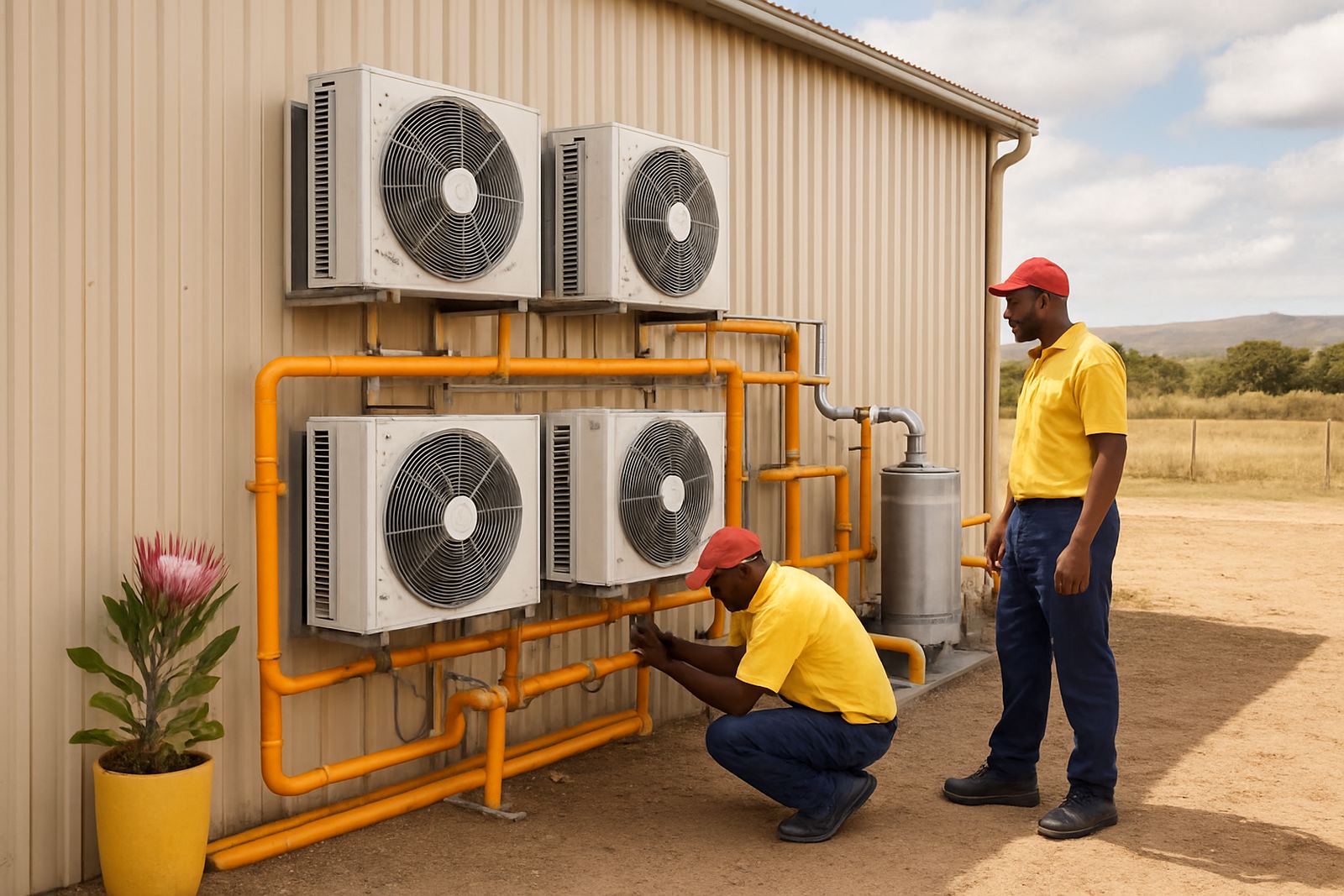
We upgraded the airflow arrangement in the produce room and replaced the condensing unit setup with a correctly matched unit for the application. The aim was to move colder air through the room properly, reduce hot spots near the door line and get the room back to temperature faster after loading.
The work included mechanical checks, refrigeration pipework adjustments, electrical connections, system evacuation, leak testing and start-up testing under real conditions. We also checked the evaporator side to make sure the new unit and airflow pattern were not fighting each other. A cooling system can only do so much if the room circulation is lazy.
- Condensing unit upgrade matched to room load
- Airflow improvement to reduce dead zones
- Pipework and service connections checked
- Evacuation, pressure testing and commissioning
- Final test run with monitored temperature pull-down
Specs and technical notes from the job
The packhouse room was used for fresh produce holding, so even a small improvement in recovery time made a real difference to stock handling. We treated the room as a working cold space, not a showroom. That means keeping the airflow steady, protecting against moisture ingress and making sure the system can cope with a warm load after repeated door openings.
The upgrade was sized to suit the actual room use and not just a theoretical figure on paper. We logged the start-up readings and checked the operating cycle across the first week so the client had something useful to compare against later.
- Room type: produce holding and dispatch cold room
- Location: Malmesbury
- Upgrade focus: airflow and condensing capacity
- Monitoring: temperature checks during pull-down and normal running
- Environment: dust, regular door use, seasonal load changes
- Consideration: reliable restart after power interruptions
How long the work took
The project ran over two weeks from first inspection to final handover. The first visit covered assessment, measurements and fault tracing. The second phase was the physical upgrade and mechanical changeover. The last part was commissioning, temperature verification and a brief follow-up to make sure the room settled into normal operation.
We kept the timing short because packhouse work cannot afford long stoppages. A good refrigeration job should fit the business rhythm, not the other way round. That is especially true in harvest periods, when every hour counts and the room needs to be ready before the next intake arrives.
- Week 1: inspection, measurements and load review
- Week 2: upgrade works and commissioning
- Follow-up: temperature verification after run-in
Results in day-to-day use
After the upgrade, the room recovered faster after loading and the client had more predictable temperature pull-down during busy periods. The airflow improvement also helped reduce uneven cooling near the door and along the product faces, which matters when produce is being staged and shifted through the room several times a day.
In plain terms, the packhouse got a cooler that could catch up quicker. That means less waiting around before stock can move, less strain on the system during busy hours and a better chance of keeping produce in a tighter temperature range. The staff noticed the difference because the room stopped behaving like it was always one step behind.
- Shorter pull-down time after loading
- More even cooling across the room
- Better handling of peak packing periods
- Improved confidence during warmer afternoons
What we would do again on a similar site
If we were back on a similar packhouse job tomorrow, we would follow the same approach: measure the room properly, check the actual loading pattern, and match the cooling hardware to how the room is used rather than how it looks on a drawing. That saves time later and avoids oversizing or underfeeding the system.
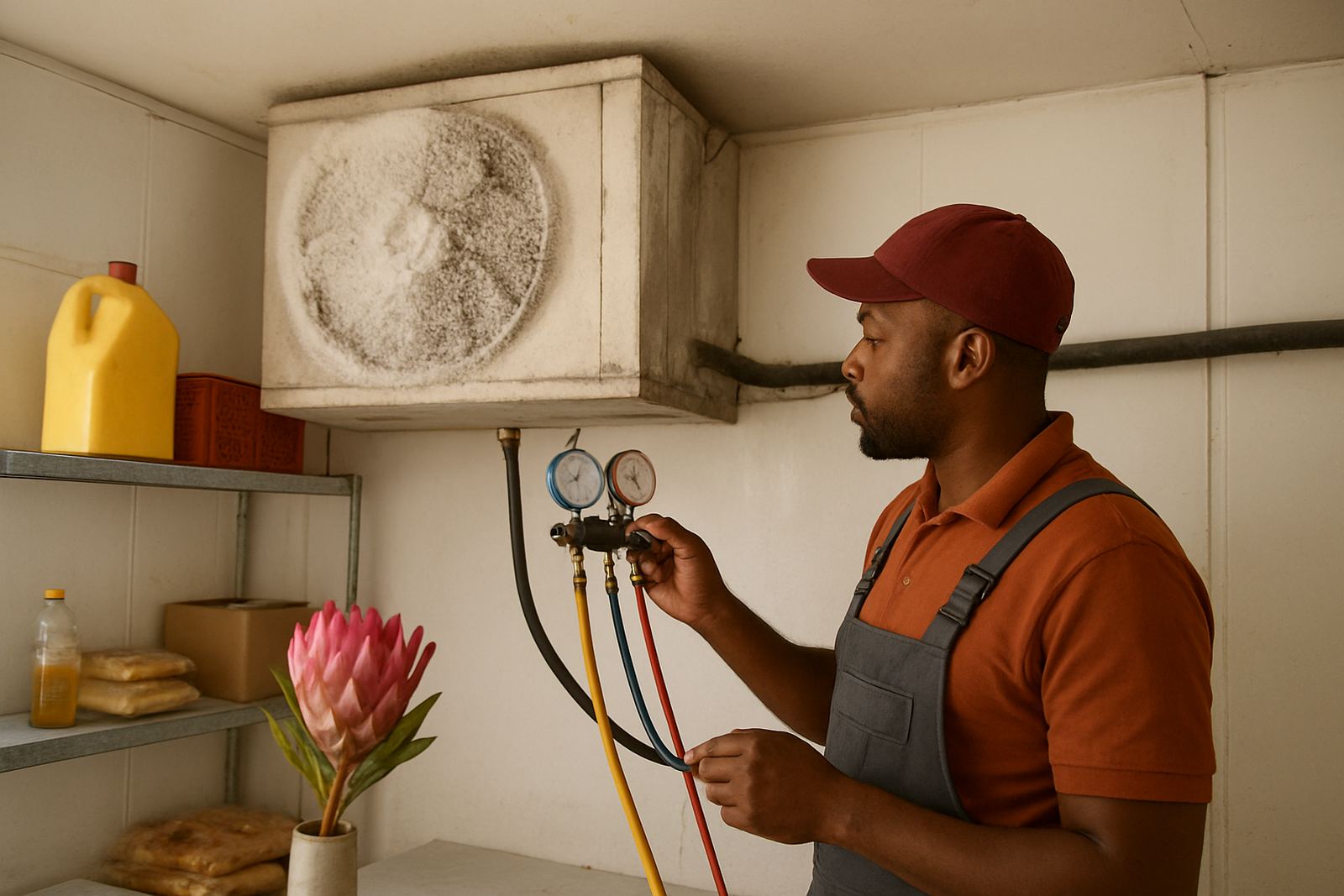
We would also keep the attention on airflow from the start. Too many cold room problems are blamed on the compressor when the real issue is circulation, blocked coil faces or poor air distribution. On a site like Malmesbury, with dust, warm product and regular door movement, that basic detail makes all the difference. A room that breathes well usually behaves better too.
- Measure real operating load before changing equipment
- Check airflow path before chasing bigger refrigeration parts
- Plan around production hours and power cuts
- Leave room for routine cleaning and future servicing
Key facts
| Project | Malmesbury packhouse cooling upgrade |
|---|---|
| Town | Malmesbury, Western Cape |
| Client type | Produce packhouse |
| Main work | Airflow improvement and condensing unit upgrade |
| Timeline | 2 weeks from inspection to handover |
| Outcome | Faster pull-down and steadier room temperatures |