What the Vredenburg fish room needed
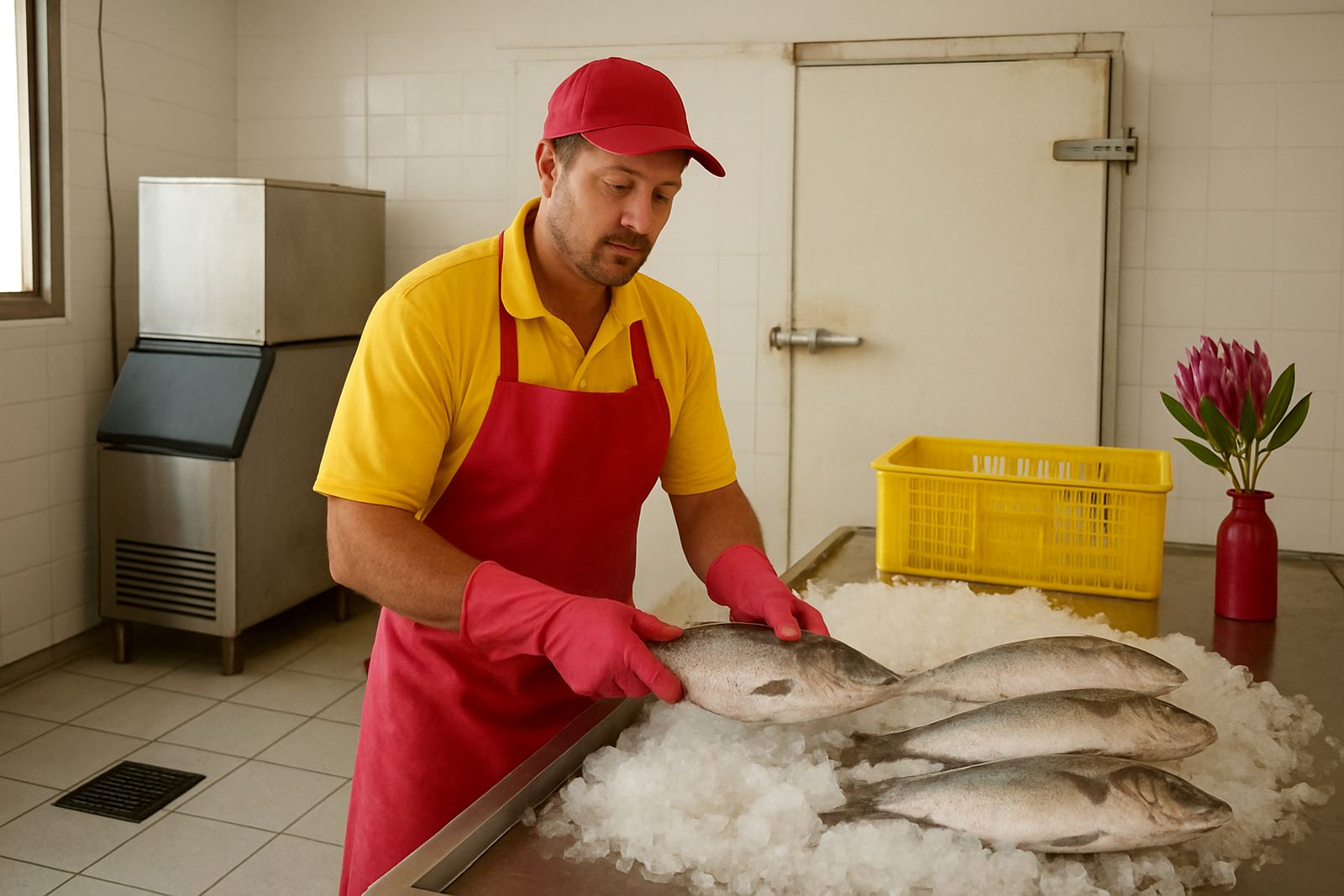
The site was a working seafood handling facility in Vredenburg, serving daily stock flow from the West Coast. The fish room had to hold product at the right temperature through loading, sorting and dispatch, while the ice machine had to come back online without giving the staff another weak point to manage. The brief was practical: reduce temperature swings, sort out the faults, and get the room and ice supply ready for regular use again.
We were brought in after the team noticed uneven cooling, longer pull-down times and poor ice production. There was also concern about hygiene and moisture build-up around the room, which is common on coastal sites where salty air and constant wash-downs make equipment work harder. The client needed something that would hold up in real daily use, not just for a one-off test.
Site conditions that shaped the work
Vredenburg brings its own set of conditions. The area can be dry and dusty, then suddenly cold and damp off the coast, and that mix affects coil performance, drain lines and electrical components. Seafood sites also run with frequent door openings, product movement and wash-down cycles, so the plant was under pressure almost all day. The cold room could not afford long downtime, because even a few hours off spec can mean wasted stock.
There were a few practical constraints on the job. Access had to be planned around operating hours, the room could not be fully taken out of service for long, and the plant had to be checked while the site stayed active. We also had to work carefully around cleaning routines and product handling. In short, the repair had to fit the operation, not the other way round.
- Location: Vredenburg, West Coast
- Site type: seafood handling and cold storage
- Main pressure points: temperature stability, ice output, drainage and hygiene
- Working environment: coastal humidity, salt exposure and frequent wash-downs
How we recommissioned the ice machine
Our first step was to inspect the ice machine from the water feed through to the production cycle. We checked for blocked strainers, scaling, poor water flow and electrical faults, then tested the controls and operating sequence. Once the unit was safe to work on, we cleaned the internal surfaces, cleared the build-up that was affecting output, and reset the machine for proper recommissioning.
We also checked the surrounding refrigeration load, because an ice plant rarely fails on its own. If the cold room is cycling badly, or if the airflow is poor, the whole site feels it. Where needed, we adjusted the setup and confirmed that the unit was starting and stopping correctly. The idea was to return a steady production cycle, not just a short burst of ice that drops off after an hour. That sort of thing causes more grief later on.
- Electrical and control checks before restart
- Water flow and feed inspection
- Internal cleaning and scale removal
- Operational testing under site load
Cold room service and fault finding
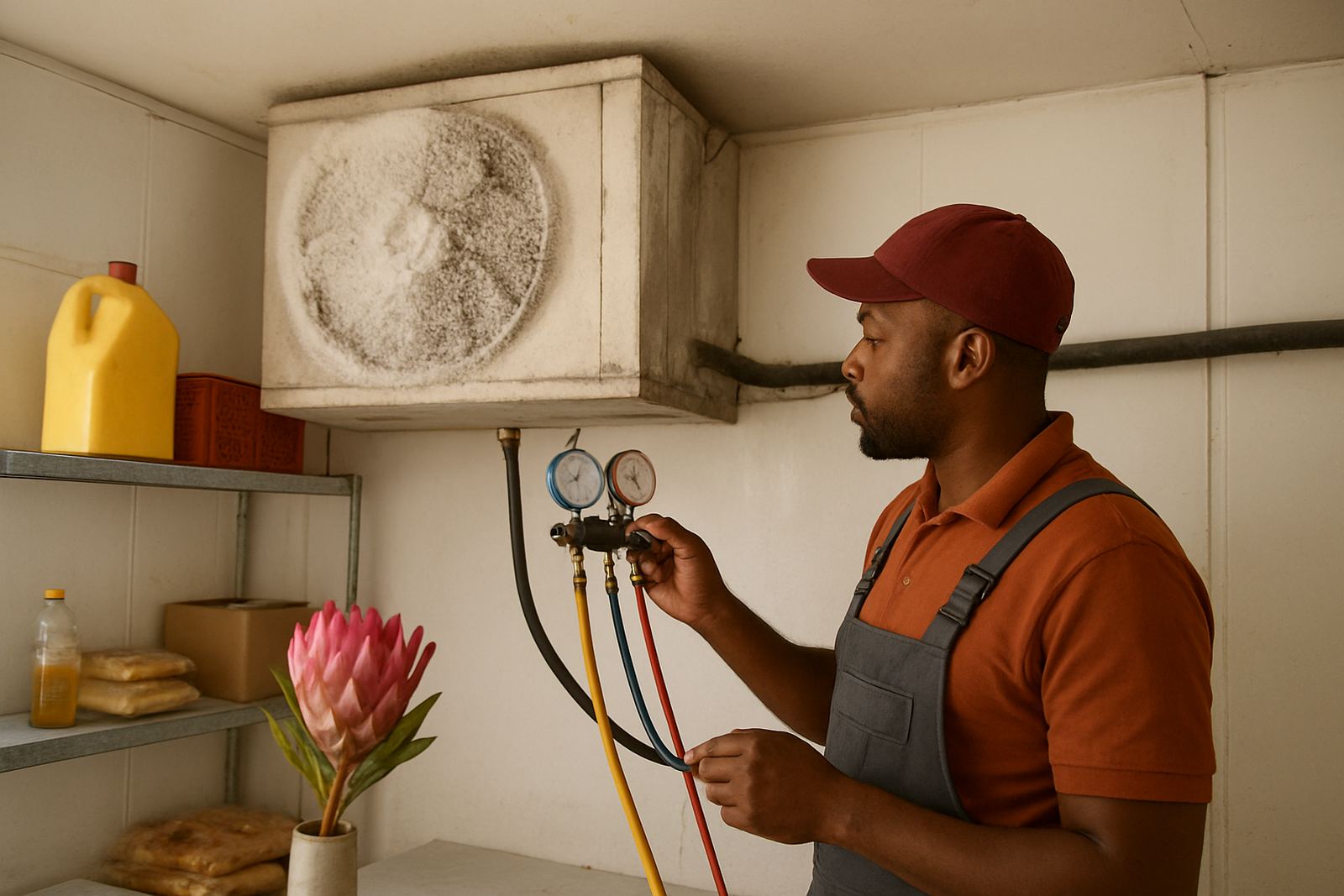
The cold room side needed a full service. We cleaned the coils, checked the drain clearing points, tested the thermostat behaviour and inspected the door seals, hinges and closing pressure. A fish room has very little tolerance for poor sealing or dirty coils, so even small defects can push power use higher and make temperatures drift. We also checked for refrigerant leaks and listened for signs of short cycling or compressor strain.
Leak detection was part of the job because a slow leak can sit unnoticed for weeks on a site that is busy every day. We tested the system, traced likely problem points and verified that the pressure readings were in line with the operating conditions. Where the room showed signs of moisture pooling, we cleared the drains and checked that the water was moving away properly. That matters more than many people think, because standing water becomes a hygiene issue very fast.
We also handled the seasonal start-up checks needed for a plant that must cope with changing demand across the week. The result was a room that held temperature more evenly and a service schedule the site could actually keep up with.
Timeline and the work carried out
The project ran over two weeks from the first inspection to final sign-off. The first week was spent diagnosing faults, cleaning the main components and recommissioning the ice machine. The second week covered follow-up checks, temperature logging, and making sure the cold room stayed stable during normal site use. That staged approach helped because the team could keep operating while we worked through the important items in order.
Across the job we supplied the hands-on labour, testing, cleaning and recommissioning support. We also advised the client on ongoing maintenance intervals so the room would not slip back into the same pattern. On a site like this, it is better to deal with small issues early than wait for a full shutdown and a bigger invoice later.
- Week 1: inspection, diagnostics, cleaning and ice machine recommissioning
- Week 2: cold room service, leak checks and temperature logging
- Final stage: site verification under operating conditions
Results and what we would repeat
By the end of the job, the site had a cold room that pulled down faster and stayed steadier through the day, plus an ice machine that was back to a useful production rhythm. The staff had clearer readings to work with, less nuisance moisture around the room, and fewer warning signs to chase before the next shift. The site could focus on product handling rather than wondering whether the refrigeration would hold.
If we were to do the job again, we would still start with a full condition check, because that showed the real causes and not just the symptoms. We would also keep the service in two phases, with recommissioning first and follow-up testing after the plant had run under normal load. That approach suits busy fish rooms, especially where salt air, wash-downs and temperature control all pull in different directions.
For similar work in Vredenburg, Cape Town, Stellenbosch, Paarl, Malmesbury or along the West Coast, the key is to keep refrigeration practical and measurable. The room must hold temperature, the ice machine must produce consistently, and the drainage and cleaning must stay easy to manage. That is the standard we work to every time.
Key facts
| Project type | Cold room service and ice machine recommissioning |
|---|---|
| Client type | Seafood handling and cold storage site |
| Town | Vredenburg, Western Cape |
| Duration | 2 weeks |
| Scope | Leak detection, coil cleaning, drain clearing, temperature logging, start-up checks |
| Outcome | More stable temperatures and restored ice production |
| Base | Montague Gardens, Cape Town |