Why the farm called us back in
The client runs a fruit packing operation outside Citrusdal and had kept the chiller idle through the cooler months. When the packing season started up again, the system needed more than a flick of the switch. The farm team wanted a proper check before loading produce, because a weak restart can lead to slow pull-down times, higher power use and uneven storage temperatures. On fruit, that can mean softening, condensation and short shelf life. Not worth the risk.
The brief was clear. Recommission the chiller, check for leaks, confirm the controls, clean the coils and drains, and make sure the plant could hold temperature during busy picking days. The site also asked for advice on what to watch during the first two weeks back in service, since this is when hidden faults usually show up. The chiller supports fruit storage for grading and dispatch so any downtime affects the packing schedule straight away.
- Client type: fruit farm and packing operation
- Location: Citrusdal, Western Cape
- Work type: seasonal recommissioning after shutdown
- Main risk: unstable temperature after restart
What made this job tricky
Off-season shutdowns are useful for saving energy and protecting equipment but they also create their own issues. Oil settles, moisture can creep into fittings, belts and isolators age, and dust builds up on coils faster than many farms expect. Citrusdal brings another challenge: hot afternoons, fine dust from farm roads and long operating hours once harvesting starts. That mix can put a lot of strain on a chiller that has been sitting still for several weeks.
The site had space constraints too. The chiller room is compact, with limited access around the evaporator and the condensing section, so the team had to work in a set sequence. We also had to keep the visit practical for the farm crew because the packing line was due to begin again within days. There was no room for trial and error. We planned the work so the unit could be opened, tested and brought back into service without holding up other farm tasks.
- Limited access around the plant room
- Dust load on coils and filters after shutdown
- Need to restart before packing began
- Temperature stability had to be confirmed quickly
Our recommissioning process
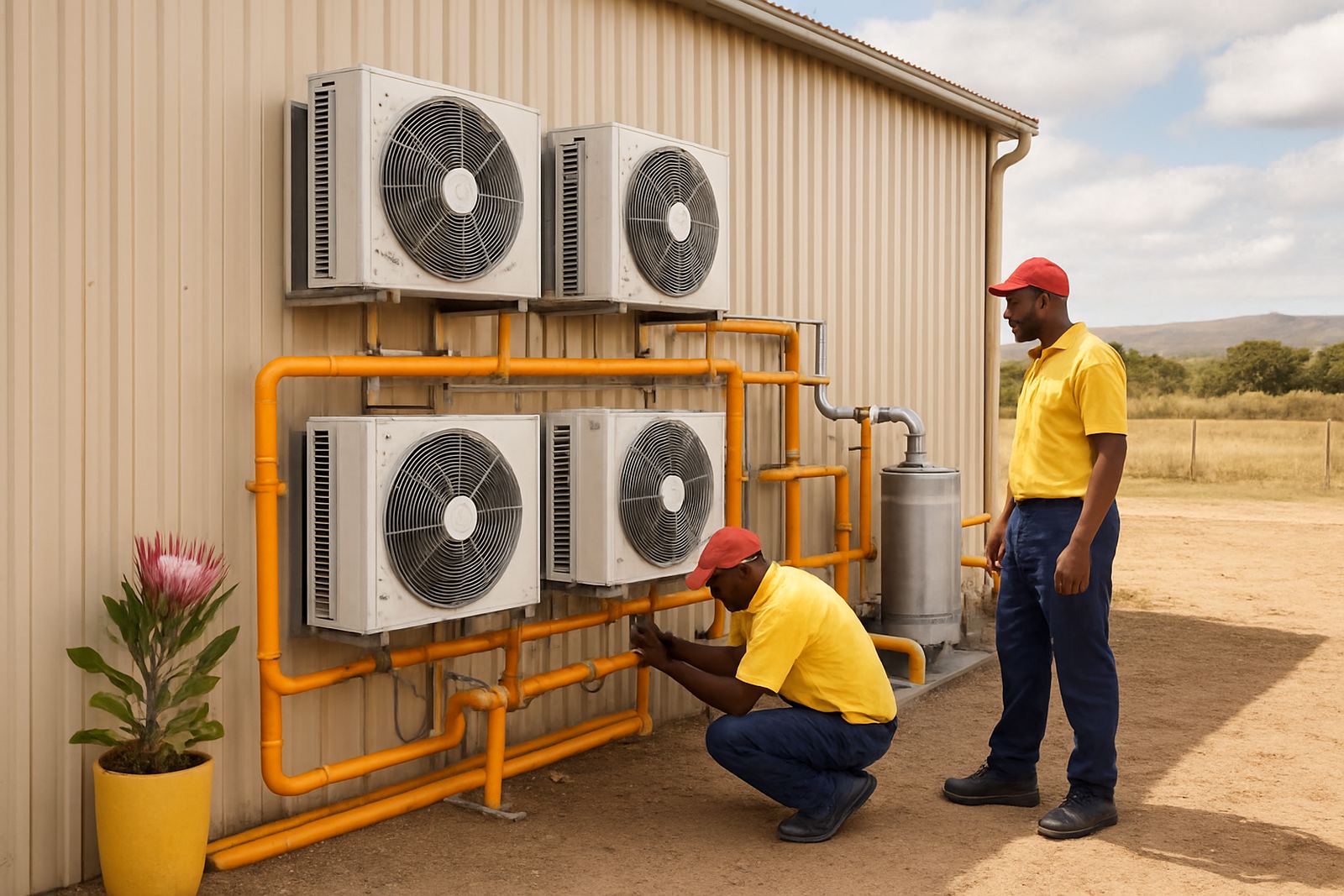
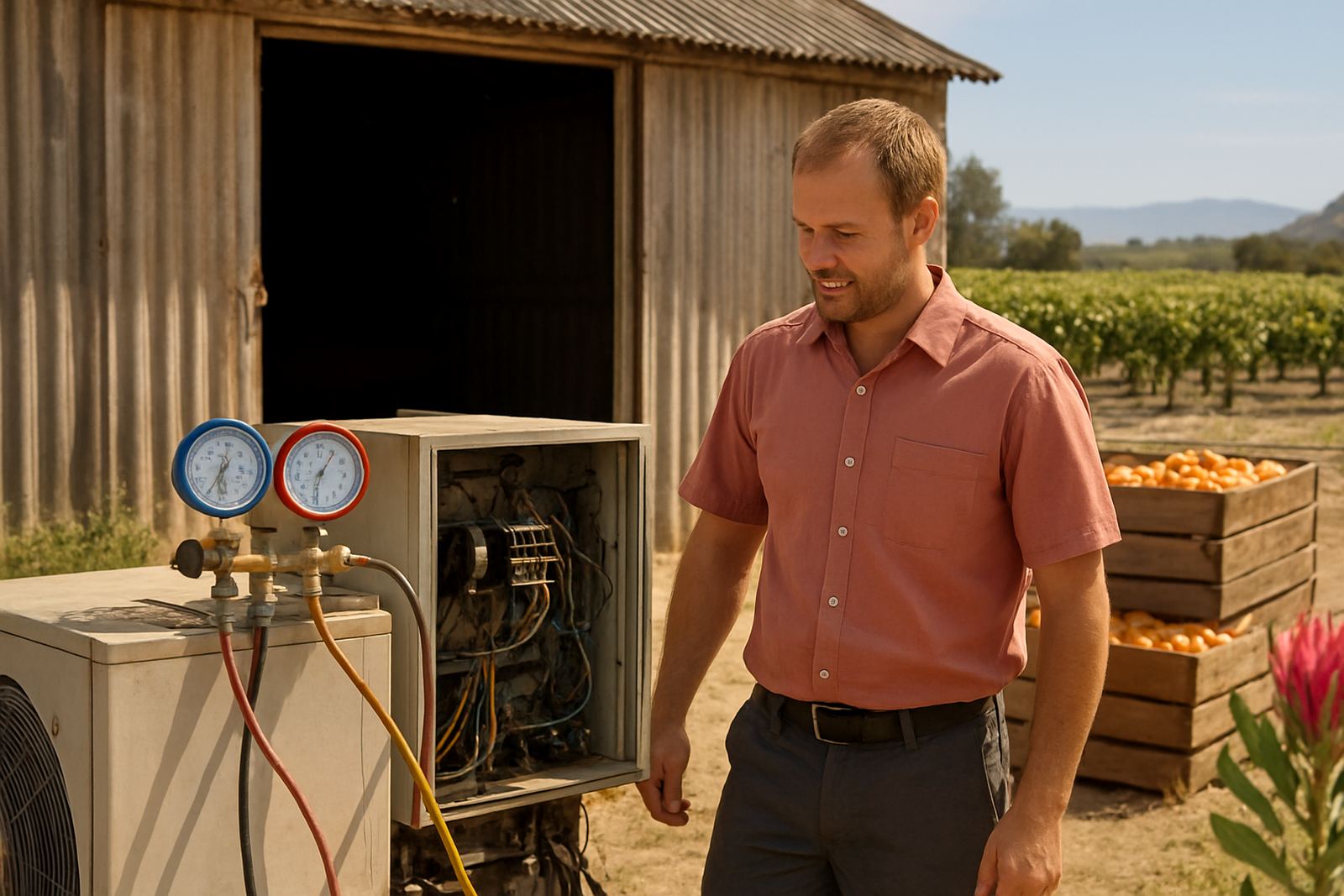
We started with a full visual inspection and a measured restart sequence. First we checked the power supply, contactors, isolators and control settings, then we inspected pipework, insulation and drain points. After that we cleaned the evaporator and condenser coils, cleared the drain line and tested the fan motors and sensors. The refrigerant circuit was checked for signs of leakage and pressure drift before any load was introduced. A simple pressure test can save a farm from a much larger fault later on.
Once the basics were confirmed, we ran the chiller under supervision and monitored the pull-down rate, suction and discharge readings, and the room temperature response. We also checked the thermostat and the temperature logging function so the farm could keep a record during the first production days. Where settings needed adjustment, we made small corrections rather than over-complicating the plant. The goal was steady running, not chasing numbers on a screen.
- Electrical and control checks before start-up
- Coil cleaning and drain clearing
- Leak detection on the refrigerant side
- Live run test with temperature logging
Project timeline and site coordination
The work was completed over one week on site, with the recommissioning itself taking two visits. The first visit covered inspection, cleaning and fault finding. The second visit covered the live restart, monitoring and final handover. That approach kept the downtime short while still allowing us to spot issues that only appear once the plant is under load. For a farm, two shorter visits are often better than one long day because the team can keep moving around the packing schedule.
Charlene coordinated the booking with the farm office and Bianca kept the job notes moving between site and office. Morne oversaw the technical sign-off while Anele and Lutho handled the refrigeration side of the recommissioning. Ruan checked the air movement and ancillary components around the room where needed. The handover included a short maintenance note for the farm manager with reminders for cleaning intervals, drain checks and what to watch if load-shedding affects the restart sequence. It is the little things that usually trip people up.
- Week 1: inspection, cleaning and system checks
- Week 1: live restart and operating readings
- Handover: written notes and follow-up guidance
Results for the Citrusdal packhouse
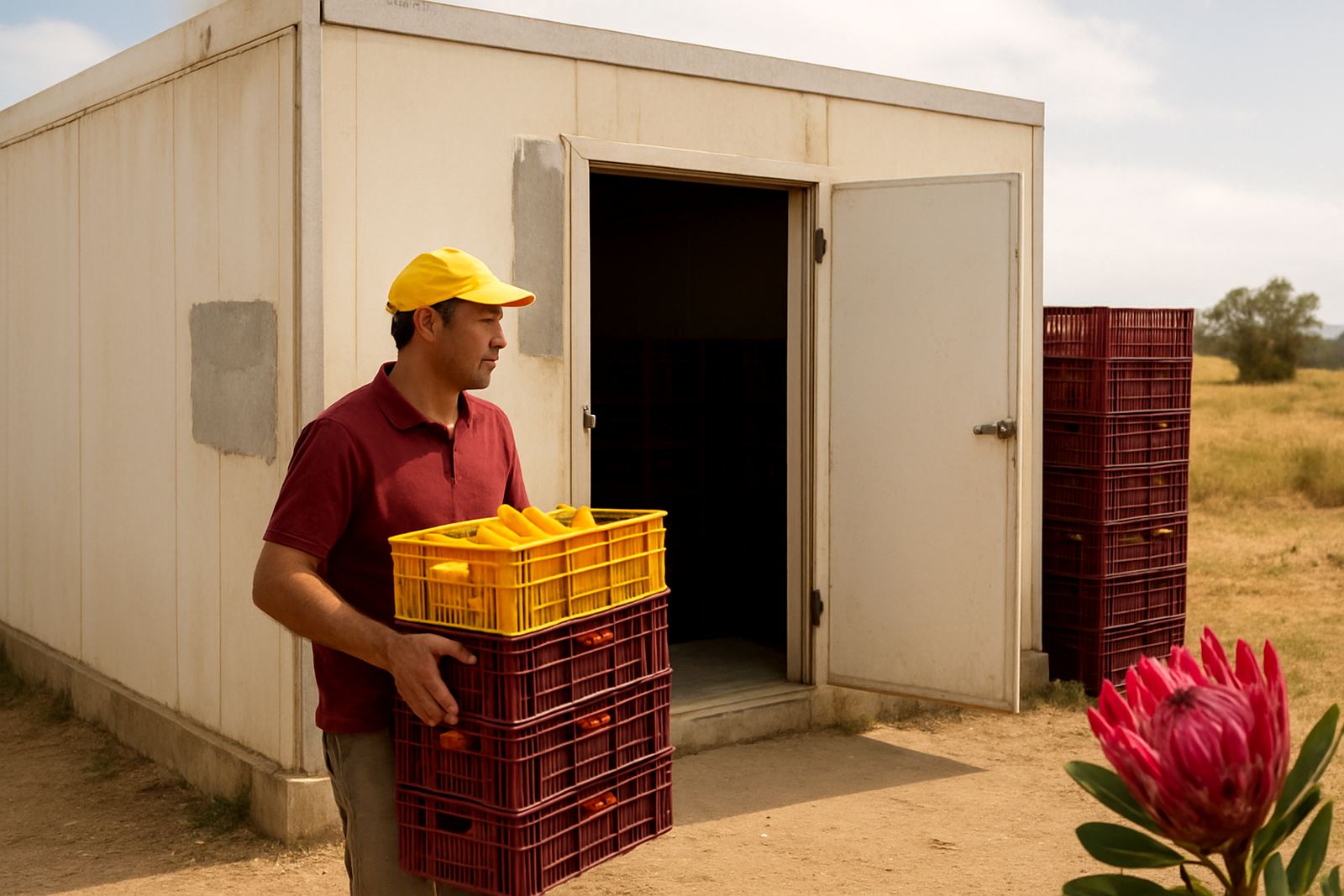
By the end of the recommissioning, the chiller was pulling down properly and holding a stable storage range for fruit awaiting grading and dispatch. The farm reported smoother start-up mornings and less manual adjustment from the team. That matters on a working farm where staff need to focus on produce handling, not babysitting a temperature graph. The cleaned coils also improved airflow and reduced strain on the system, which should help with running costs through the season.
The most useful result was peace of mind. The client now has a cleaner, checked and logged system ready for the busy months. No one wants to discover a gas leak, blocked drain or faulty sensor after the first pallet of fruit has already gone in. We left the site with temperature records in place, the controls confirmed, and a maintenance plan for follow-up servicing during the season.
- Stable operating temperature after restart
- Better airflow through cleaned coils
- Drain line cleared and checked
- Temperature logs available for monitoring
What we would do again on a similar farm
If we were called back to a similar Citrusdal job tomorrow, we would follow the same method. Start with the shutdown history, inspect before power-up, clean the heat exchange surfaces, confirm sensor readings and only then put the plant under full load. On fruit farms, that sequence prevents a lot of avoidable breakdowns. We would also recommend a planned maintenance visit before each new season, especially on sites exposed to dust, heat and long operating hours. A quick visit before the rush is cheaper than an emergency call-out in the middle of packing.
For farms across the Western Cape, from Citrusdal through the Winelands and West Coast, we handle seasonal start-up, shutdown preservation, cold room servicing and emergency repairs. If your chiller, cold room or aircon system needs attention before the next busy stretch, we can help from our Montague Gardens base and get a technician out to site. The best time to sort a refrigeration problem is before the fruit starts moving.
Key facts
| Project | Citrusdal Farm Chiller Recommissioning |
|---|---|
| Client type | Fruit farm and packing operation |
| Location | Citrusdal, Western Cape |
| Scope | Seasonal start-up after off-season shutdown |
| Timeline | 1 week, with 2 site visits |
| Key work | Leak detection, coil cleaning, drain clearing, temperature logging, live run testing |