What the Malmesbury flower room needed
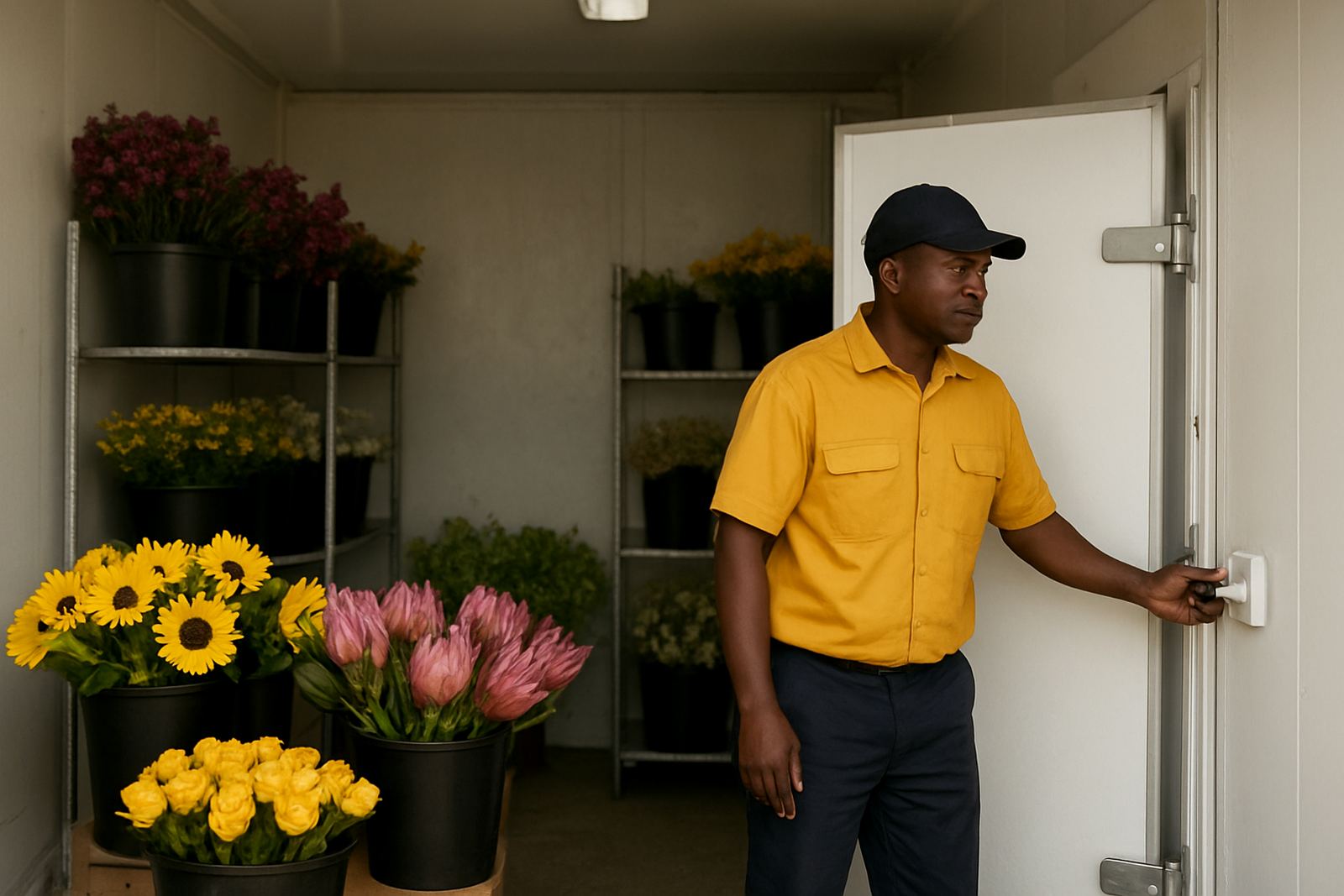
The site was a flower pack-and-hold room serving a local grower and distributor outside Malmesbury in the West Coast district. Product was being stored for short periods before collection, so the room had to stay dry, steady and easy to load without temperature swings every time the door was opened.
The client’s main concern was condensation on internal surfaces and a soft seal around the door that was letting damp air in. That meant more work for the refrigeration set-up, slower pull-down after door openings and a higher risk of flower heads going soft before dispatch. In a cut-flower room, even a few percent of extra humidity can show up quickly in the product.
- Town: Malmesbury
- Use: cut-flower cold storage
- Issue: high humidity and worn door sealing
- Risk: condensation, temperature drift and shortened shelf life
The brief and site constraints
The brief was simple on paper but had a few practical limits. The room had to stay in use for normal packing and loading, so we could not take it out of service for long. The client also needed the work done without disturbing stock, and with clear feedback on what had changed once the room was running again.
Malmesbury can bring warm afternoons and cool evenings, and that swing often makes a weak cold room show its faults. The site also had the usual Western Cape pressures: load-shedding planning, doors left open during busy periods, and dust finding its way into seals and drains. We had to correct the leakage points first, then check whether the system could maintain stable conditions once the room was closed up properly.
- Room had to remain available for day-to-day use
- No long shutdowns, only short access windows
- Work had to suit a produce room with frequent door cycles
- Basic logging was needed to confirm the correction
What we supplied and adjusted
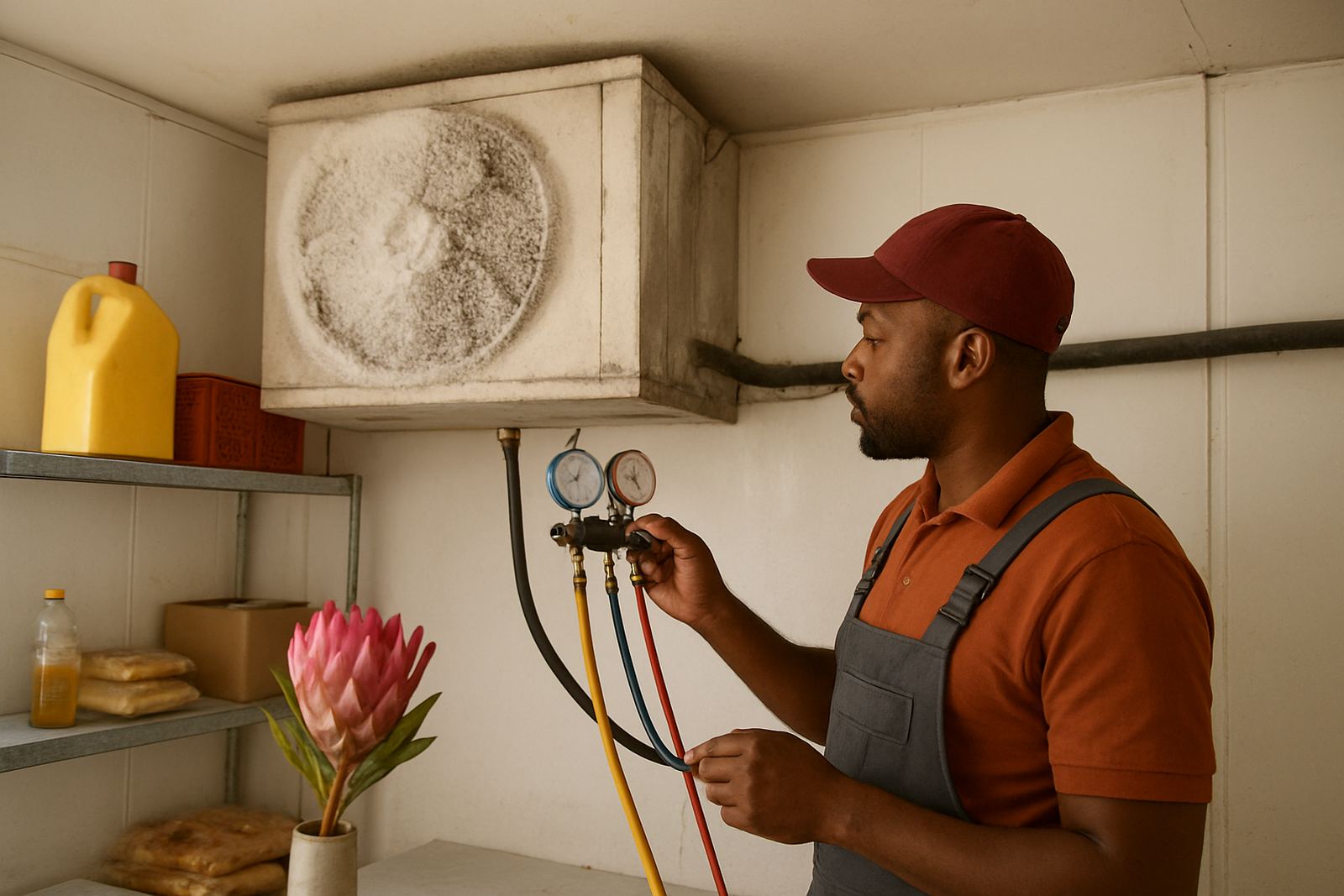
Our team inspected the room, checked the door perimeter, looked at the closing pressure and tested the condition of the seals. We also reviewed the coil face, drain line and air movement inside the room because humidity problems often come from more than one small fault rather than a single big one.
We corrected the door sealing, cleaned and cleared the drain path, and carried out a full servicing pass on the evaporator area. Where needed, we adjusted closing alignment so the door shut squarely and did not leave a gap at the latch side. We then checked the room against a short logging period to make sure the readings were holding after the repair. The system was left with the settings noted, so the client could keep an eye on it during normal use.
- Door seal correction and alignment check
- Drain clearing and moisture removal
- Evaporator coil cleaning
- Temperature logging after the work
- Advice on door discipline during busy pack periods
How the work ran over two weeks
The project was completed over two weeks. In week one we did the inspection, confirmed the problem points and carried out the first round of repairs and cleaning. That gave us the chance to see how the room behaved once the obvious air leaks were reduced. We then returned in week two to recheck the seals, confirm the drain stayed open, and compare the room’s temperature pull-down and humidity behaviour after regular use.
That second visit mattered because cool rooms for flowers can look fine immediately after a repair, then drift when staff begin opening the door again. We wanted to know whether the corrections held up under normal conditions, not only on the first day. The follow-up also gave the client a clean handover on what to watch for in the next busy picking cycle.
What changed after the correction
Once the door held properly, the room recovered faster after opening and showed less visible condensation. The client reported that the floor stayed drier and the product area felt more stable during the day. That is important in flower storage because moisture at the wrong point can affect presentation, handling and overall freshness.
The biggest gain was not a single dramatic number but the general steadiness of the room. With fewer warm air leaks, the refrigeration plant had less to fight against and the storage conditions became easier to manage. In practical terms, the room was calmer and the stock spent less time in a damp environment. That is exactly what a short-term flower room needs when dispatch times move around.
- Reduced condensation inside the room
- Better door closure and less air ingress
- Faster recovery after loading
- Improved holding conditions for cut flowers
What we would do again for similar rooms
If we were back at a similar cut-flower room in Malmesbury, Paarl or Stellenbosch, we would follow the same sequence: check the door first, then confirm drain condition, then verify the coil and logging. That order saves time because humidity complaints are often traced to a worn seal, poor latch pressure or a blocked drain long before the refrigeration unit itself needs major work.
For growers, packers and farm stores in the Western Cape, we would also recommend a scheduled maintenance contract with seasonal checks before the hotter months and again before winter loading changes. Add a quick door seal inspection after peak use, and keep a simple temperature log so small drifts are caught early. It is cheaper to catch a seal that has slipped than to lose product because the room was quietly working harder than it should.
- Seasonal checks before summer and winter
- Door seal inspection after heavy use
- Drain and coil cleaning on a set schedule
- Temperature logging for early fault detection
Key facts
| Project type | Cut-flower cool room correction |
|---|---|
| Town | Malmesbury |
| Service date | Completed over 2 weeks |
| Main issue | Humidity rise and weak door seal |
| Work carried out | Seal correction, drain clearing, coil cleaning, temperature logging |
| Best fit use | Flower storage for shops and farms |