The first 15 minutes decide what you can save
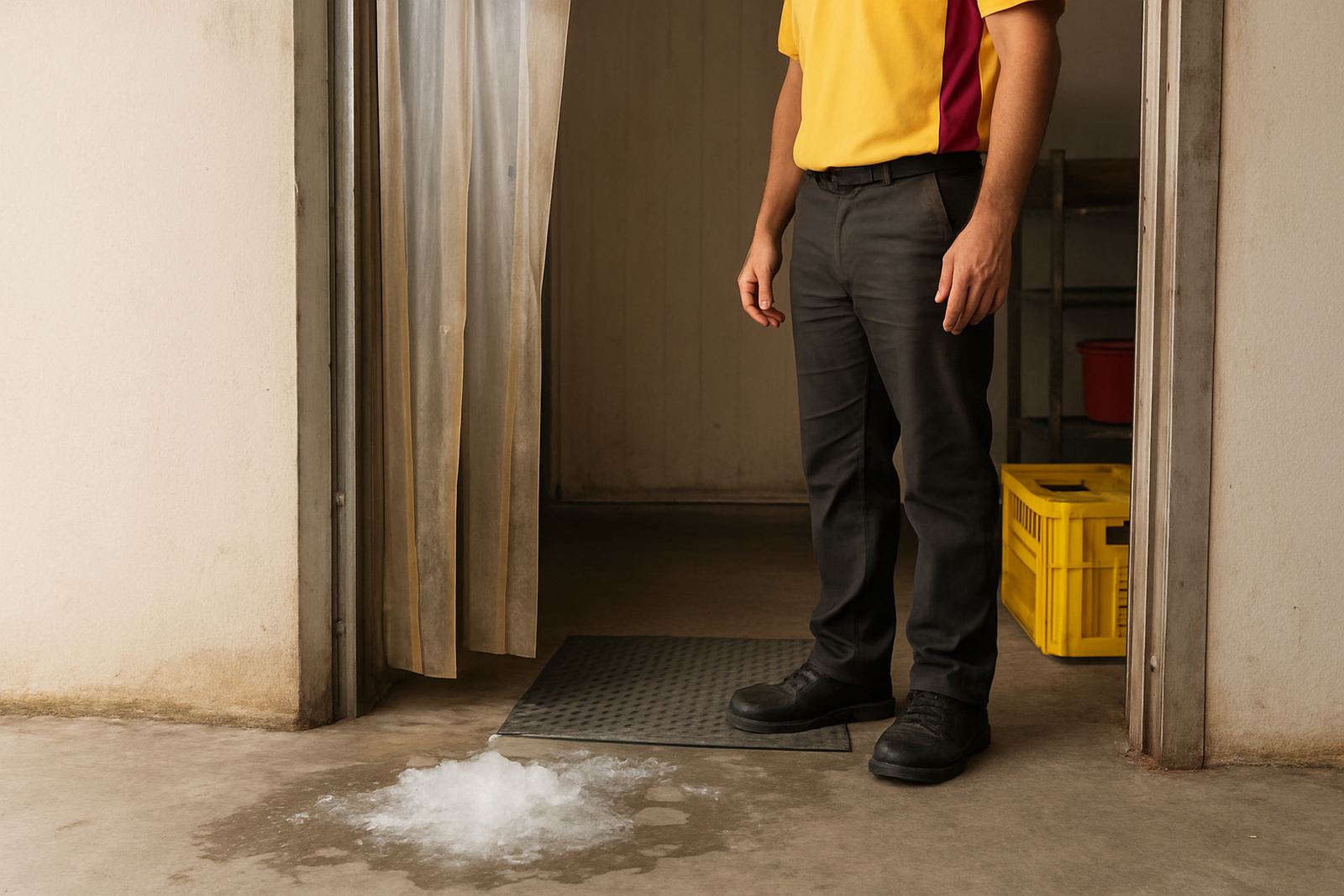
When temperatures start climbing, do not wait to see if the unit comes back on its own. Open and close doors as little as possible, check the temperature display, and move quickly to protect the most sensitive stock first. Dairy, meat, seafood, cut produce and prepared food warm up fast, especially in summer or during load-shedding.
If the room is already above safe holding temperature, treat the breakdown as a stock control issue as much as a repair issue. One person should coordinate the response so staff are not opening doors, moving product and phoning suppliers all at once. That confusion costs time and costs stock.
- Keep the room closed unless stock must be removed.
- Record the current temperature and time straight away.
- Move the highest-risk items first.
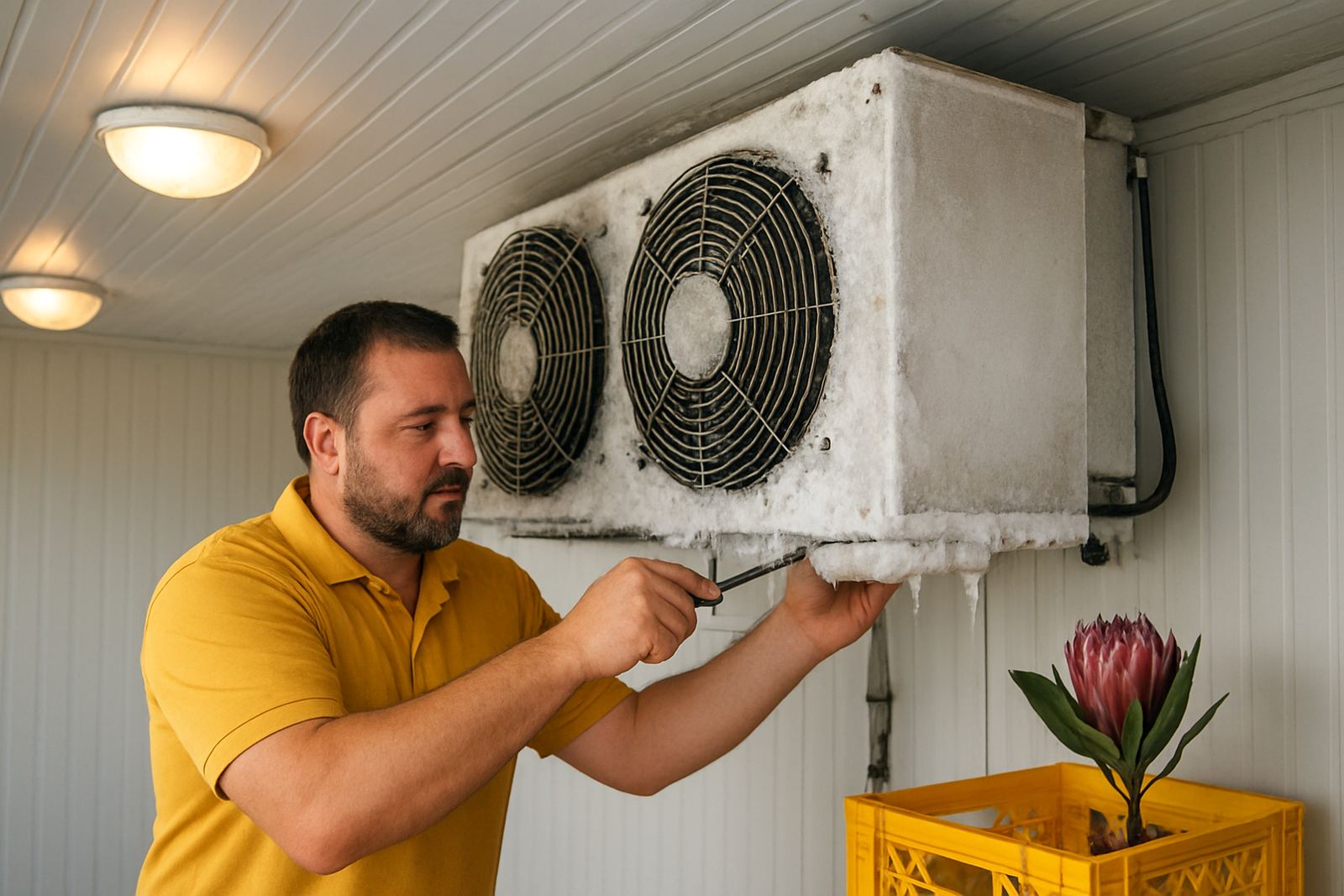
- Check whether the fault is power, thermostat, fan, drainage or compressor related.
Separate stock by risk, not by shelf position
The items nearest the door are not always the ones most likely to spoil first. Products with a short shelf life or weak temperature tolerance need priority. In a shop in Stellenbosch or Paarl, that may mean dairy and deli lines. On a farm near Malmesbury, it may mean freshly packed fruit, cut flowers or chilled nursery stock.
Use clean crates, insulated bins or chilled backup storage if you have it. If you must move stock into another room or another unit, keep food groups separated and marked. Mixing warm cartons with colder product can raise the whole batch temperature quicker than expected, and once cross-contamination starts, the losses go up fast.
- Keep raw and ready-to-eat products apart.
- Label crates with time moved and original room temperature.
- Stack with space for air flow, not tightly packed.
- Do not return uncertain stock to sale after it has warmed.
Use temperature logging as proof, not guesswork
Good records help you decide what stays, what goes and what can be claimed or written off. Temperature logging is also useful when a client or inspector asks what happened. In the Western Cape, many businesses run on tight margins, so a clear record can save arguments later and helps show whether the failure was brief or prolonged.
Write down the time the fault was noticed, the room temperature, what stock was moved and when the technician arrived. If you have a manual log or digital logger, keep it running during the breakdown and after restart. That record is practical, not fancy, and it can show whether the room recovered properly or kept drifting up. If the product had to be discarded, the log shows why.
- Log the room temperature every 15 to 30 minutes during an outage.
- Note any load-shedding events or power trips.
- Keep photos of display readings and affected stock.
- Save invoices for emergency call-out repairs and disposal.
Why coastal humidity and load-shedding make breakdowns worse
On the West Coast and around Cape Town, warm air and coastal humidity put extra strain on refrigeration and aircon systems. Doors sweat, drains block, coils pick up dirt and a small fault becomes a bigger one quicker than expected. During load-shedding, a system can restart under poor voltage or with overloaded fans, then fail again an hour later.
That is why planned maintenance matters before summer hits. Coil cleaning, drain clearing and seasonal start-up checks reduce nuisance failures, while shutdown preservation helps if a room will sit unused for a while. A system that looked fine in winter can struggle badly once humidity, dust and longer run times arrive. You only need one bad weekend to lose a lot of stock.
- Clean coils and clear drains before peak heat.
- Check door seals and fan operation monthly.
- Inspect backup power and restart procedures.
- Service units before the holiday rush or harvest peaks.
A local example from a cold room in the Winelands
A small retailer outside Stellenbosch had a cold room fail late on a Friday after a power interruption. Staff noticed the room felt warm but kept trading for nearly an hour before the stock was checked properly. By then, the dairy and sliced produce had risen above safe holding temperature, while other items were still usable. The business had to sort the stock in a rush and the write-off was higher than it should have been.
The useful lesson was simple: quick response, clear logging and one person in charge would have reduced the loss. A technician found a fan motor fault made worse by dirt on the coil and weak restart conditions after the outage. The room was repaired, the drain cleaned and the site put onto a proper maintenance schedule. The next breakdown risk was lower because the cause had been dealt with, not just the symptom.
What to do before the technician arrives
Once the call is logged, there are a few practical steps that help the repair go faster and protect what is left. Keep the area clear, give access to the machine room and tell staff not to reset breakers repeatedly. If the unit is cycling on and off, leave it alone until the fault is checked. Repeated resets can make a simple issue harder to diagnose.
If you have to move stock to another site in Cape Town, Montague Gardens, Vredenburg or the Winelands, make sure transport is ready before the stock starts warming. Keep the route short, the vehicle cool and the handling calm. The aim is not perfect comfort, it is to keep temperature loss under control until the repair is done.
- Clear access to indoor and outdoor equipment.
- Keep the fault area safe and dry.
- Tell staff not to tamper with controls or switches.
- Prepare backup space for product that can still be saved.