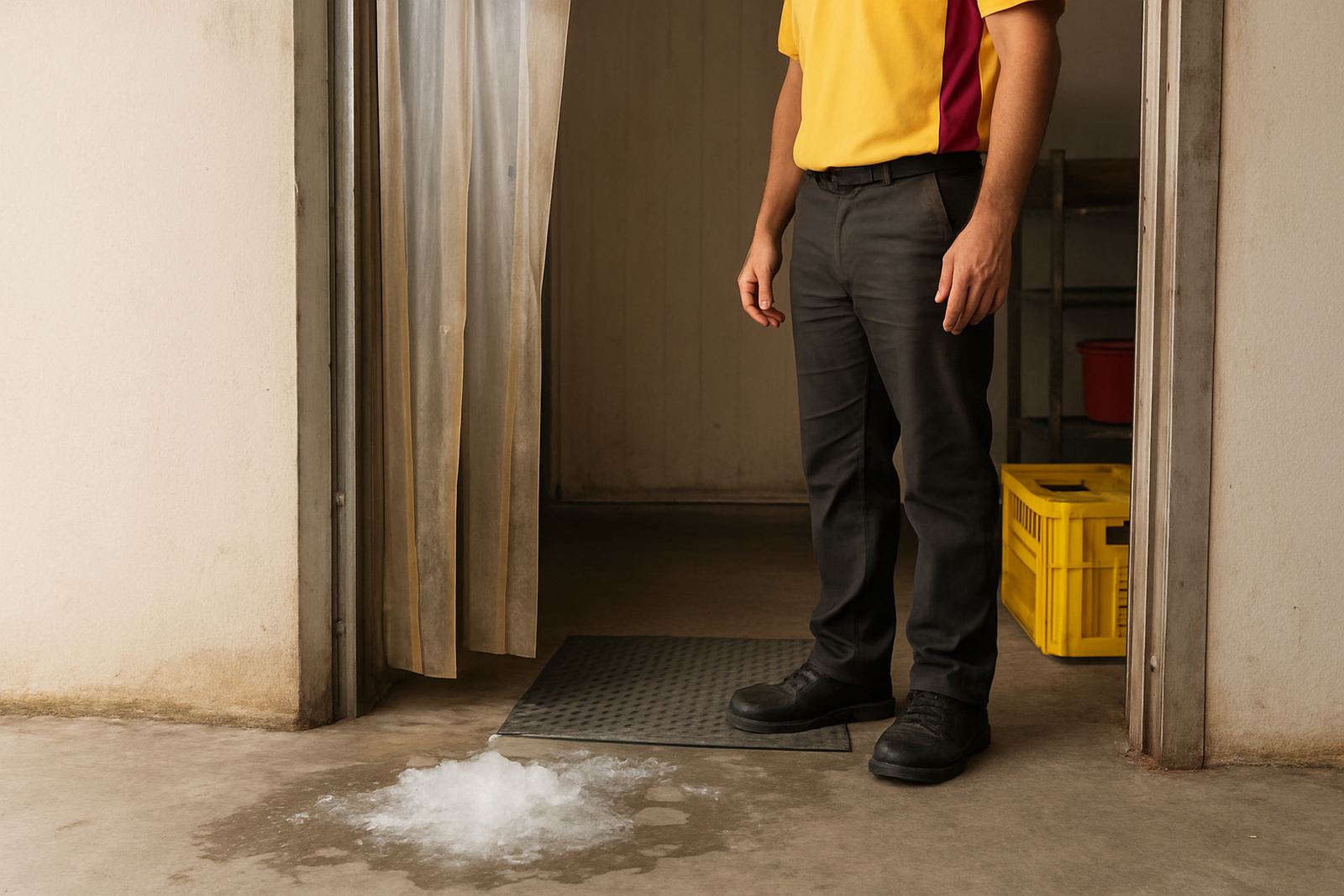
Where the water starts before it turns to ice
Most freezer room floors do not go slippery by themselves. Water gets in, stays long enough to freeze, and then foot traffic or trolley movement spreads it around. In shops, packhouses and farm storage rooms, the source is often one of four things: a door that is letting warm air in, a drain that is backing up, a cleaning routine that leaves too much water behind, or a system that is not pulling humidity down properly.
On the coast, especially around Cape Town and the West Coast, moist air finds any opening. In inland areas like Paarl and Stellenbosch, the issue often shows up after busy loading periods when doors stay open longer than they should. The room may still be cold enough, but the floor never gets a chance to dry out. That is when a thin film of ice forms, and it can be hard to spot until someone slips.
The usual suspects in a freezer room
If the floor is wet or glazed over often, start with the basics. The problem is usually not one single fault, it is a few small things adding up. A worn door seal, a slow-closing hinge, poor strip curtain coverage, or a door that is being held open during restocking can all bring in warm damp air. Once that air hits the cold floor, the moisture drops out and freezes.
- Door seals that are split, dirty or not closing evenly
- Forklift or trolley traffic leaving the door open too long
- Drain lines that are blocked, frozen or poorly pitched
- Defrost cycles that are not clearing ice properly
- Wash-down water left behind after cleaning
- Damaged floor insulation allowing cold spots and condensation
In many rooms, the drain is the real trouble point. If melt water has nowhere to go, it pools at the doorway or along low spots in the slab. By morning the floor can look like it was cleaned, but it is actually a thin layer of ice. That is where a quick check by a technician saves time and avoids repeat call-outs.
How cleaning habits can make it worse
Good hygiene matters, but the wrong cleaning method can create a slipping hazard. Hot water, overuse of hose-downs, or leaving excess water after a wash can load the floor with moisture that freezes within minutes. If the room is packed up before the floor has had time to dry, the next staff member walks into a hidden danger.
This is common in smaller shops and farm storerooms where one team member may be handling stock, cleaning and closing up at the same time. It only takes a few litres of water in the wrong place. Add to that a busy morning rush or a load-shedding delay and the room stays open longer than planned, which gives thier moisture time to settle in.
- Squeegee water toward the drain, do not leave puddles near the door
- Use the least water needed for cleaning
- Check that floor mats or anti-slip strips are still serviceable
- Confirm the room is clear before the door is shut for the night
What refrigeration faults show up on the floor first
Some cooling faults do not show on the temperature display straight away. The first sign may be frost build-up at the evaporator, air that is too humid inside the room, or a drain tray overflowing after a defrost cycle. If the system is short cycling, struggling after a power dip, or losing gas through a slow leak, humidity control drops and the floor starts to suffer.
Temperature logging helps here because it shows the pattern, not just a single reading. If the room temperature is swinging more than it should, or defrost periods are not recovering properly, the floor will often tell the story before the stock does. For shops handling fresh food, that matters because a slippery floor and a cold-chain risk can come from the same fault.
A Western Cape example from a busy loading bay
A small food wholesaler in Montague Gardens called after staff kept finding a patch of ice near the freezer door by 6 am. The room itself was still holding temperature, so the problem was missed for weeks. On inspection, the door closer was weak, the seal at the bottom edge was letting in humid air, and the drain line had a partial blockage from fine debris. During the night defrost, water was moving slowly and then freezing at the threshold.
Once the seal was replaced, the drain was cleared and the door routine changed so the bay was not left open during sorting, the floor dried properly again. The manager also introduced a quick end-of-shift check for water around the doorway. Small changes, but they stopped the repeat slip risk. In a place where people are moving pallets before sunrise, that kind of fix is worth doing early.
When to call for repair, not just cleanup
If the floor is slippery more than once, treat it as a refrigeration fault until proven otherwise. A mop can hide the symptom for a few hours, but it will not fix a drain issue, a seal failure or a humidity problem. In cold rooms for shops and farms, the sooner the source is found the less chance there is of lost stock, staff injuries or a shutdown during peak trading.
Planned maintenance is usually the best defence. Coil cleaning, drain clearing, seasonal start-up checks and shutdown preservation all help reduce ice formation. For rooms in Malmesbury or Vredenburg where conditions swing between damp mornings and warm afternoons, that regular service makes a real difference. If the room is already slippery, get the system checked before the floor becomes a repeat hazard.
- Request leak detection if the room is not holding temperature properly
- Book drain clearing if water pools near the doorway after defrost
- Ask for coil cleaning if frost is building up too fast
- Set up maintenance contracts for busy retail or farm sites
For call-out repairs, maintenance contracts or cold-room work in Cape Town, the Winelands and the West Coast, Kenny Cape West can help from our Montague Gardens base.