Why loading pattern matters more than room size
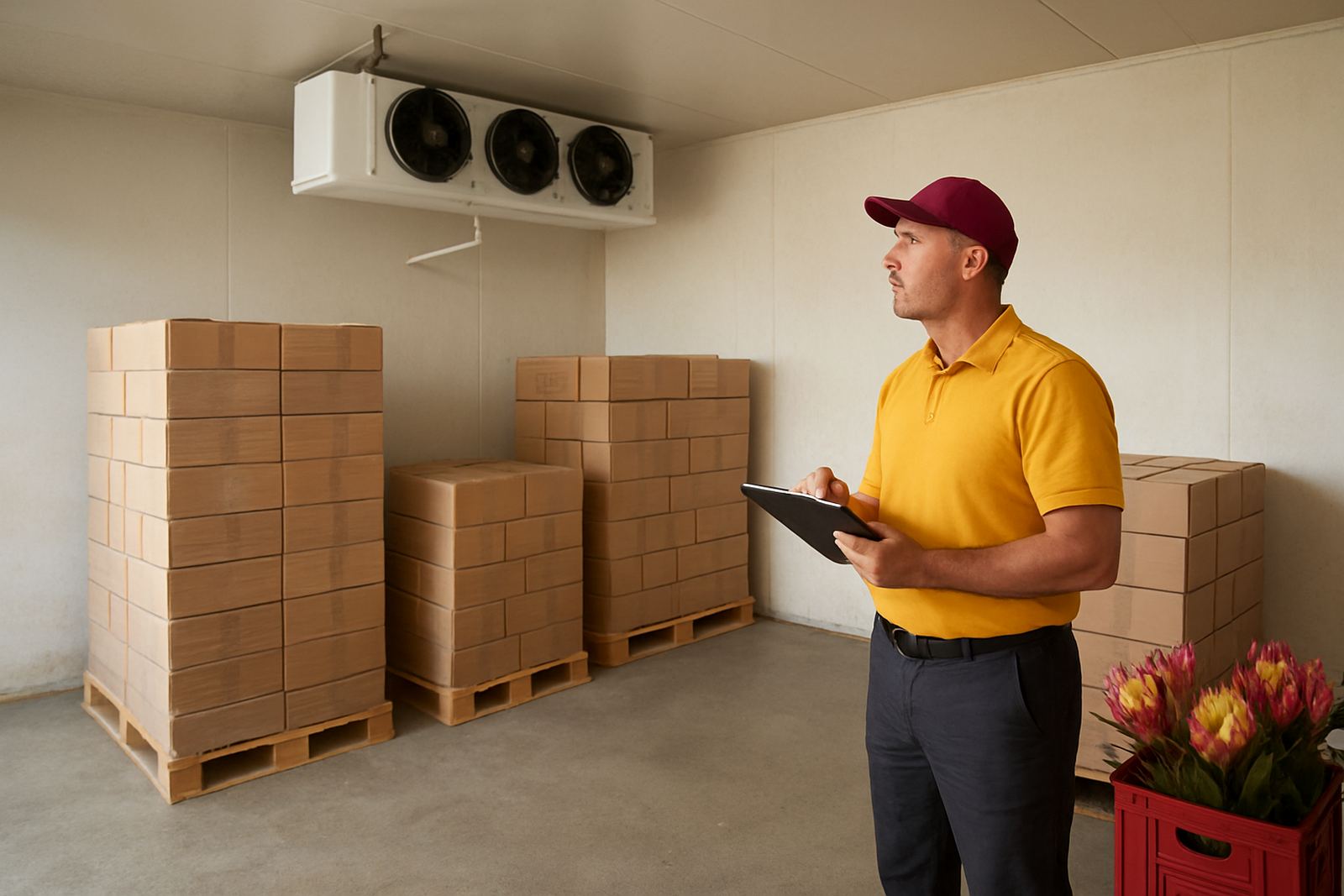
A produce room can have the right cooling capacity on paper and still struggle if the load is stacked badly. Air needs a clear path from the evaporator, across the room and back again. When pallets are packed too tight, or pushed against the walls, the cold air short-circuits in one area and leaves warm pockets in another. That means slower chill-down, more sweating on cartons and uneven shelf life.
We see this often in shops and pack sheds from Montague Gardens to Paarl. A room that is only half full can still pull down badly if the first rows of stock block the return air. The issue is not always the unit, sometimes it is the loading pattern. A good layout lets the room work with less run time and less strain on compressors, fans and door seals.
Keep air paths open from floor to ceiling
Cold air does not move around a room by magic. It needs gaps between pallets, a gap above the load and space near the evaporator return. If sacks, crates or boxes are stacked right up to the ceiling, the top layer often stays warmer than the bottom. That is a problem for produce that must cool quickly and evenly after delivery.
- Leave clear space above the top layer so air can wash over the load.
- Keep pallets off the walls by a small but steady gap.
- Do not block return air grilles with loose packaging or shrink wrap.
- Use straight rows where possible, not staggered clutter that traps warm air.
- Allow space for a trolley or forklift to turn without scraping the room insulation.
On a windy West Coast morning, a room can look cold enough inside while the centre pallets still sit too warm. That is why loading patterns need to be planned, not guessed. A tidy room is not only easier to move through, it cools better too.
How to load for faster chill-down after delivery
When produce arrives warm from the field or packing line, the first few hours matter. The room must remove field heat quickly, and that depends on how the load is arranged. Warm stock should not be buried behind already cold stock if you want a proper pull-down. Put the warmest pallets where they get direct air movement, but still keep the room safe for handling and stacking.
For mixed loads, group by product type and by target temperature where you can. Some produce needs a quicker pull-down than other items and mixing everything in one tight block slows the lot. A load that is too dense can also make the evaporator run longer, which pushes up electricity use and can cause icing on coils if the room is opened often.
- Load warm stock first so it gets the most immediate air movement.
- Separate products with different temperature needs.
- Keep door time short during the first cool-down period.
- Avoid stacking cartons over damaged floors where air movement is poor.
- Check that drain lines are clear before a heavy loading day.
Common mistakes in shops and pack sheds
Most loading problems are not complicated. They are repeated habits that seem small on the day and become costly over a week. We have seen produce rooms in Stellenbosch and Malmesbury where the back row stayed warm because the crew used the room like a store room, not a chilled space. Once the aisle fills with loose cartons, the room loses circulation and the operator blames the unit for what is really a loading issue.
Another common problem is shutting the room down for the night with stock packed too tightly after a busy shift. The refrigeration system then has to fight the heat trapped in the core of the load. If the room is also opened before dawn, or the power has been interrupted by load-shedding, the recovery time gets even longer. That is why shutdown preservation and seasonal start-up checks matter for produce rooms just as much as repairs do.
- Do not block the front of the evaporator with loose stock.
- Do not build pallets against the door where warm air leaks in.
- Do not use the room as a long-term overflow area for dry goods.
- Do not leave damaged strip curtains or door seals unattended.
What to watch during peak season and load-shedding
During grape, berry and stone fruit season, rooms often get loaded hard and turned around quickly. That is exactly when bad loading shows up. If a room is full, the fans work harder to move air through tighter spaces. Add a power cut and the cold mass inside starts to drift. When power returns, the system may run flat out but still struggle to recover if the load is badly stacked.
Temperature logging helps here because it shows what the room did while staff were busy elsewhere. A good log will show if one corner warms faster than the rest, or if pull-down takes far longer after a delivery. That is useful on farms around Paarl and the Winelands where crews often work early and late, and every minute counts. It also helps when explaining to managers why a room needs a layout change, not just a service call.
A local example from the Winelands
A cold room in the Winelands can look fine on the outside but still lose performance if loading is done in a rush. One pack house we assisted had a room used for mixed produce, with pallets placed tight against the side walls and no clear return path for air. The compressor ran longer than expected, and the top layers kept arriving at the dispatch point too warm. After a simple re-layout, with wider centre aisles and better spacing around the evaporator, chill-down improved and the room held temperature more evenly through the night.
The owner did not need a bigger room. They needed a better pattern. That is a common story in Cape Town, on farms near Stellenbosch and at distribution sites in the West Coast towns. Good loading reduces strain on the plant, lowers breakdown risk and keeps produce moving at the right temperature. In a business where one hot pallet can spoil the rest, the layout is part of the refrigeration system.
- Review pallet positions after every busy week.
- Check whether the coldest spots match the planned layout.
- Use maintenance visits to inspect fans, drains and seals together.
A simple loading rule your team can follow
If your team needs one rule to remember, use this: leave room for air to move before you worry about filling every cubic metre. A full room that cannot circulate properly is worse than a slightly under-filled room that cools evenly. That applies whether you are handling vegetables, fruit or mixed fresh stock. It also applies to rooms that are opened several times a day for picking, sorting or dispatch.
For businesses with regular cold-room use, planned maintenance should include a look at loading habits as well as mechanical parts. If a room keeps icing up, takes too long to recover after loading, or shows uneven product temperatures, the cause may be in the way stock is stacked. A proper check can save a lot of guesswork and a fair amount of electricity too.