Why farm sheds need dedicated cooling, not just an open door
Farm sheds in the Western Cape do not all work the same way. A tractor shed in Malmesbury, a pack office near Paarl or a chemical store outside Stellenbosch each face different heat, dust and humidity levels. When the sun is on corrugated iron from 10 am onward, the inside temperature can climb quickly, and that affects staff comfort, phone chargers, computers, paperwork and any product that must stay within a stable range.
Open doors help with airflow, but they also bring in dust, insects and warm air from outside. On windy West Coast sites, that can mean salt-laden air as well. In a farm office or workshop, one properly sized aircon unit can keep the occupied area cool enough for admin, supervision and servicing work, while the larger shed stays practical for storage and movement.
We often find that farms only need cooling in one part of the building. That might be the supervisor's office, a small weigh room, or the area where tablets, radios and log sheets are kept. Cooling the full shed is not always needed and can waste power. The right setup starts with the actual use of the space, not just the floor size.
Where aircon makes the biggest difference on a working farm
Some rooms benefit more than others. A dedicated aircon becomes valuable where people must sit still, read details, or keep records in good condition. It also helps where temperature affects machinery controls, labels, or stock packed in smaller volumes before moving to a cold room or dispatch area.
- Farm offices where admin staff work with invoices, delivery notes and temperature logs
- Tool stores that hold electrical equipment, batteries or sensitive spares
- Mixing rooms and sample rooms where steady room conditions matter
- Security offices and gate control rooms with long hours and closed windows
- Lunch rooms and staff rest areas that are too hot by midday
If a room is used only for quick access, cooling may not be needed. But if people spend three or more hours there each day, heat starts affecting concentration. In summer, even a small office attached to a shed can become uncomfortable enough to slow down the whole operation.
For farms near the coast or in low lying areas, humidity can make the air feel heavier. That is where cooling and dehumidifying together helps. It is not about making the room icy, just keeping it workable and dry enough that paper, seals and electronics last longer.
Signs the shed aircon is undersized or badly placed
Many farm buildings already have a unit installed, but it is often in the wrong spot or too small for the room. If the aircon runs all day and the room never really cools down, that is a clear warning. Short cycling can also happen when the unit is too large for a small office, which wastes power and leaves the air sticky.
Watch for these signs:
- Warm air near the roof while people still feel hot at work height
- Dust build-up on filters and vents within a few weeks
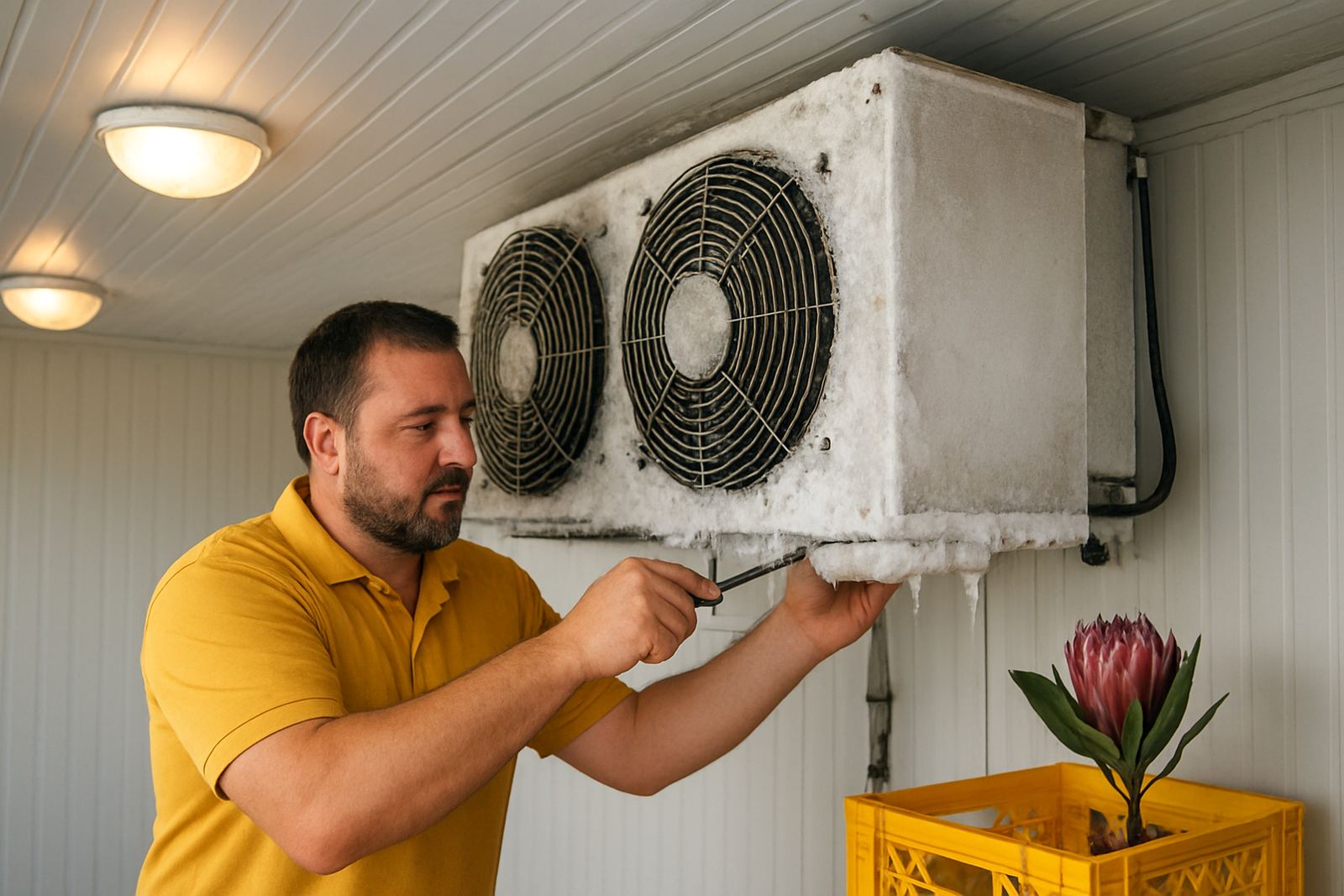
- Water dripping where the drain should carry it away
- Breakers tripping when the compressor starts after a power cut
- Noise or vibration from a unit mounted on thin cladding
Placement matters as much as capacity. A unit blowing directly onto a seated person is unpleasant. One installed too close to a hot tin wall may fight its own heat load. In farm buildings, we also look at door openings, sun exposure and whether the room gets shut down after hours or left open for staff movement. A quick site check can save a lot of trial and error.
If the room is used for compliance paperwork or stock records, stable cooling also protects the habit of good admin. Wet logs, curled pages and overheated printers cause small delays that add up fast when harvest is under pressure.
Keeping farm shed aircon going through load-shedding and dusty conditions
Western Cape farms have to plan around power cuts, especially during peak season. A shed aircon does not have to stop working every time the supply drops, but it does need a sensible setup. After power returns, the unit should restart without damaging the compressor or tripping the board. That means correct wiring, clean filters, a healthy capacitor and regular checks before the hot months arrive.
Dust is the other main problem. Pack sheds, grain stores and vehicle bays collect fine dust that blocks filters faster than many owners expect. On farms near dry roads or open fields, a dirty filter can reduce airflow in a matter of weeks. The result is poor cooling, higher power use and extra strain on the unit. A simple planned maintenance visit can catch that before it becomes a breakdown.
- Clean filters and indoor coils before summer starts
- Check drains so condensation does not back up onto floors
- Test restart behaviour after outages and generator changeovers
- Inspect insulation and seals on linesets running through hot roof spaces
- Look for corrosion on outdoor units in coastal towns and farmyards with spray or mist
We also recommend seasonal start-up and shutdown preservation. Start-up means the unit is ready before the first heat wave. Shutdown preservation helps when the building closes for a period, or when a room is only used in harvest months. A few careful steps can extend the life of the installation and avoid a costly call-out on a Friday afternoon.
A practical example from a mixed farm near Paarl
On a mixed fruit farm outside Paarl, the packing team was using a small office attached to a steel shed. The office was holding stock notes, laptop work and daily temperature records for cold-room dispatch. By 11 am the room was already uncomfortable, and the printer was overheating on hot afternoons. The shed itself did not need full cooling, only the office and record area did.
After a site assessment, a dedicated unit was placed to cool the occupied corner only, with the drain routed clear of the walkway. We also adjusted the maintenance schedule so the filters would be checked before the long summer run. That made the room usable through the day without trying to cool the entire building.
For farms in the Winelands, this is often the answer. A lot of energy gets wasted when the aim is to make a big shed feel like a house. Better to cool the area where people work, then support the rest of the site with proper ventilation, shade and practical housekeeping.
It is a small change, but it helps keep staff steady and records in order. When the room is cooler, people make fewer mistakes and the admin stack does not turn into a mess by lunch time.
What to ask before fitting or servicing a shed aircon
Before any installation or repair, it helps to be clear about how the room is used. A farm office, a chemical store and a staff room all have different needs. The right answer depends on size, sun exposure, dust levels, daily occupancy and whether the room is shut after hours or left open to movement. If you are not sure, a short site visit will usually show the best option.
Useful questions include:
- How many people use the room and for how long each day
- Does the room face afternoon sun or sit under a hot roof
- Is there a lot of dust from vehicles, grain or packing activity
- Will the unit need to start again after load-shedding or generator switchover
- Does the drain have a proper fall away from foot traffic
Good service is not only about fixing a fault. It is about preventing the next one. That can include leak detection, coil cleaning, drain clearing and checking the temperature settings against what the room actually needs. If a farm already keeps maintenance records for cold rooms, it makes sense to do the same for shed aircon too. One neat record now can save a bigger repair later.
For farms across Cape Town, Montague Gardens, Stellenbosch, Malmesbury, Vredenburg and the wider Western Cape, that approach keeps workrooms and offices usable through the hottest months. You do not need to chill the whole shed, just the part where the work gets done.
Keeping workrooms comfortable without wasting power
Farm shed aircon works best when it is part of a sensible plan. Shade the windows if there are any. Keep roller doors closed where possible. Fix broken seals around doors and service hatches. Clear dust from around the indoor unit. Then set the temperature at a level that keeps the room working, not freezing. On many sites, that small balance is what makes the biggest difference.
If your farm has a room that stays hot, sticky or full of dust, it is worth checking whether a dedicated cooling solution would pay for itself in less downtime and better working conditions. The goal is simple: make the space fit the job, not force the staff to work around the heat all day.