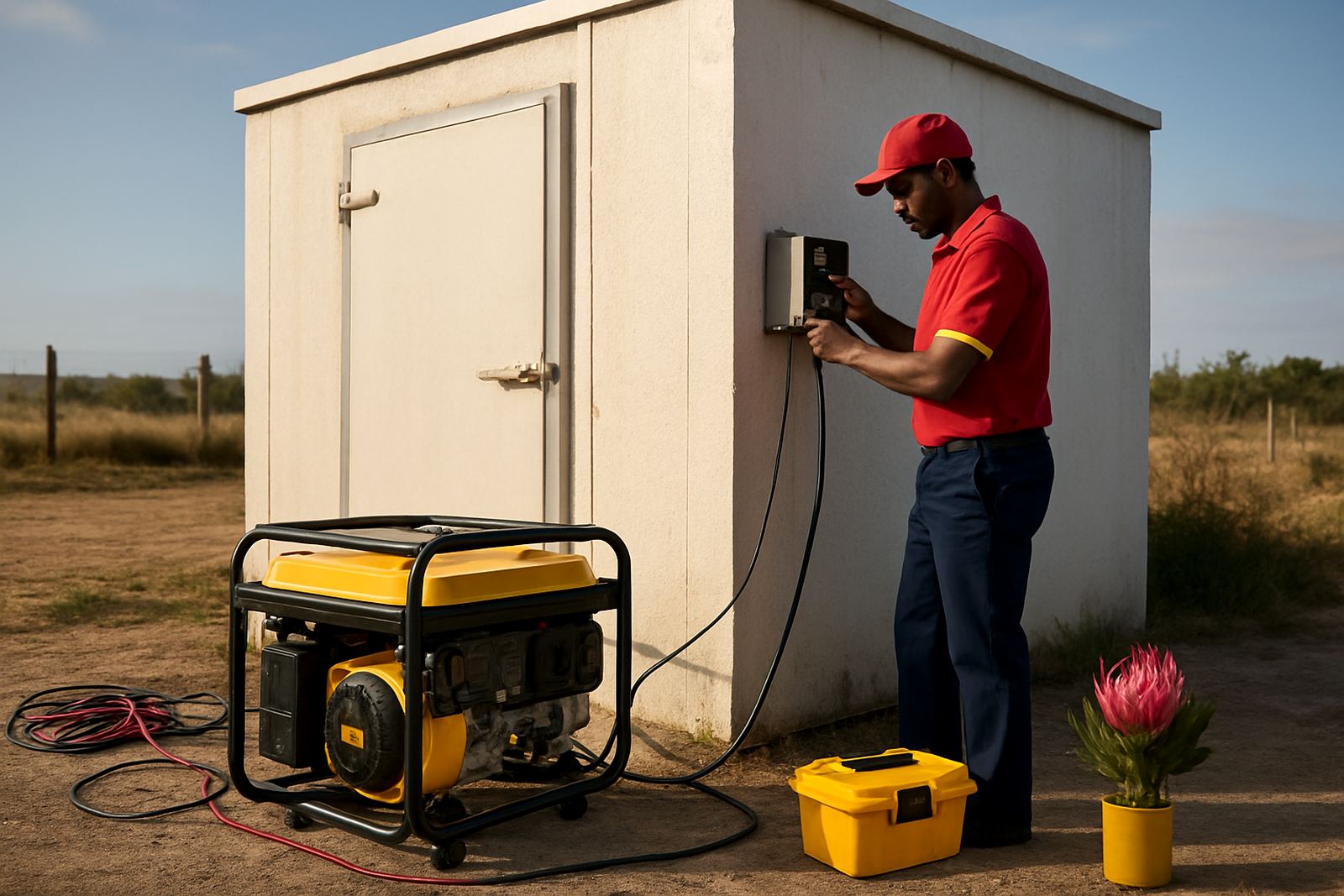
Start with the real load, not the nameplate figure
Before a cold room is run from standby power, check the actual load on the system. A refrigeration plant may look modest on paper, but once the compressor, evaporator fans, lights, strip curtains and any ancillaries start together, the demand can climb fast. That matters in the Western Cape where load-shedding, storms and planned shutdowns can all hit in the same week.
Many sites have a generator sized for general business use, then expect it to carry refrigeration as an extra. That is where trouble starts. Voltage drop, slow compressor start-up and nuisance tripping can damage motors or leave stock warm. Get the starting current, running current and sequence of loads checked, then compare that with the generator's continuous rating and surge capacity.
- Identify which units must stay on during an outage
- Check compressor starting amps and fan motor draw
- Allow for lighting, controls and door heaters if fitted
- Leave headroom, do not run the set at the limit
Cold rooms need a different plan to ordinary aircon
Aircon can usually tolerate a short restart delay. A cold room cannot always do that, especially if it holds meat, dairy, flowers or frozen goods. Temperature rise is slower when the room is full, but a warm start after power returns can make the compressor work hard for longer and push the system into a heavy pull-down cycle. That is rough on components and bad for product life.
For shops and farms around Paarl, Malmesbury and the West Coast, the practical answer is often a staged restart. Bring the control system up first, then the condenser or compressor stage, then the evaporator fans once the unit is stable. If multiple cold rooms share a generator, do not start them all together unless the electrical sizing allows it. One room may recover quickly while the others stay online, but only if the sequence is planned properly.
- Set a restart sequence before the outage happens
- Keep door openings to a minimum during changeover
- Check that thermostats and timers reset correctly
- Watch for high head pressure after power returns
Generators, voltage and the hidden problem of dirty power
A generator that runs the lights does not always supply clean enough power for refrigeration controls. Sensitive boards, contactors and digital thermostats can misbehave when voltage is unstable or frequency drifts. In some cases the unit keeps restarting, or it appears to run but never reaches proper temperature. That is often mistaken for a refrigeration fault when the supply is the real issue.
On farms outside Stellenbosch and in coastal areas near Vredenburg, humidity and salt air add another layer. A generator left outside with poor protection can corrode connections and cause intermittent faults at the worst time. Cables, plugs and changeover gear must be checked for heat marks, loose terminations and signs of water entry. If the power quality is poor, the safest option may be to reduce the load, improve the changeover setup, or service the generator before the next outage. Sometimes a small setting change solves a big problem.
Maintenance before summer is cheaper than emergency food loss
Standby power is only useful if the refrigeration plant itself is healthy. A dirty coil, blocked drain or weak fan motor will draw extra current and struggle harder on a generator. That extra load shortens runtime and increases fuel use. Before summer, or before the first scheduled closure, get the system cleaned and tested so the generator is not carrying a sick installation.
For retail sites and packhouses, planned maintenance should include temperature logging, leak checks, coil cleaning and drain clearing. If the cold room has been running on mains power through winter, it may still need a proper seasonal start-up check before it is asked to operate through repeated outages. A unit that seems fine in cool weather can fail once ambient temperatures rise and the generator is already under pressure.
- Clean condenser and evaporator coils
- Test door seals and curtain condition
- Clear drains so melt water cannot back up
- Log temperatures before and after power interruptions
A local example from a farm outside Paarl
A fruit producer outside Paarl had a standby set that was meant to cover lighting, pumps and one cold room. During repeated outages, the generator started, but the cold room took too long to recover and product temperatures crept up. The issue was not one fault, it was a combination of overloaded start-up, a dirty condenser and a control panel that was not set up for staged restart.
After the load was measured properly, the team adjusted the sequence, cleaned the coils and checked the drains. The room then came back faster after each interruption, and the generator was no longer working at full strain. That is the point many sites miss: standby power is not just about keeping things running, it is about keeping them running in a controlled way. Once that part is sorted, the risk drops quickly.
What to check before the next outage
If you are planning to run refrigeration from standby power, make a proper checklist and test it under supervision, not during the real emergency. A short trial run can show whether the cold room holds temperature, whether the generator carries the starting load, and whether any alarms or controls need attention. It is better to find a weak point on a Tuesday morning than during a Friday night load-shedding block.
For businesses in Cape Town, Montague Gardens, Stellenbosch, Paarl, Malmesbury and Vredenburg, the priority is simple: protect stock, protect equipment and keep the system easy to restart. If your set-up has not been reviewed recently, a call-out inspection can save a lot of spoilage and downtime.
- Test generator capacity with the refrigeration load connected
- Check changeover gear, cabling and breakers
- Verify restart sequence after power comes back
- Confirm temperature logging is working