Why coastal air attacks metal faster than inland air
On the coast, the problem is not only the sea spray you can see. The air carries fine salt that settles on coils, casings, brackets and electrical parts. Once that salt gets damp from fog, night dew or rain, it starts pulling moisture to the surface and the metal begins to pit. In places like Cape Town, the West Coast and parts of the Winelands that get wind off the bay, we see this on units before the owner expects it.
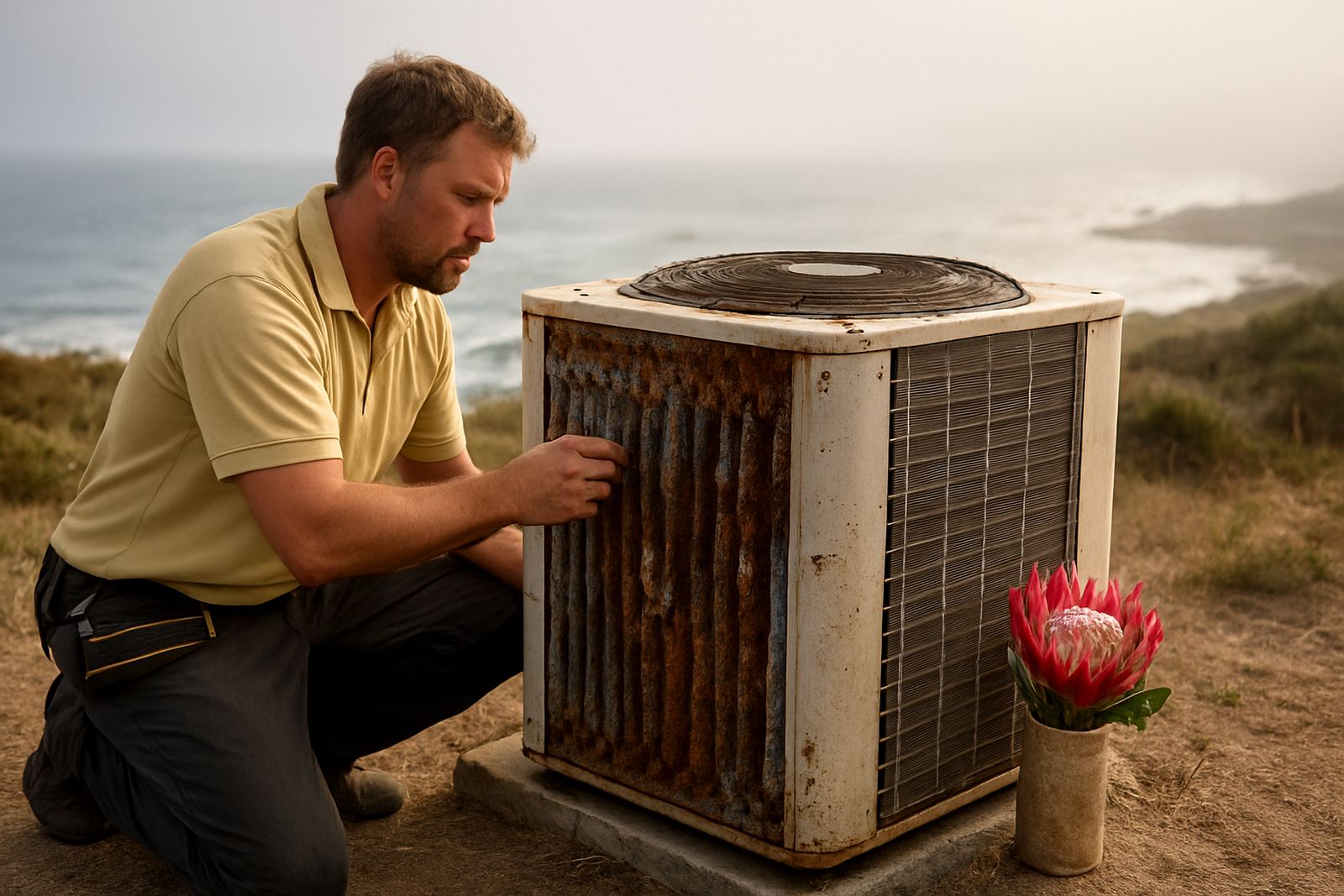
Exposed condensers take the worst of it. The fins corrode, air flow drops, pressures climb and the unit works longer to do the same job. That means higher power use, warmer product temperatures and more wear on compressors and fan motors. If the equipment already fights load-shedding or long hot days, coastal corrosion pushes it closer to failure.
The first signs are small but they add up quickly
Most coastal corrosion starts quietly. A unit still runs, so people leave it alone until the damage is expensive. By then the casing may have rust bubbles, fasteners may be seized and coil fins can be fragile enough to crumble under cleaning. We often find the issue during a routine service, not after a breakdown.
- Rust streaks under screws, hinges or mounting brackets
- White powder or green staining on copper and aluminium parts
- Fan blades with chipped edges or uneven wear
- Electrical terminals showing heat marks or corrosion
- Drain pans with scale, slime or standing water
If you spot two or more of these signs, the unit should be checked soon. Waiting for summer to test it is a poor plan, because corrosion does not pause for peak season.
What we see in Cape Town, Montague Gardens and the coast towns
A common case is a shop unit near the harbour side or a cold room condenser on a roof with no shelter from wind. Another is a farm packroom near the West Coast, where salt air travels inland and finds any exposed metal first. In Stellenbosch and Paarl, the air may seem less harsh but equipment on open yards still suffers from dust, damp and chemical residue from cleaning, so corrosion and clogging often arrive together.
One local example: a seafood outlet in the Cape Town area called us after their cold room started cycling too often. The compressor was not the real problem. The outdoor condenser had heavy salt build-up, the fins were partly blocked and the fan motor housing was rusted at the base. After cleaning, repair work and a plan for regular maintenance, the unit came back into normal range. The owner saved the compressor by acting before it seized. That is the difference between a service visit and a full replacement.
Where units face the sea wind directly, we often recommend more frequent inspections. On some sites, every 6 to 8 weeks during the wetter months is sensible, especially if the business cannot afford warm product or downtime.
What a proper coastal service should include
Coastal work is not just a quick wash down. The technician needs to check the condition of the coil, electricals, drain path and mounting points, then decide what has to be cleaned, protected or replaced. A rushed rinse can push salty water deeper into the unit and make matters worse.
- Coil cleaning with the right pressure and cleaner for the metal type
- Drain clearing so water does not sit and restart corrosion
- Inspection of terminals, contactors and cable entry points
- Checking fan motors, bearings and blades for salt wear
- Corrosion control on fasteners, brackets and exposed edges
- Temperature logging to confirm the unit is still performing properly
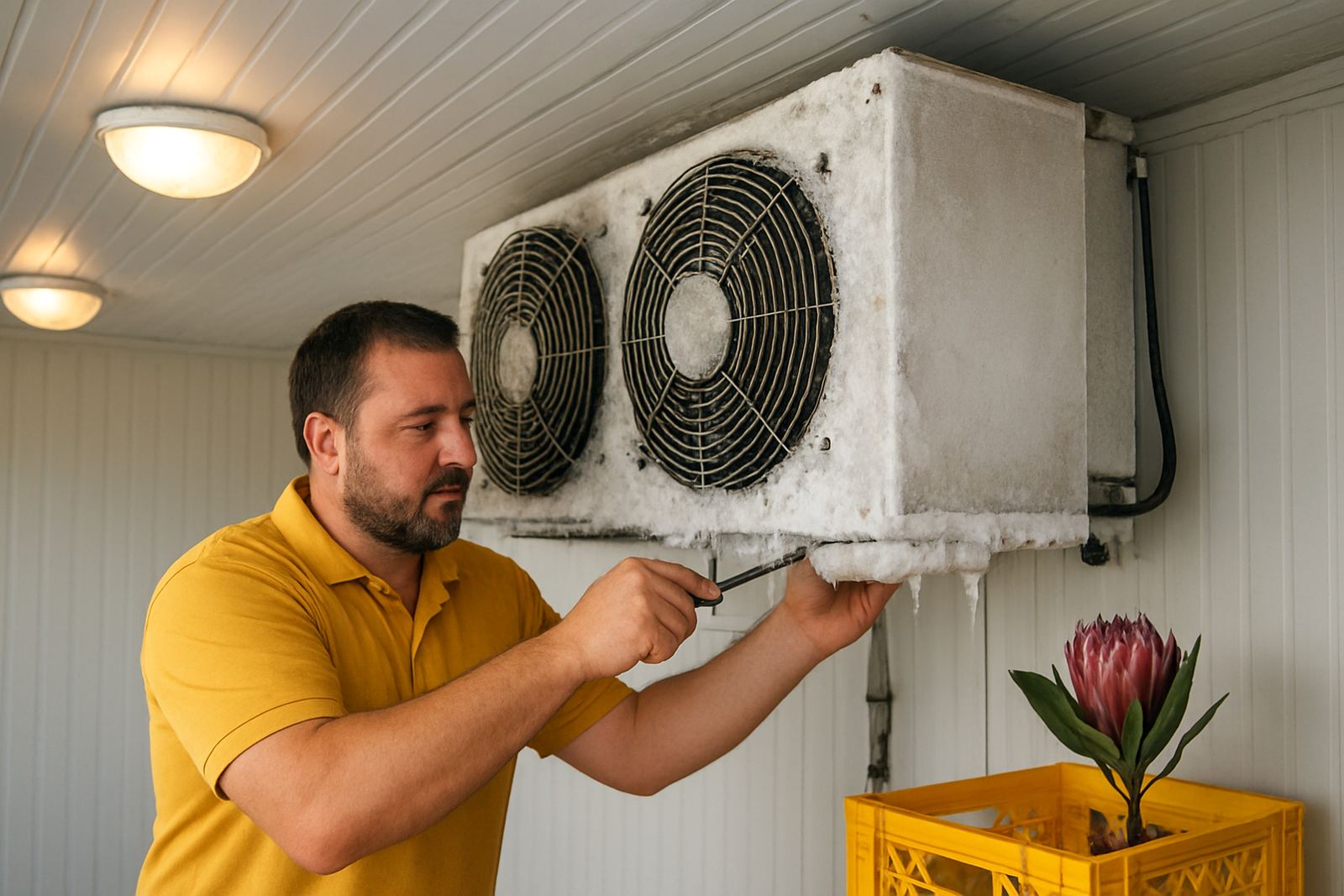
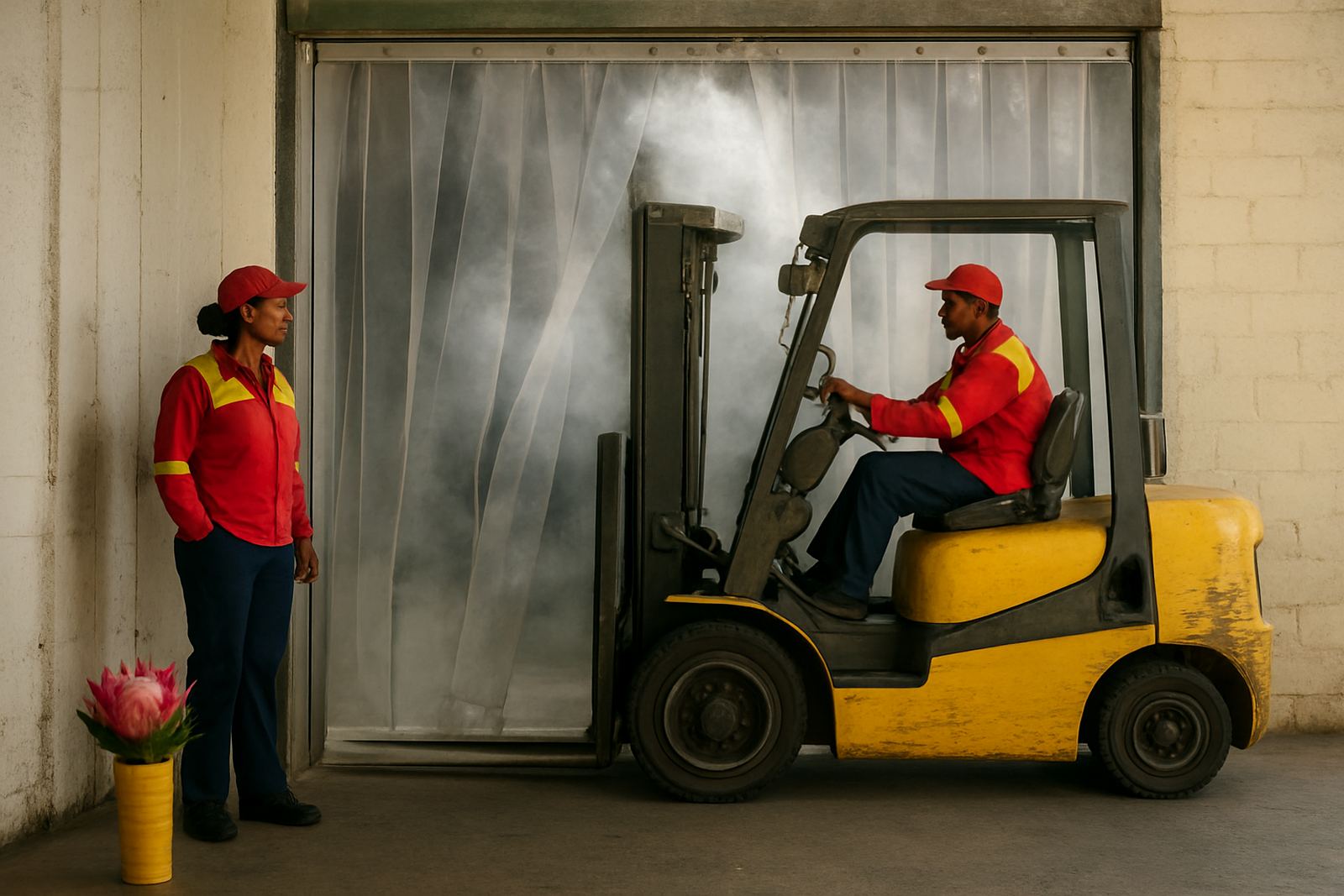
For cold rooms, the outdoor plant and the room fittings both matter. A corroded condenser can be bad enough on its own, but a damaged door frame, hinges or strip curtain can also let in warm humid air. Then the room has to work harder and the whole system ages faster.
How to reduce damage before it becomes a breakdown
The best protection starts with site layout and maintenance timing. If a condenser can be placed out of direct wind and spray, do that. If it is already installed in an exposed position, make sure the area around it is clear and that nobody stores boxes, drums or bins close to the airflow. A blocked unit corrodes faster because it runs hotter and holds more moisture.
On many Western Cape sites, small habits make a big difference. After a windy spell, wipe down visible salt on accessible covers. Do not use harsh chemicals that eat paint or aluminium. Keep bushes and climbing plants away from outdoor units. Check that roof water does not drip onto the casing after rain. And after any power cut, listen for odd noises at start-up, because corrosion can hide electrical weakness that only appears when the unit restarts.
If the unit sits in a very exposed area, ask for planned maintenance before the hot months and again before winter. That is usually cheaper than emergency repairs when the stock is already under pressure.
When call-out repairs are the right move
Some corrosion can be managed with cleaning and parts replacement. Other times the damage has reached the compressor, motor or coil and the unit needs a faster intervention. If you hear grinding, notice tripping, see oil marks or get warm readings that do not settle, treat it as urgent. A cold room or shop fridge that is losing temperature can spoil stock very quickly.
We handle call-outs, maintenance contracts, leak detection, coil cleaning, seasonal start-up and shutdown preservation across Cape Town, Montague Gardens, Stellenbosch, Paarl, Malmesbury and Vredenburg. For farms and shops, that means one team can look after the day-to-day work and the bigger repairs when corrosion has already done some damage.
In coastal areas, the aim is not to stop salt from existing. The aim is to catch it early, keep the equipment clean and keep the business out of trouble. That approach saves money, avoids repeat failures and gives the plant a longer working life.