Why door cycles matter more than most teams think
A cold room does not only cool product. It also keeps the air dry enough to slow mould, protect packaging and hold a stable temperature from one shift to the next. When a door opens again and again, the room loses cooled air and pulls in warmer air from the packhouse. That extra air carries moisture, and moisture is what drives frost, heavy coil loading and long pull-down times.
In a busy packhouse, a door may open dozens or even hundreds of times in one day. That can happen during grading, pallet movement, loading bays, returns, stock checks and short stops for paperwork. Each cycle may only last a few seconds, but the effect builds up. The system has to remove not just heat from product, but also the repeated air exchange. If the room is already near capacity, even a small change in opening pattern can push the plant into longer run times and higher power use.
That is why operators often notice the same signs: product staying warmer than expected, doors sweating, ice on the evaporator, and the compressor running longer after peak dispatch. It is not always a gas issue or a faulty part. Sometimes the real problem is simply too many openings and poor traffic control.
What repeated opening does to temperature and humidity
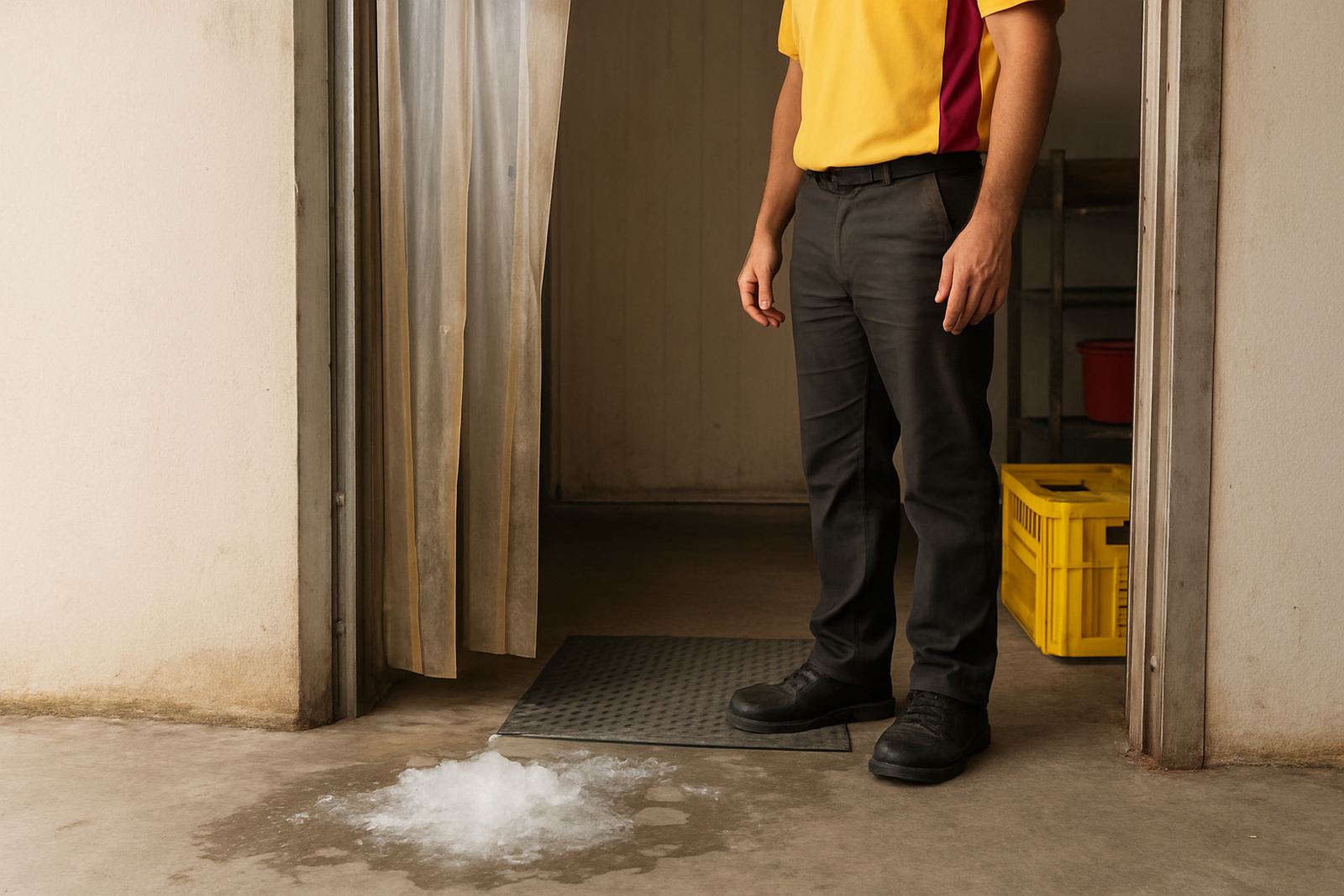
When a door opens, air moves both ways. Warm air enters high up, cold air spills out low down, and moisture follows the airflow into the room. In the Western Cape, especially near the coast, that incoming air can be very damp. Once inside, that moisture condenses on cold surfaces and on product packaging. Over time, this can soften cartons, cause labels to lift, and create slippery floors near the threshold.
Door cycles also affect temperature recovery. A room may be set to hold 2 deg C, but after repeated openings it can climb several degrees before it settles again. That is a real risk for fruit, vegetables, dairy and other perishable stock that depends on a narrow temperature band. The plant may still look like it is working, but if recovery is slow, the room is not protecting product as it should.
- Higher humidity increases frost build-up on coils and reduces air movement.
- Longer compressor run times increase wear and electricity use.
- Temperature swings can shorten shelf life and affect dispatch quality.
- Wet floors and cold surfaces create safety issues for staff moving pallets.
Signs your packhouse door routine is costing money
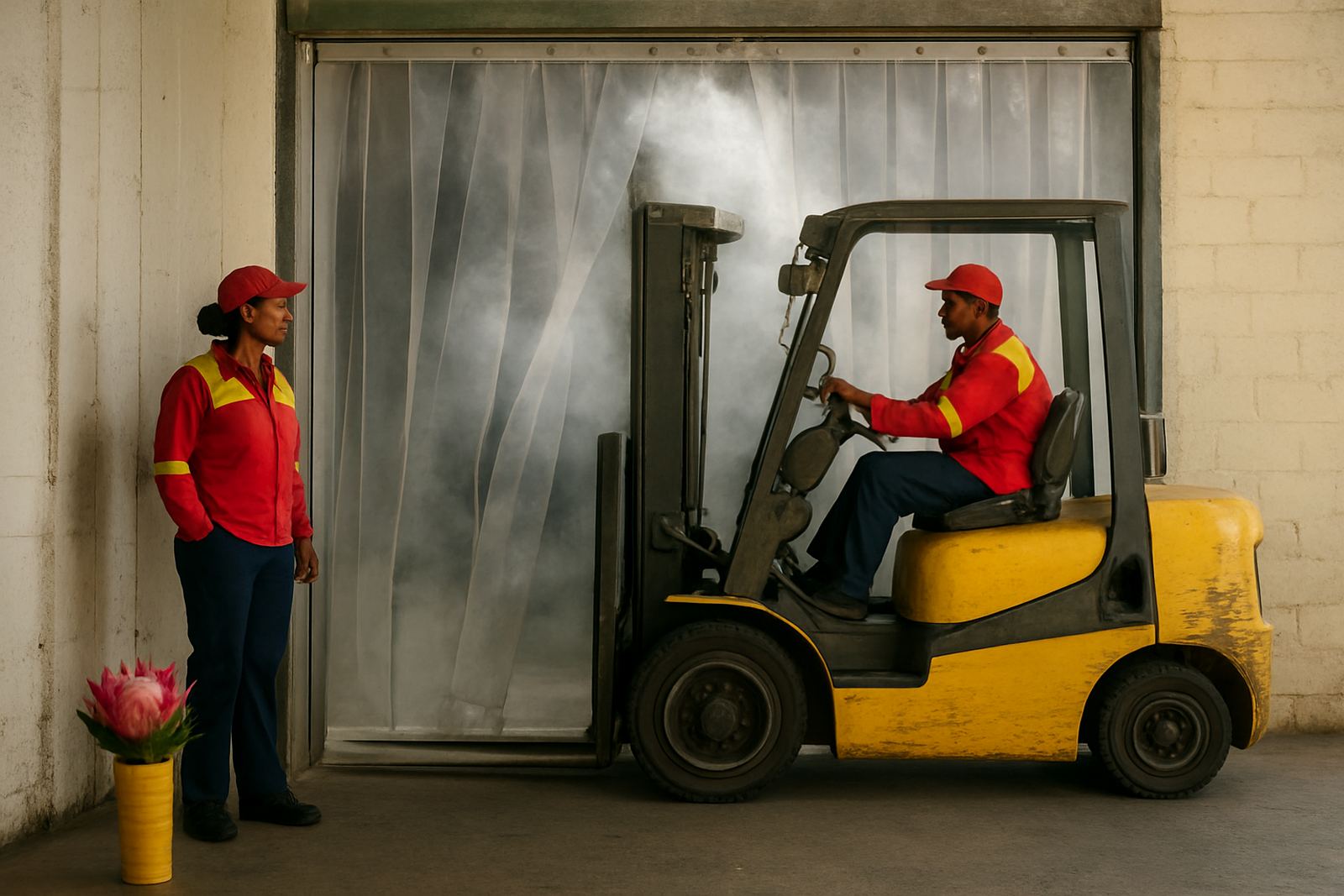
Some symptoms show up long before a complete breakdown. If staff keep hearing the plant recover after every busy period, that is a warning. If the door frame, seals or strip curtains are damaged, the cold room will work harder than it should. A door that is left open for a few minutes at a time while staff wait for a forklift or paperwork can waste far more cooling than people realise.
Look for the practical signs below:
- Frost forming faster than normal on the evaporator or around the door.
- Condensation on the inside of the door and on nearby wall panels.
- Temperature alarms after loading periods, even though the product itself was pre-cooled.
- Aircon or refrigeration units running through breaks and after hours.
- More complaints about soft packaging, damp boxes or uneven room temperatures.
If these issues come and go with the work schedule, the root cause may be operating practice rather than a mechanical fault. That is why a proper call-out includes checking the room, the traffic pattern and the opening times, not only the equipment itself.
Practical ways to cut door loss during busy shifts
The easiest gains usually come from small changes that do not slow the pack line. The aim is to reduce the number of openings and shorten the time each one stays open. In many Western Cape sites, that starts with clearer staging space outside the room, better communication between forklift operators and pack staff, and a simple rule that the door only opens when the next load is ready.
Useful controls include the following:
- Group pallet movements so the door is not opening for every single item.
- Keep product staged and labelled before opening the room.
- Repair damaged seals, hinges and closers quickly.
- Use strip curtains or similar barriers where suitable.
- Train teams to avoid propping the door open during quiet tasks.
- Check that lights, alarms and sensors are placed so staff do not need to hold the door while waiting.
For packhouses in Stellenbosch, Paarl and the West Coast, where ambient temperatures and humidity vary a lot through the season, these habits can make a measurable difference. It is not fancy work, just good control. Less warm air in means less work out of the system later.
How servicing helps the room recover faster
Even with good door discipline, a room still needs proper servicing to keep recovery times sensible. Dirty coils, blocked drains and weak fans all make door-cycle losses worse. If the evaporator cannot move air properly, the room takes longer to pull back down after each opening. If drains are blocked, moisture hangs around and freezes where it should not. If the condenser is fouled, the system runs hot and struggles during the afternoon peak.
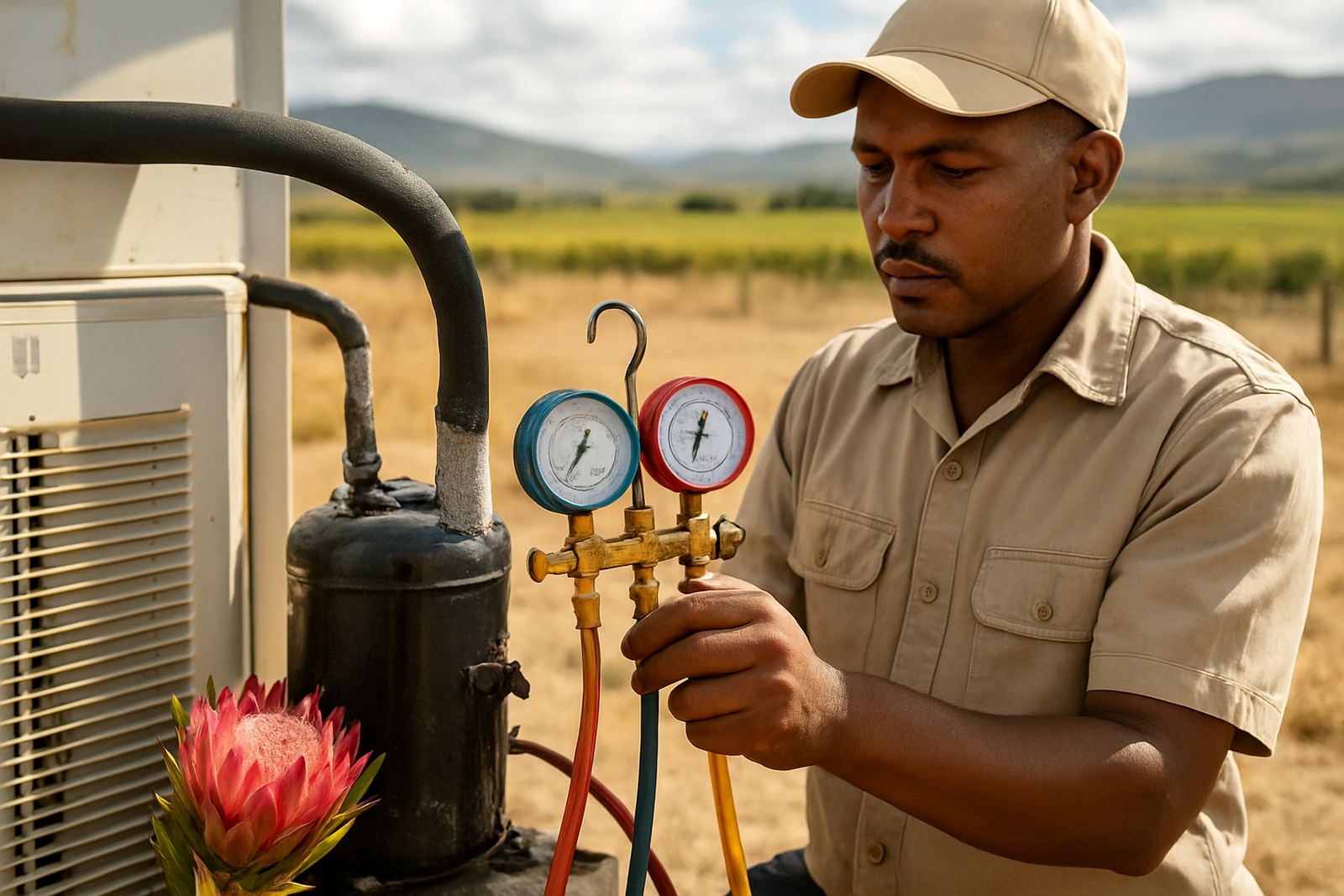
Planned maintenance should include coil cleaning, drain clearing, leak detection, temperature logging and a check on door hardware. That combination shows whether the room is coping with the actual load, not just the expected one on paper. During shutdown periods, it also helps to preserve the room properly so the next season starts clean and stable.
At Kenny Cape West, we often see that a room with average equipment can still perform well if the maintenance is regular and the doorway habits are controlled. A clean system and a disciplined pack line are usually cheaper than chasing temperature problems after stock has already been affected.
A Western Cape packhouse example from the dispatch floor
A fruit packhouse near Malmesbury had a cold room that kept drifting upward every afternoon. The manager thought the system needed a major repair, but the readings told a different story. The room recovered overnight, then fell behind whenever dispatch was busy between 10:00 and 15:00. The door was being opened for nearly every pallet move, and staff were waiting with the door open while load sheets were checked.
After a review of the work flow, the team changed the staging layout, repaired a worn seal and introduced a simple loading rule: no pallet moved until the next bay was ready. The door cycle count dropped, the coil iced up less often and the temperature held steadier through the hottest part of the day. The system did not become new, but it behaved much better because the room was not being fed warm air all afternoon.
That kind of fix matters across the region, from Cape Town to the Winelands and the West Coast. In a packhouse, the room and the people using it are part of the same system.
When to call for help with door cycles and cold-room load
If your room is struggling after busy shifts, or the team is seeing repeated frost, condensation or slow pull-down, it is worth getting the setup checked. The issue may be mechanical, operational, or a mix of both. A technician can measure temperature behaviour, inspect the seals and airflow, and check whether the refrigeration plant is sized and maintained for the actual opening pattern.
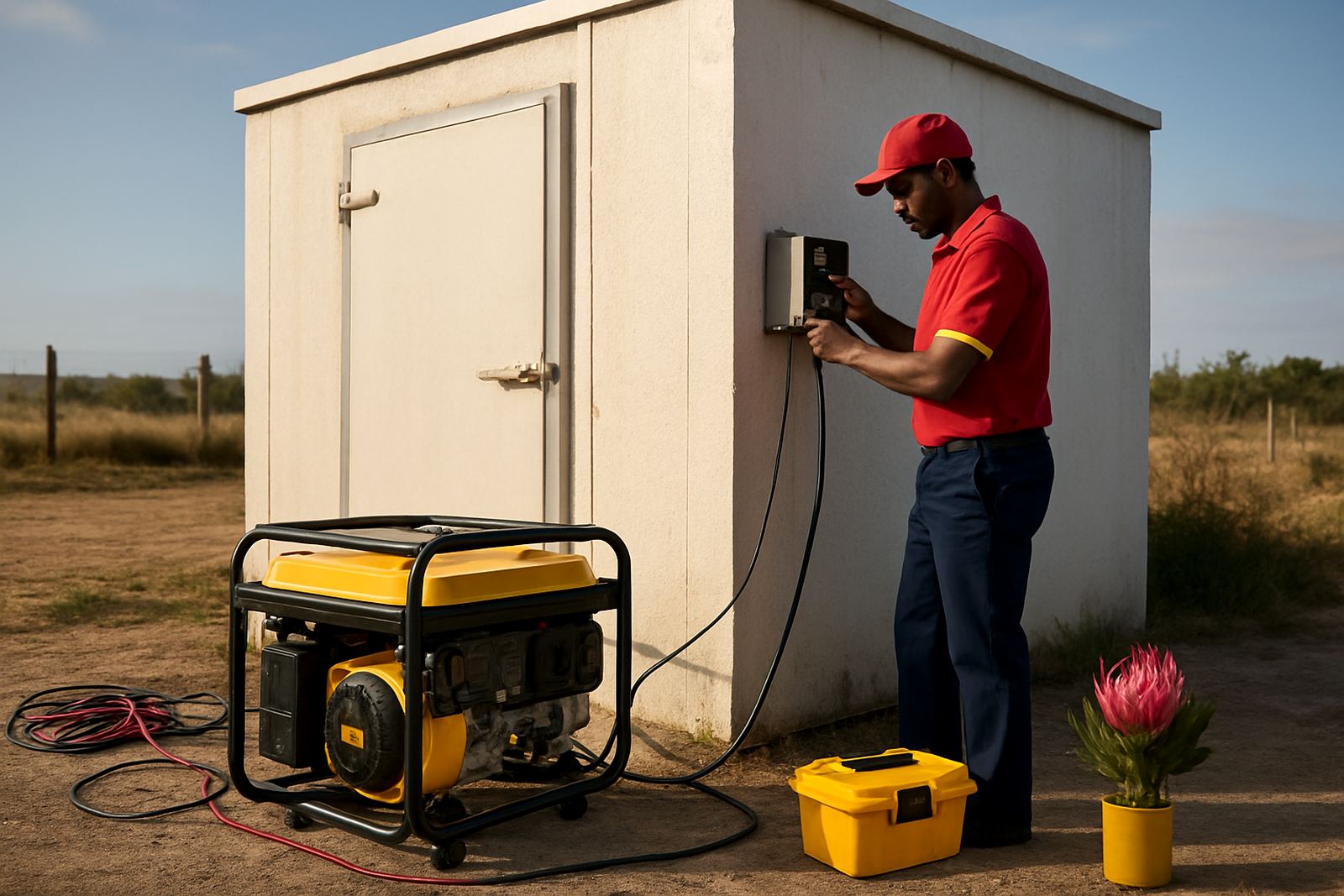
We handle emergency call-outs, planned maintenance and cold-room work for shops and farms across Cape Town, Montague Gardens, Stellenbosch, Paarl, Malmesbury and Vredenburg. If you need a room that keeps its temperature under pressure, send the details through to callouts@kennycapewest.co.za. A proper inspection now can save a lot of product later.