Why clean ice machines fail in ordinary South African trade conditions
An ice machine can look fine from the outside while the inside starts carrying scale, slime and fine dust. In shops, cafés, butchery back areas and farm packhouses, that build-up affects how quickly water freezes, how well the machine releases ice and whether the ice stays neutral in smell and taste.
In Cape Town and along the West Coast, salty air and damp evenings can speed up corrosion on exposed parts. In the Winelands, dust from yards and loading bays often gets into vents and condenser fins. If the machine is near a prep sink or dish area, splashes and grease mist add another layer of grime. The result is often missed at first, then shows up as smaller cubes, hollow pieces, slow cycles and higher power use.
Good hygiene is not only about appearance. It is about keeping the water path, storage bin and ice contact surfaces clean enough that the machine can do its job without strain. A dirty machine often works harder for the same output, and that is usually when call-outs start to rise.
The cleaning points that matter most inside the machine
The important areas are not always the obvious ones. The bin may look empty and the scoop clean, but the real problems usually sit where water moves, freezes and drains. A proper service should focus on the parts that touch water, air and the finished ice.
- Water inlet lines and filters, where scale and grit can settle
- Evaporator plates or freezing surfaces, where mineral film slows ice release
- Water troughs, pumps and distribution tubes, where biofilm can form
- Drain lines and traps, where standing water causes smell and slime
- Storage bins and lids, where dust and fingerprints get transfered to ice
- Condenser fins and intake areas, where airflow drops when dust packs in
If any of these points are missed, the machine may still produce ice, just not cleanly or consistently. For businesses that sell food or serve drinks daily, that can be a quiet problem until a customer notices a smell or a chunk of ice with a cloudy centre.
A cleaning routine that fits shops, farms and back-of-house areas
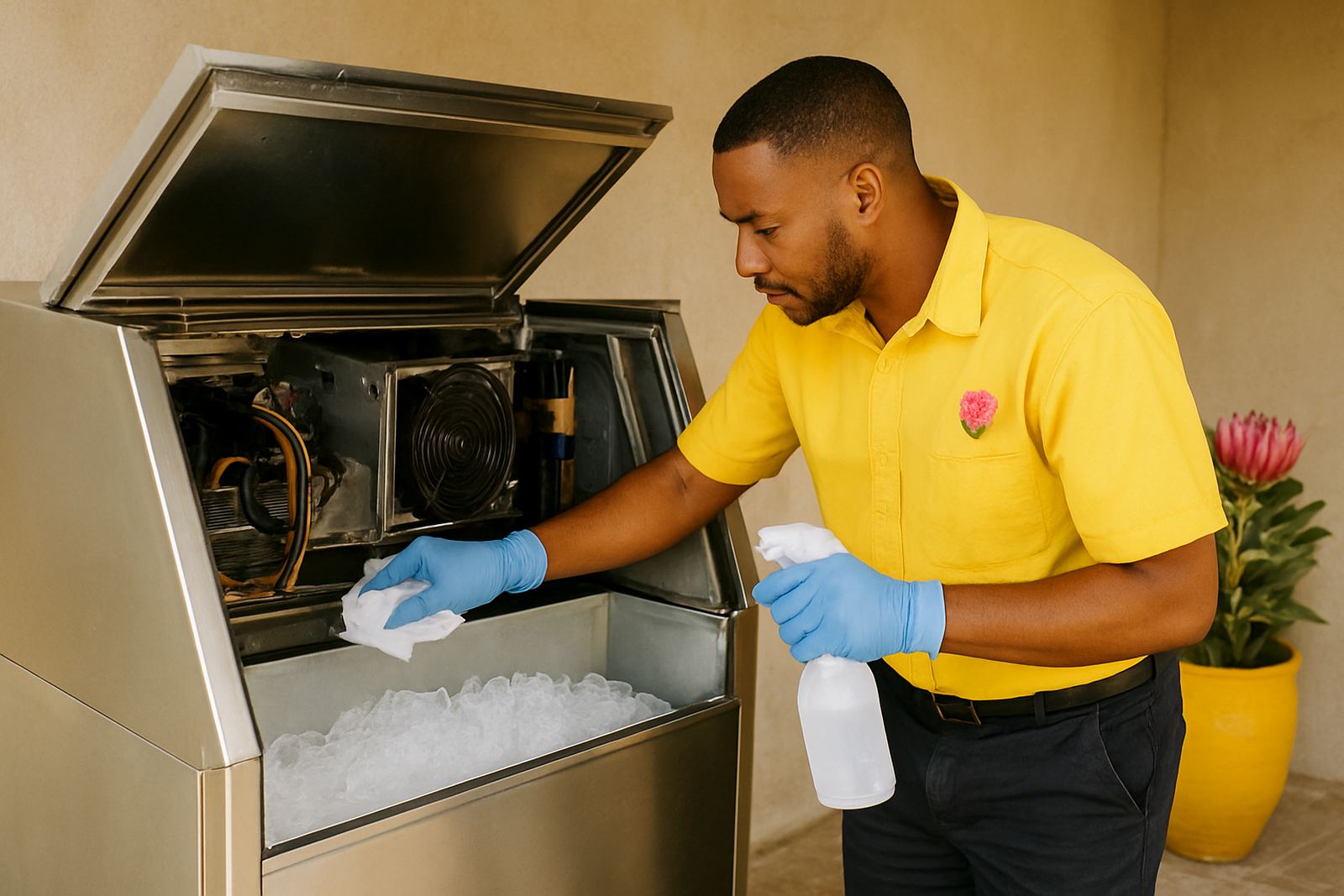
Most operators do not need a complicated routine, but they do need one that is regular and recorded. Daily wiping of the scoop handle, bin rim and surrounding area matters because that is where hands and splashes meet the machine. Weekly checks should include the air intake, drain path and visible water lines. Monthly or quarterly deep cleaning is where the real value sits, especially in busy sites or where water quality is not ideal.
A simple routine usually covers:
- Switching off and isolating the machine before cleaning
- Removing all ice, then washing and sanitising the bin
- Cleaning internal water paths with the right food-safe method
- Checking for scale, slime, cracks and loose seals
- Flushing drains and confirming free flow
- Restarting and confirming the first batch is clear, hard and odour-free
In some rural areas outside Paarl or Malmesbury, borehole or hard water can leave mineral film faster than expected. That means cleaning alone is not enough. If scale keeps returning, the water treatment side also needs attention or the machine will keep underperforming.
What hygiene problems look like before the breakdown
Ice machine faults often begin as small hygiene issues before they become mechanical faults. Cloudy ice, a slight musty smell, slow production and wet clumps in the bin are early warnings. So is a machine that runs longer than usual but produces less ice than normal. If the bin starts to stick, or the ice bridges together, the internal surfaces may be coated with residue.
Other signs include water dripping where it should not, odd clicking during harvest, and a condenser that feels hotter than usual because airflow is restricted. If a drain is partly blocked, moisture sits in the cabinet and the machine works in a damp pocket. That can cause corrosion, electrical faults and short cycling, all of which cost more than a planned clean.
One farm client near Stellenbosch had an ice machine in a packing area where dust from cartons and fruit bins settled into the intake. The machine was still making ice, but it had started to smell faintly stale and the cubes were shrinking. After a proper clean, drain clearing and condenser wash, production recovered and the odour disappeared within the same day. The issue was not dramatic, it was just steady build-up. Those are the ones that often get missed.
When to book professional service instead of doing it in-house
Basic wiping and bin hygiene can be handled by trained staff, but internal cleaning, descaling and fault checks should be done by someone who understands refrigeration and water flow. If the machine is in a food site, the cleaning process should protect both the equipment and the ice contact surfaces. A rushed clean can push loosened scale into the wrong places or leave sanitiser residue behind.
Professional servicing is the better call when there is recurring odour, poor ice shape, visible scale, slow recovery after peak use, or repeated drain issues. It is also the safer option where the machine sits in a hot back room, near a fryer, or in a coastal area with high humidity. Those conditions make small faults show up quicker and they also make corrosion more likely.
Scheduled maintenance works best when it is tied to actual use. A small shop may manage with seasonal checks, while a high-volume venue or farm packhouse may need monthly attention. It is cheaper to plan the service than to throw away a bin of bad ice during a busy Friday afternoon.
Why clean ice protects the rest of the cold chain
Ice hygiene is part of wider cold-room and refrigeration care. If the machine is dirty, the rest of the system may also be under pressure. A blocked drain, warm cabinet or failing condenser can affect nearby cold storage and cause temperature swings in product holding areas. That matters for shops selling meat, dairy, drinks and prepared food, and for farms that rely on steady cooling during loading.
Keeping the ice machine clean helps protect:
- Product safety, because clean ice supports cleaner handling
- Energy use, because a clear condenser and water path reduce strain
- Machine life, because scale and grime shorten component life
- Staff time, because fewer breakdowns mean fewer urgent fixes
- Customer confidence, because ice should look clear and smell neutral
For Western Cape operators, the practical answer is simple: treat the ice machine like part of the food system, not a side appliance. If it is fed by poor water, dusty air or a crowded prep area, it needs more than a quick wipe now and then.