Why moisture shows up first at doors, joints and ceilings
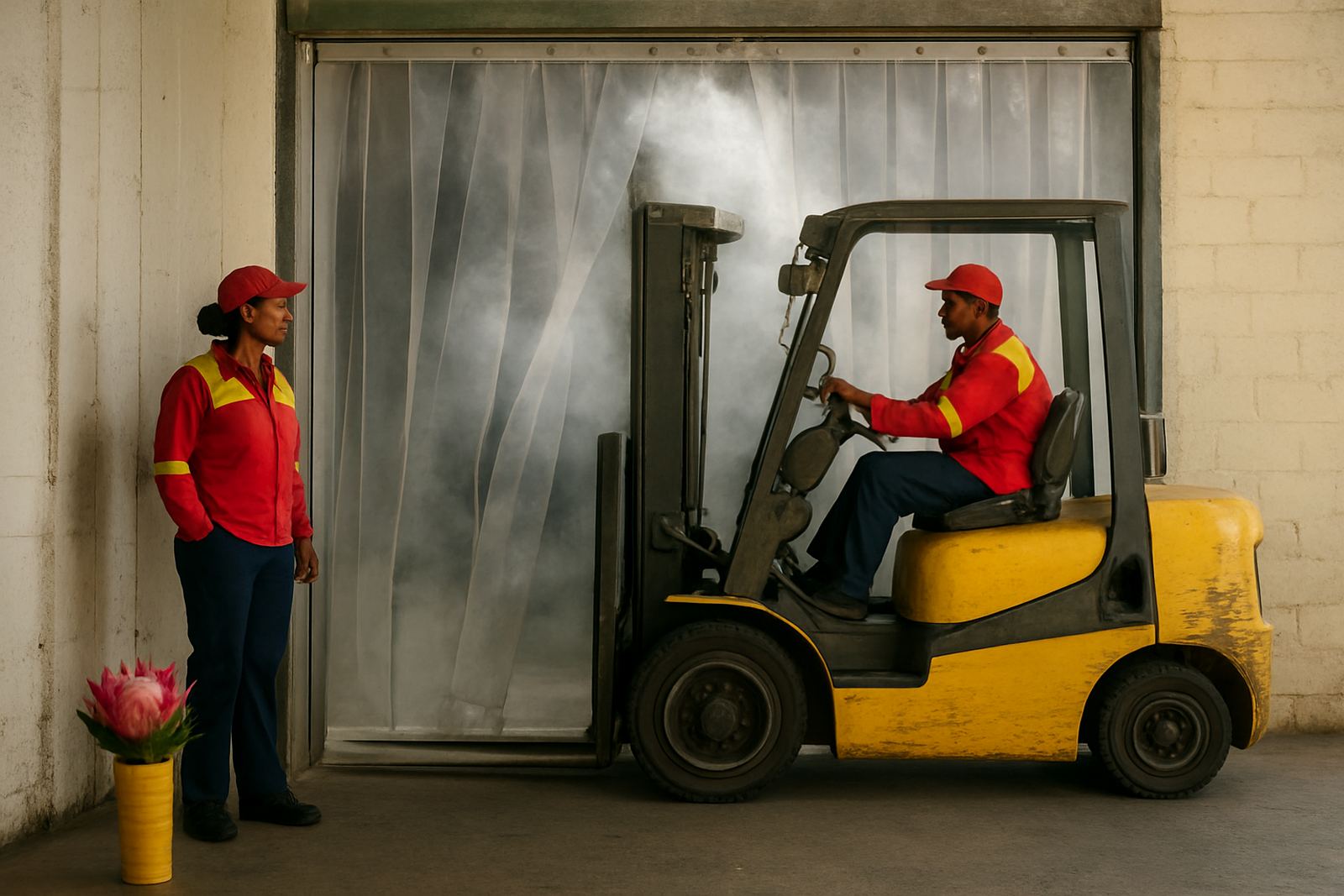
Cold rooms are built to hold a steady temperature, but they are also one of the few places on a site where warm air is constantly trying to get in. Every time the door opens, damp air from the shop floor, packing area or yard enters the room. When that air touches a cold surface, the water vapour condenses and you see droplets, mist or frost.
The most common problem spots are the door frame, the rubber seal, ceiling joints and the edges where insulated panels meet. These areas often have tiny gaps, worn mastic or damaged insulation. Even a small opening can pull in moist air, especially in windy parts of the West Coast or on farms near Paarl and Stellenbosch where doors open often during loading.
Condensation is not just a housekeeping issue. It can shorten the life of door hardware, stain panels, weaken seals and make floors slippery. Left long enough, it can also lead to ice build-up that puts extra strain on the cooling system.
What usually causes it in Western Cape conditions
In the Western Cape, condensation often shows up harder in winter and during cool, damp mornings, but it can happen all year round. Coastal humidity in places like Cape Town, Montague Gardens and Vredenburg brings a lot of moisture into the air. On farms and in produce stores, wash-down routines, frequent traffic and open loading bays add even more damp air.
Load-shedding can make the problem worse. If a cold room warms up during a power cut and then drops back down quickly when power returns, moisture in the air has more chances to settle on cold surfaces. The same can happen when a room is overpacked, airflow is poor, or the evaporator is dirty and not pulling air through properly.
- Worn or damaged door seals
- Door closers that do not shut fully
- Gaps in ceiling or panel joints
- Blocked drains or standing water nearby
- Dirty coils reducing airflow and cooling efficiency
Early warning signs you should not ignore
Most condensation problems start small. A bit of damp around the threshold, a foggy patch near the ceiling or a line of moisture on a panel seam may not look serious, but it often means the room is taking in more warm air than it should. Once the room starts sweating in the same places every day, the issue is usually mechanical or structural, not just a one-off weather problem.
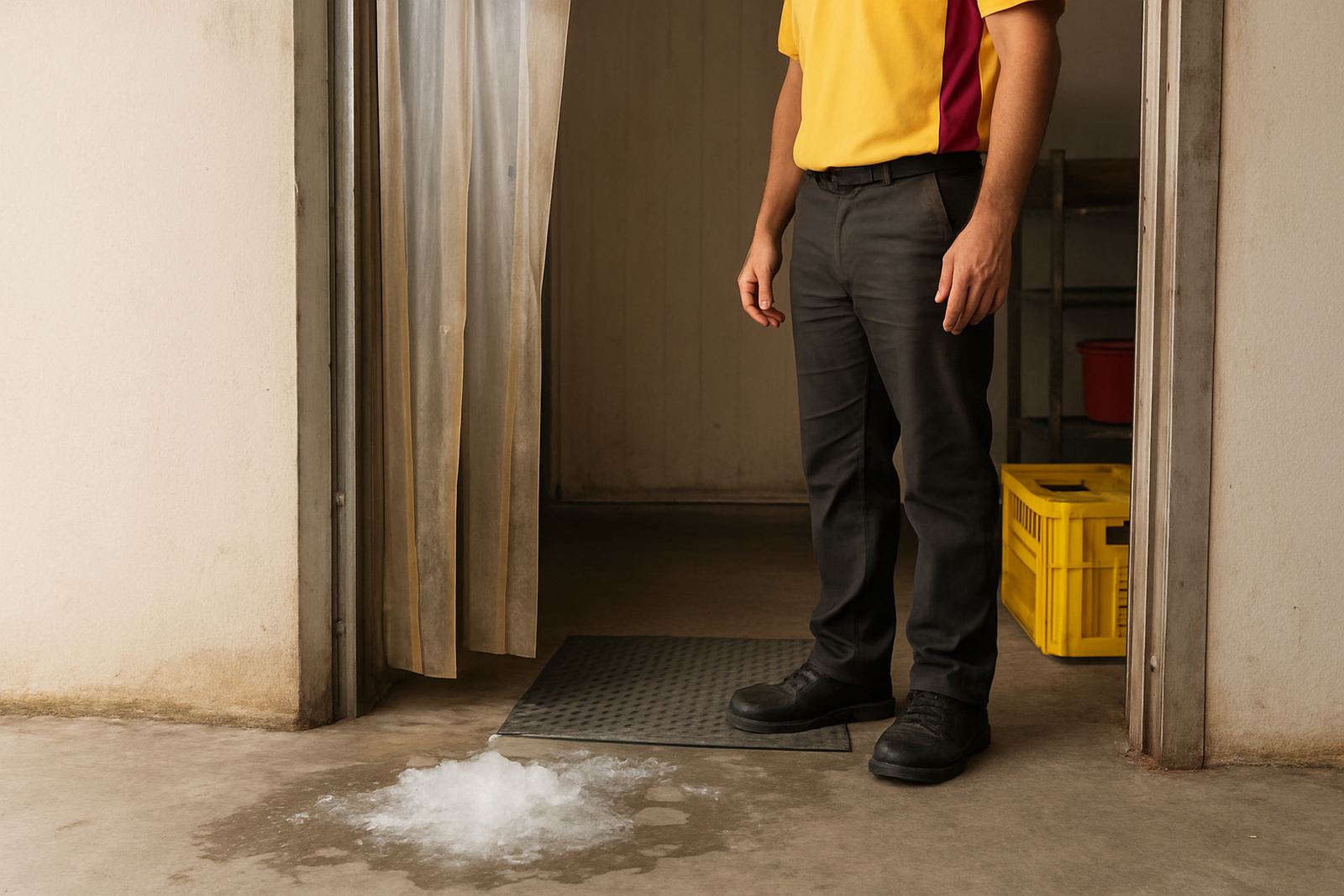
Look out for water pooling near the doorway, frost building up on the inside of the frame, a rubber seal that no longer sits flat, or a cold room that takes longer than usual to pull down after a door has been open. If staff are wiping the same spot every morning, that spot is telling you something.
- Water marks on the wall or ceiling panels
- Ice around the door frame or latch
- Musty smells near the entrance
- Floor tiles or epoxy coating lifting near the threshold
- Temperature swings after normal loading activity
What good maintenance should check first
A proper inspection starts with the simple things. The door must close squarely, the seals must sit tight, and the frame must not have gaps where warm air can creep in. After that, the technician should check the insulation joints, panel fixings, drainage and the condition of the evaporator coil. If the coil is iced or dirty, the room may be running harder than it should and the surfaces around it can sweat more often.
Temperature logging is useful here because it shows patterns. If the room is stable at night but swings badly during stock handling, the issue may be door traffic. If condensation appears even when the door is rarely used, the problem is more likely insulation, drainage or a failing seal. In some cases a small leak at a refrigerant line or a blocked drain can look like ordinary moisture, so it pays to trace the source properly.
For shops in Cape Town and the Winelands, we often see the same thing: a room that seems fine in summer, then starts sweating in the first cold wet spell. That does not mean the room suddenly broke. It usually means the weak point was there al along and the weather made it obvious.
How to reduce condensation without shutting the room down
You do not always need a full shutdown to get condensation under control. A planned maintenance visit can deal with several common causes in one go, while keeping stock handling in mind. Cleaning the coil, clearing drains, checking door hardware and resealing small gaps can make a big difference.
Simple site habits help too. Keep the door open for the shortest possible time, avoid washing down right beside the entrance just before a busy loading period, and do not prop the door open unless there is a clear reason. If the room is used seasonally, a proper shutdown preservation step before a quiet period can protect seals, drains and panels from damp damage.
- Keep pallets and stock away from the doorway
- Repair torn seals before they split further
- Make sure drains fall away correctly
- Check fan operation after any power interruption
- Schedule servicing before the wet season starts
A local example from a produce room near Paarl
On a recent cold room in the Paarl area, staff were finding water at the threshold every morning and a thin line of frost on one ceiling joint. The room itself was holding temperature, so at first it looked like a minor nuisance. On inspection, the door seal had hardened, the closer was not pulling the door shut fully, and the drain line was partly blocked with silt and debris. The coil was also dirty, which made airflow uneven.
After the seal was replaced, the door closer adjusted and the drain cleared, the sweating stopped within a short time. The panels dried out and the team did not need to keep mopping the same spot. That sort of repair is common across shops and farm packhouses in the Western Cape, especially where humidity, traffic and power cuts all put pressure on the room at once.
If condensation keeps coming back, treat it as a warning sign. It is usually cheaper to fix the cause early than to replace damaged panels, floor finishes or door parts later on.
When to call for a proper inspection
If moisture is returning after cleaning, if ice is forming around the door, or if the room is starting to smell damp, it is time for a technician to inspect the system properly. The same applies if the cold room is used for high-value stock and temperature swings could affect quality. In those cases, a small fault can become a bigger loss very quickly.
Kenny Cape West works across Cape Town, Montague Gardens, Stellenbosch, Paarl, Malmesbury and Vredenburg on cold room servicing, leak detection, maintenance contracts and emergency call-outs. For condensation problems, we check the full setup, not just the wet patch. That means the door, seals, drains, coils, joints and operating pattern all get looked at together.
For advice or a site visit, email callouts@kennycapewest.co.za. A cold room that stays dry usually starts with one thing: finding out where the moisture is getting in.