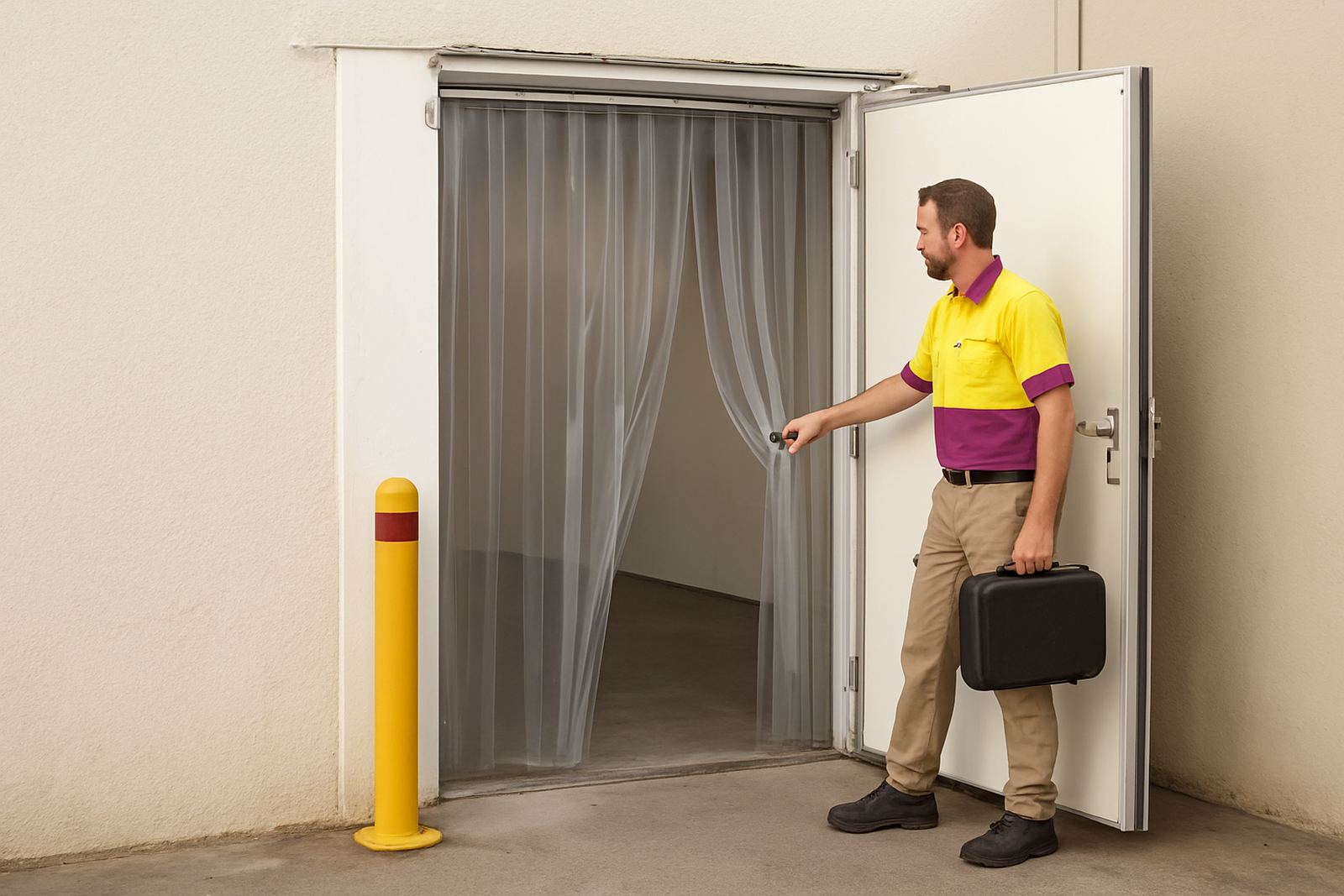
Why Small Cellars Swing Faster Than Larger Rooms
A compact cellar has less air volume, so every door opening, warm pallet, or short power interruption shows up quickly on the temperature reading. In Cape Town, Stellenbosch and Paarl we often see the same pattern in shops and farm stores, the space looks tidy but the cooling load changes every hour.
Smaller rooms also recover more slowly when the unit is undersized or the condenser is working in dusty air. If the cellar is near a loading bay, bakery, or sun facing wall, the temperatue can climb in a matter of minutes and then settle again once the door stays closed.
The Most Common Causes Of Unstable Readings
Before blaming the refrigeration unit, check the basics. The issue is often a mix of air movement, usage, and maintenance rather than one big fault.
- Door seals that leak warm air when the door closes
- Too many door openings during stock moves or farm pickups
- Blocked evaporator coils that cannot pull heat out properly
- Dirty condenser coils running against West Coast dust or coastal salt
- Drain line blockages that let ice build up and affect airflow
- Thermostat probes placed too near the door or too close to the evaporator
- Load-shedding starts and stops that cause short cycling
On a cold morning in Malmesbury, a small deli cellar may hold steady. By late afternoon, after repeated deliveries and the door standing open for unpacking, the same room can drift up and down enough to worry a manager.
How Air Movement And Layout Affect The Cellar
Many temperature complaints come down to poor air circulation inside the room. If cartons are packed tight against the walls or stacked in front of the evaporator, cold air cannot move evenly. The top shelf may be too warm while the floor area feels fine.
Check that product is not blocking the return air path. Leave enough clearance around the unit, keep bulk items off the wall, and avoid hanging plastic strips or bags in front of the fan. Even a small change in layout can make the room steadier.
- Keep crates and boxes off the evaporator area
- Do not overfill the room after a delivery
- Leave space for air to move between shelves
- Make sure lights are switched off when not needed
Humidity, Coastal Air And Door Openings
Coastal humidity matters more than many owners expect. In places like Cape Town, Vredenburg and other parts of the West Coast, damp air enters quickly when a cellar door is open. That moisture can form frost on coils, which then reduces cooling capacity and causes the room to swing warmer before dropping cold again.
In a wine store or produce cellar, repeated opening and closing also brings in warmer air from outside. If the room sits near a wash area or a loading zone, condensation on floors and walls is a sign that the space needs attention. The answer is not always colder settings, it is often better control of air leaks and traffic.
What To Check During Load-Shedding And After Power Returns
Load-shedding can leave a cellar out of balance even when the unit comes back on. After the power returns, the compressor may run hard to catch up, then short cycle if the controls are not set correctly. That starts a pattern of over-correction and the temperature drifts again.
After an outage, check the following:
- Confirm the setpoint is correct and the thermostat is responding
- Listen for fan motors starting cleanly
- Look for ice on the evaporator or water under the unit
- Check whether the door was left open during the outage
- Review the temperature log for the full period, not just one reading
For farms outside Paarl, where power interruptions can come at busy packing times, a proper restart routine matters. If the cellar is opened too soon after power returns, warm air enters while the system is still catching up.
When A Maintenance Call Makes More Sense Than A Quick Reset
If the room keeps swinging after you have checked the door, layout and power supply, the system likely needs proper maintenance. That may include leak detection, coil cleaning, drain clearing, probe testing or a full service on the refrigeration circuit.
At Kenny Cape West we see many small cellars in shops and farm stores across Cape Town, Montague Gardens, Stellenbosch, Paarl, Malmesbury and Vredenburg. The common thread is usually this: the room was fine at installation, then dust, humidity, stock changes and usage built up over time. A steady cellar needs regular attention, not only emergency repairs when product is already at risk.
For busy operations, planned maintenance and temperature logging are worth the effort. They show whether the problem is a real fault, a usage issue, or a seasonal change that needs a small adjustment.