Why the doorway matters more than the thermostat
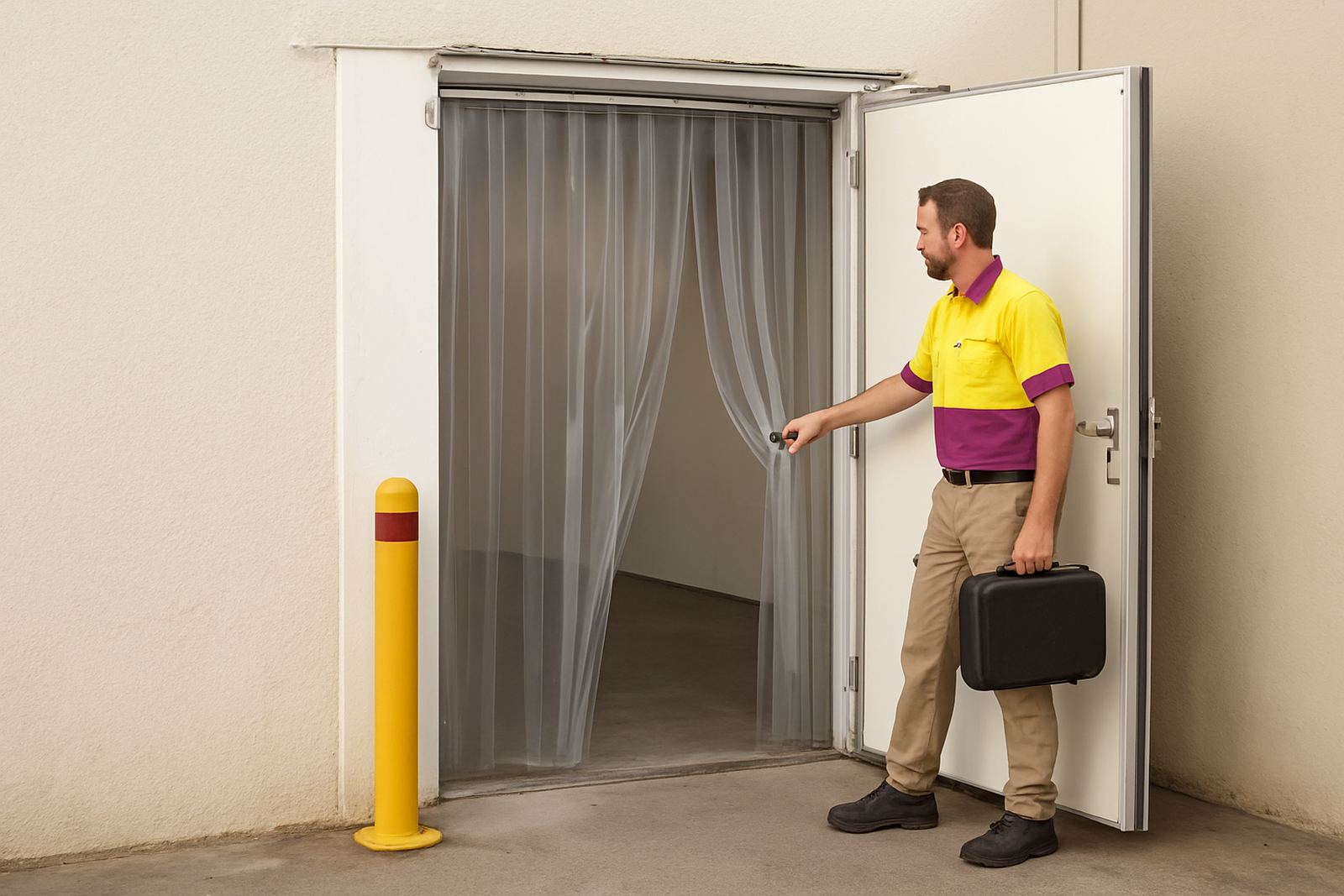
A cold room can have a good compressor and still struggle if warm air keeps slipping in through the doorway. Every time the door stays open too long, moist air moves inside, the evaporator has to work harder, and the room starts carrying extra frost on the coil, floor and fittings.
In the Western Cape that matters in more than one way. Coastal humidity around Cape Town and Vredenburg can load a room with moisture quickly, while inland dust from farm yards and loading areas can settle on seals, hinges and tracks. Once that happens the door starts closing badly, the cold air escapes faster and the system runs longer just to hold temperature. It is a small opening with a big effect.
If a shop door is opening every few minutes, or a farm cold room is being used for fast stock turnarounds, the operating habit becomes just as important as the refrigeration equipment. Keeping doors closed is not about being strict, it is about stopping avoidable heat gain before it turns into higher power use and temperate swings.
Simple doorway habits that make a real difference
Most sites do not need complicated changes first. They need a clear routine that everyone can follow, especially when the pace picks up at receiving time or just before closing.
- Open the door only when stock is ready to move in or out.
- Keep goods staged close by so staff are not standing in the doorway looking for space.
- Use one person to manage the door during busy loading periods.
- Check that the door closes fully after every use, not almost fully.
- Do a quick seal check each morning for tears, gaps or hard spots.
- Keep the floor area clear so pallets, crates or bins do not stop the door from shutting.
These are small habits, but they work. A door that closes cleanly and stays closed for even a few extra seconds each cycle will cut down warm air entry and reduce frost on the coil. On a busy shop floor in Stellenbosch or a packing yard near Paarl, that can be the difference between steady holding temperatures and repeated recovery periods after every opening.
What warm air does inside a cold room
Warm air is not just hotter air. It carries moisture, and moisture is what creates most of the trouble. When humid air meets the cold interior, water condenses and then freezes on surfaces. Over time that ice layer acts like insulation on the evaporator, so the unit has to run longer and harder to pull the room back down.
The side effects show up in practical ways:
- frost on the evaporator coil
- water pooling near the doorway
- slower pull-down after loading
- uneven product temperatures near the entrance
- doors that start sticking because of ice or swollen seals
If the room is used for dairy, produce, meat or mixed stock, these swings can matter quickly. Even a short warm spell at the doorway can leave the first pallets near the entrance under more pressure than the rest of the load. That is why doorway control should sit alongside planned maintenance, not after it.
Loading practices for shops, packhouses and farms
Different sites have different traffic, but the principle stays the same. The less time the doorway is open, the better the room performs. A shop in Cape Town might need quick loading during trading hours, while a fruit store in the Winelands may work with early morning stock moves before the day heats up. The routine should fit the site, not the other way around.
Good loading practice starts before the door opens. Stock should be sorted, counted and ready. Pathways should be clear. If a forklift or trolley is involved, the route must be planned so there is no waiting at the threshold. One extra minute with the door open can bring in more heat than people expect, especially on a hot inland afternoon.
For sites that use multiple staff, make the doorway rules visible and practical. A short briefing during shift handover helps more than a long instruction sheet. Charlene can organise maintenance schedules around these operating times so the room is checked after peak loading, not only on a fixed calendar date that may miss the real pressure points.
Hardware checks that support better habits
Door control works best when the hardware is in decent shape. A seal that has hardened in winter, a hinge that sags slightly, or a latch that needs a second pull can all undermine the best staff routine. These problems often start small and then grow once the weather turns warmer or the site gets busier.
During a service visit, the team will usually check:
- door seals for gaps, cracks and flattening
- hinges and closers for alignment
- latch pressure and closing force
- drainage around the threshold
- frost points near the doorway and frame
- signs that warm air is entering from repeated use
If a seal has failed, no amount of good behaviour will fully fix the issue. The same goes for a door that drags on the floor or does not meet the frame properly. On coastal sites, salt air can speed up wear on metal fittings, so these checks should be part of routine maintenance rather than a once-off repair response.
A West Coast example from the field
At a cold room serving fresh stock near Malmesbury, the owner noticed that temperatures were stable overnight but drifting by late morning. The equipment itself was still running, but the evaporator was frosting faster than expected and the doorway showed signs of repeated holding open during loading. Staff were moving produce in small batches and waiting for the next trolley to arrive, which kept the door open for too long.
The fix was not dramatic. The team changed the loading sequence, moved staging closer to the room, and assigned one person to manage the door during receiving periods. The seals were checked, the coil was cleaned and the drain cleared. After that, the room held temperature more consistently and the defrost load eased. It was a practical reminder that operating habits can be just as important as mechanical repairs.
That is often what separates a room that always seems to be struggling from one that simply gets on with the job. Small changes, done every day, can protect stock and cut stress on the system without adding much cost.
When to bring in planned maintenance or a call-out
Doorway control is a good first step, but it should sit inside a broader service plan. If you are seeing frequent frost, unusual compressor run times, water at the entrance or temperatures that rise after every delivery, the system needs a proper inspection. Leak detection, temperature logging and coil cleaning can show whether the issue is behaviour, equipment, or both.
For Western Cape shops and farms, a planned maintenance contract makes it easier to catch these problems before they grow. Seasonal start-up and shutdown preservation also help when rooms are used harder in summer or sit quieter during a slower period. If the door is the weak point, fixing it early saves a lot of trouble later.
Kenny Cape West works from Montague Gardens and covers Cape Town, Stellenbosch, Paarl, Malmesbury and Vredenburg. For cold room servicing, aircon servicing, emergency call-outs or maintenance planning, contact callouts@kennycapewest.co.za.