Why water starts escaping from the indoor unit
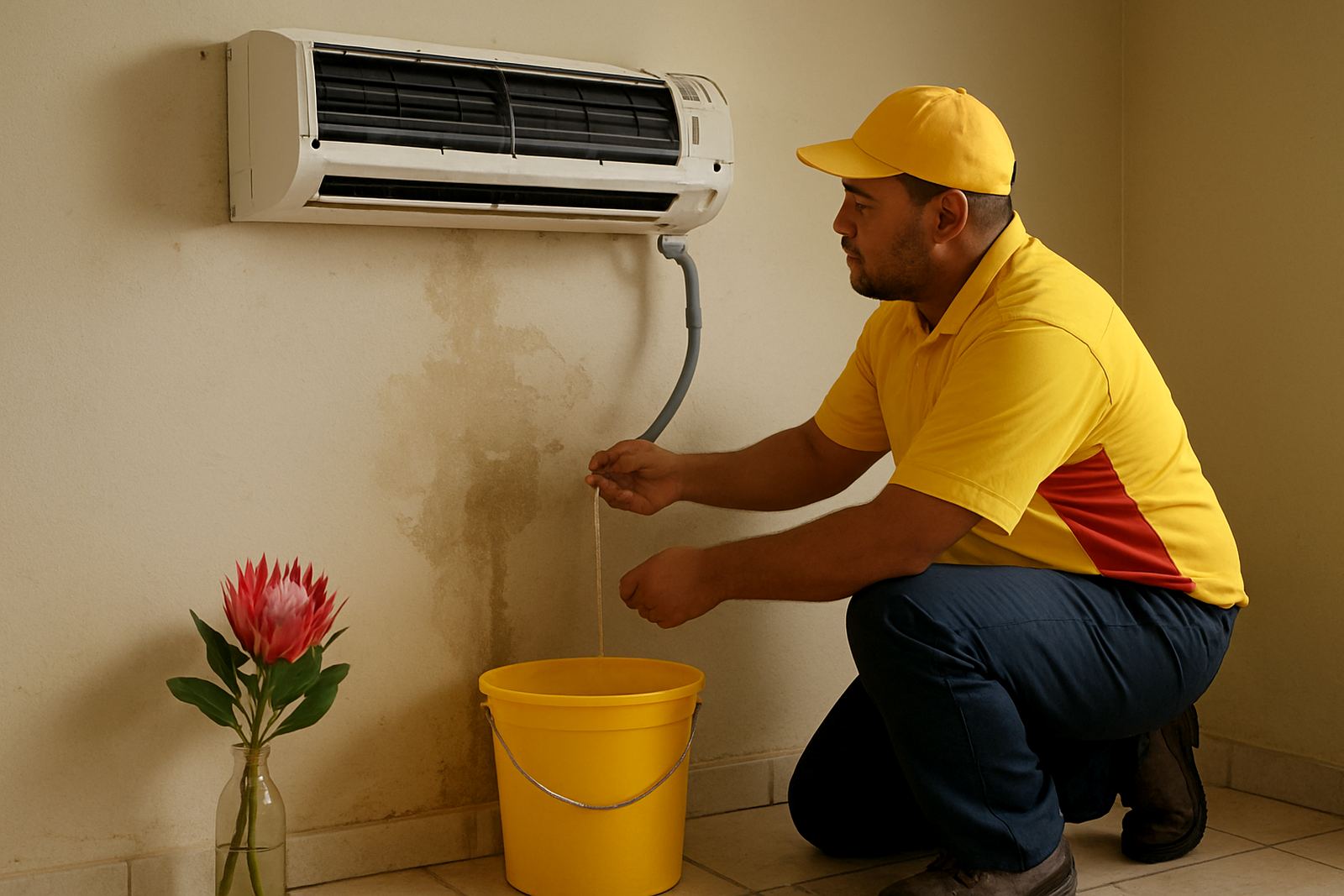
An aircon does make water while it cools. Warm room air passes over a cold coil, moisture condenses, and that water should run into the drain tray and out through the drain pipe. When that path is blocked or the unit is not set up correctly, the water looks for the easiest exit and that can be onto the wall, carpet, or directly onto stock in a shop.
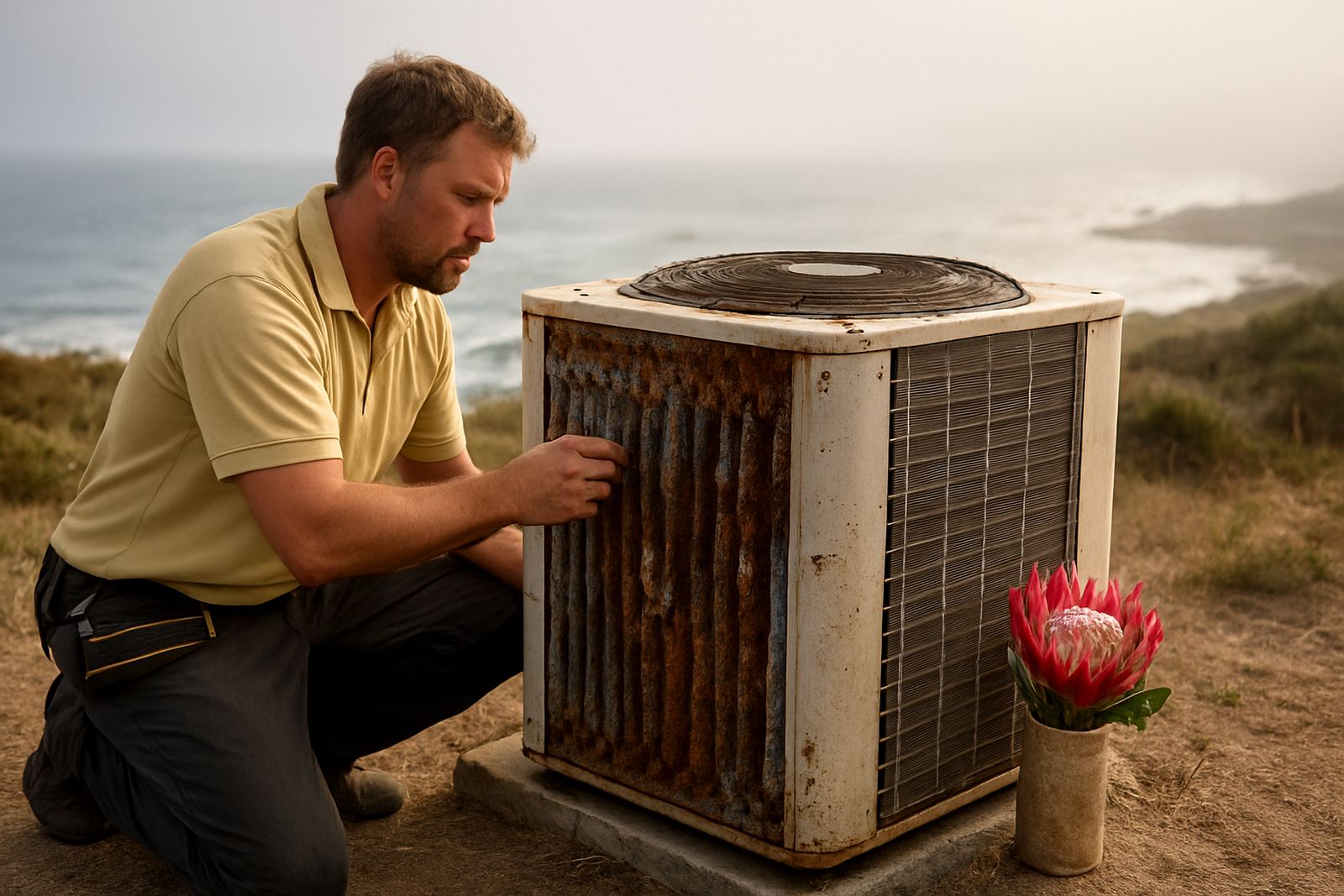
In Cape Town, Stellenbosch, Paarl and the West Coast, we often see the same few causes. Dust from road traffic, pollen, coastal salt and fine lint build up inside the unit. After a few months of heavy use, the drain line can slow right down. On a hot week with load shedding, the unit may cycle on and off more often, which can disturb weak drainage and reveal a problem that was already there.
The most common faults we find on call-outs
Most dripping indoor units come down to one of these issues:
- A blocked drain pipe from slime, dust, algae or insects
- A dirty filter or coil causing ice to form, then melt too fast
- A drain tray that is cracked, overflowing or out of level
- Improper installation where the unit does not fall correctly toward the drain
- A pump fault on systems that need lifted drainage
- A low refrigerant charge that allows the coil to ice up and thaw
A unit can look fine on the outside and still be sitting with a hidden blockage inside the casing. If water only drips when the system has been running for a while, that often points to a slow drain rather than a burst pipe. If it drips soon after switch-on, coil icing or a tray alignment issue may be the cause.
What you can check before the room gets damaged
If the room is already wet, switch the system off and move furniture or stock away from the drip path. Do not keep running it in the hope that it will clear itself. That can soak ceiling boards and push water into electrics, which is a bigger repair than the aircon fault itself.
There are a few safe checks a manager or homeowner can do without opening the unit:
- Look for ice on the indoor unit or on the copper pipes
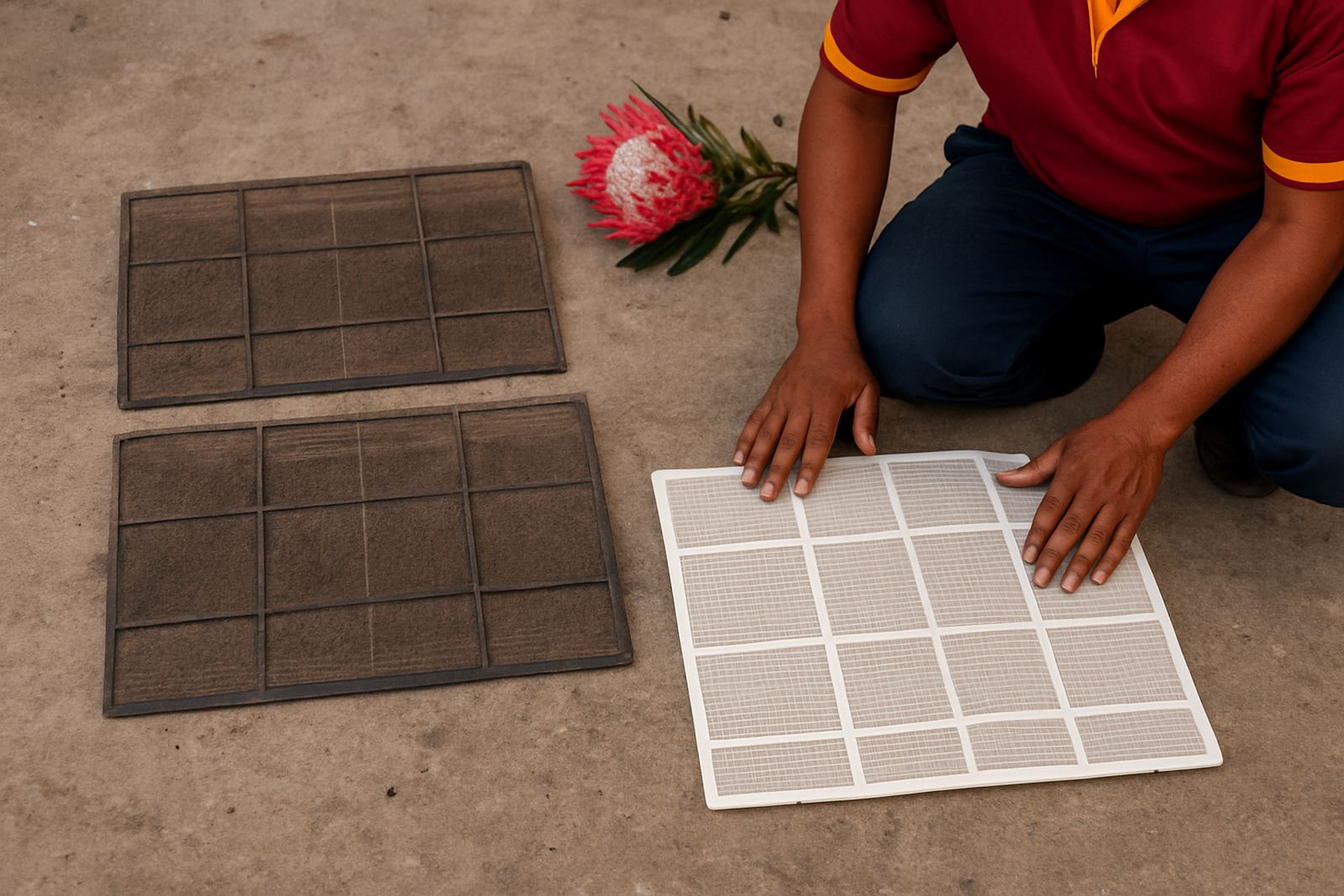
- Check whether the filter is visibly dusty
- See if the outside drain end is dripping at all
- Make sure the indoor unit has not been bumped or shifted
- Listen for unusual gurgling or hissing sounds
If the filter is heavily choked, a basic clean may help, but if water is already dripping into a room the fault is usually deeper than the filter alone. A proper service should include coil cleaning, drain clearing and a check on levels and airflow. That saves time later and prevents repeat call-outs.
What dripping means for shops, offices and farm buildings
For a small shop in Malmesbury, a leak above a till point can stop trading fast. In a restaurant storeroom, dripping water near packaged goods can lead to spoilage and complaints. On a farm office or packing area in the Winelands, the same fault can affect documents, power points and cooling for staff spaces.
In Western Cape conditions, the risk is not just the water itself. Coastal humidity makes units work harder, while fine dust from open doors and yard traffic clogs drains faster. If a system cools a room where people come and go all day, the indoor coil may be carrying more moisture than expected. That is why planned maintenance matters. It catches slow drain problems before they become damage claims.
For businesses with several units, it helps to keep a simple service record showing dates, room temperatures and any repeat leaks. This makes it easier to spot a unit that is drifting out of spec and needs attention before it starts dripping again.
When the leak points to a bigger refrigeration fault
Not every dripping aircon is just a blocked pipe. Sometimes the indoor unit is only showing the result of a larger refrigeration problem. If the coil keeps freezing, the system may have low gas from a leak, poor airflow, a weak fan motor, or a temperature control fault. In those cases, cleaning alone will not solve the problem.
A technician should check the following:
- Airflow across the coil
- Fan operation and speed
- Drain fall and tray condition
- Signs of oil staining on pipe joints
- Refrigerant pressure and system response
- Whether the thermostat or controller is cycling the unit correctly
If the leak started after a recent service, installation change or ceiling repair, the unit may have been moved slightly out of level. Even a small tilt can stop water draining properly. On older units, brittle drain piping or damaged insulation around the cold pipe can also lead to water forming where it should not.
A practical example from a Cape Town site
We were called to a mixed-use building in Montague Gardens after water started dripping from an indoor unit above a reception area. The tenant thought the aircon was broken, but the unit itself was still cooling. The real issue was a drain line blocked by dirt and fine algae, with the tray sitting just off level after ceiling work in the same area.
After draining the line, cleaning the coil and resetting the unit level, the dripping stopped. The team also logged the room temperature before and after the repair, because the staff had reported that the area felt colder than normal. That turned out to be a sign the unit had been icing and thawing, which explained the excess water. It was a small job, but if it had been left for another week the ceiling board would likely have stained and sagged.
That kind of call-out is common from Cape Town through to Paarl and Vredenburg. The fault often looks simple from the floor, but the cause is usually a mix of dust, drainage and operating conditions.
How Kenny Cape West handles dripping aircon repairs
For dripping indoor units, we use a practical repair process rather than a quick wipe and go. That usually includes a site check, drain clearing, coil cleaning where needed, a look at pipe insulation, and a check on whether the unit is level and draining freely. If the system needs a fuller service or there is a refrigeration fault, we explain what is necessary before work continues.
We handle call-out repairs, planned maintenance, cold-room work and seasonal start-up or shutdown support across Cape Town, Montague Gardens, Stellenbosch, Paarl, Malmesbury and Vredenburg. For recurring leaks, maintenance contracts are often the most cost-effective route because they reduce dirt build-up and give you a record of what was done and when.
If an indoor unit is dripping into an occupied room, do not wait for the stain to spread. Switch it off and arrange a proper inspection while the fault is still small.