Cooling work on a wine farm has to fit the way the farm runs
On a wine farm, refrigeration is not only about keeping drinks cold. It is about protecting stock, holding grape products at the right temperature, keeping staff areas comfortable and making sure the visitor areas do not feel sticky in summer. A unit that works in the morning and trips after lunch can affect service, storage and the day’s schedule very quickly.
We work with farms from Cape Town and the Winelands to Malmesbury and the West Coast, where heat, dust and coastal humidity all put pressure on equipment. In some cellars the issue is load-shedding and restart problems. In others it is a drain that blocks up, a fan motor that starts making noise, or a cold room that keeps drifting a few degrees off target. These are the kinds of faults that need practical attention, not guesswork.
- Cold rooms for stock, packaging and cellar use
- Split aircon units in tasting rooms, offices and staff spaces
- Refrigeration plant supporting stores and back-of-house areas
- Units exposed to dust, spray, humidity and long operating hours
Typical equipment on site, and what usually needs attention
Most farms have a mix of refrigeration and aircon equipment rather than one single system. A cellar store may use a walk-in cold room with wall panels, insulated doors and a floor drain. Tasting rooms often rely on wall-mounted or ceiling units. Staff areas may have smaller split units that run hard during peak season and then sit unused for part of winter. All of these need different checks and different spare parts.
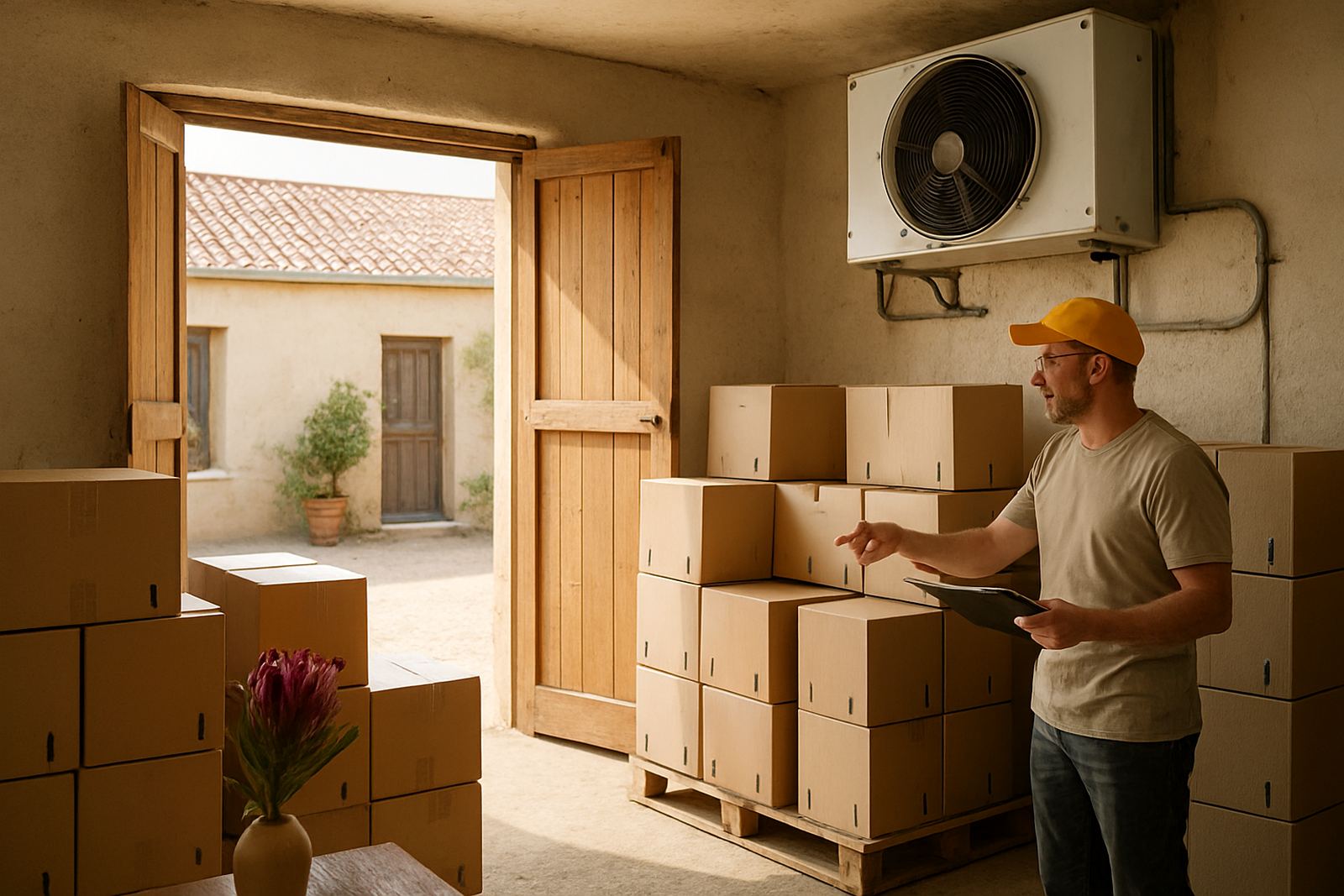
We inspect the set-up as it is actually used, not only as it was drawn on paper. For example, a cold room near a loading bay may be fighting warm air every time the door opens. An aircon unit in a tasting area may be undersized if the room has glass, direct sun and a full guest load. In these cases the equipment is not always faulty, it is simply being asked to do too much.
- Cold rooms and cellar stores
- Packaged or split aircon units
- Condenser and evaporator coils
- Drain lines, filters and temperature controls
- Thermometers, probes and basic temperature logging
Planning advice for cellar stores, tasting areas and staff rooms
Good planning saves money later. If a farm is upgrading a cellar store or adding a tasting room, we look at room size, door traffic, wall insulation, heat load from lighting and where the air will actually move. A cold room with poor airflow can freeze one side and leave the other side warm. A tasting room with the wrong unit size can be noisy, thirsty on power and still not hold a steady temperature.
It also helps to keep service access in mind. We often see outdoor units packed into corners where the technician must work around crates, pipes or a high hedge. That makes cleaning harder and repairs slower. Leave space around the plant, keep the area free of dust and make sure electrical isolators are easy to reach. On farms with load-shedding, we also advise on restart checks after outages so the system does not come back on in a poor state.
For new layouts or changes to an old building, simple planning rules make a difference:
- Allow clear access to outdoor units for cleaning and fault finding
- Keep cold-room doors closing properly with sound seals
- Separate warm work areas from cold storage where possible
- Place temperature sensors where they read the room, not a dead spot
- Plan for summer peak use, not only off-season operation
Common mistakes we see on wine farms
One of the most common problems is leaving servicing until a breakdown happens. By then the filters are blocked, the coil is dirty and the machine has been running hot for weeks. Another frequent mistake is using a temperature setting that seems fine by eye but is not checked with a proper probe or logger. In cellar storage, a small drift can matter a lot over time.
We also see drains that were never cleared properly after a season change. Water then backs up, drips through ceilings or causes mould around the unit. Coastal farms and properties nearer the West Coast get another layer of trouble from salt in the air, which can corrode coils and outdoor casings faster than expected. A quick rinse is not enough if the unit has already built up grime and salt residue.
Other avoidable errors include:
- Running units with clogged filters and dirty coils
- Ignoring short cycling or unusual fan noise
- Putting the wrong size unit into a glass-heavy room
- Skipping shutdown preservation before long idle periods
- Not checking how equipment restarts after a power cut
Maintenance and call-out options that suit harvest season
Wine farms often need a mix of planned maintenance and fast call-outs. During harvest and peak visitor periods, it is better to have a contract in place than to search for help after hours. Our team handles planned maintenance, emergency call-outs, coil cleaning, drain clearing and seasonal start-up or shutdown preservation, depending on the site and the time of year.
A maintenance visit may include filter cleaning, coil inspection, fan checks, leak detection, drain clearing, electrical visual checks and temperature logging where needed. For cold rooms we also look at door seals, hinges, condensate handling and whether the room is recovering fast enough after use. This sort of service is especially useful where staff rotate, because the equipment gets used differently from week to week.
For farms that run visitor tastings and staff housing, we can split the work into priority areas so the most important spaces are handled first. That helps when budgets are tight and the farm wants to spread work across the year rather than pay for everything in one hit.
What a realistic budget looks like in Rand
Costs depend on the number of units, how hard they are working and whether the job is a service, repair or replacement. As a practical guide, a basic service on a small split aircon unit may start from around R950 to R1 600 per unit, while a more involved clean on a dirty coastal unit can go higher. Cold-room servicing is usually priced by the condition of the room and the time needed on site, often from about R1 800 for a straightforward inspection and clean, with repairs additional.
Emergency call-outs usually cost more than planned work because they need a quicker response and may happen after hours or over a busy weekend. Leak detection, temperature logging and fault tracing are also priced according to the time spent and the equipment involved. Where parts are needed, we quote before proceeding so there are no surprises.
For farms wanting a yearly contract, the best approach is to budget by area:
- Small tasting room and office set-up: from about R3 500 to R8 000 a year
- Mixed cellar and staff-area servicing: from about R9 000 to R25 000 a year
- Larger cold-room and multi-unit sites: from about R25 000 upwards
The exact figure depends on service frequency, travel and the age of the equipment. If a system is older, budget a reserve for repairs so a failed fan motor or compressor issue does not catch the farm off guard.