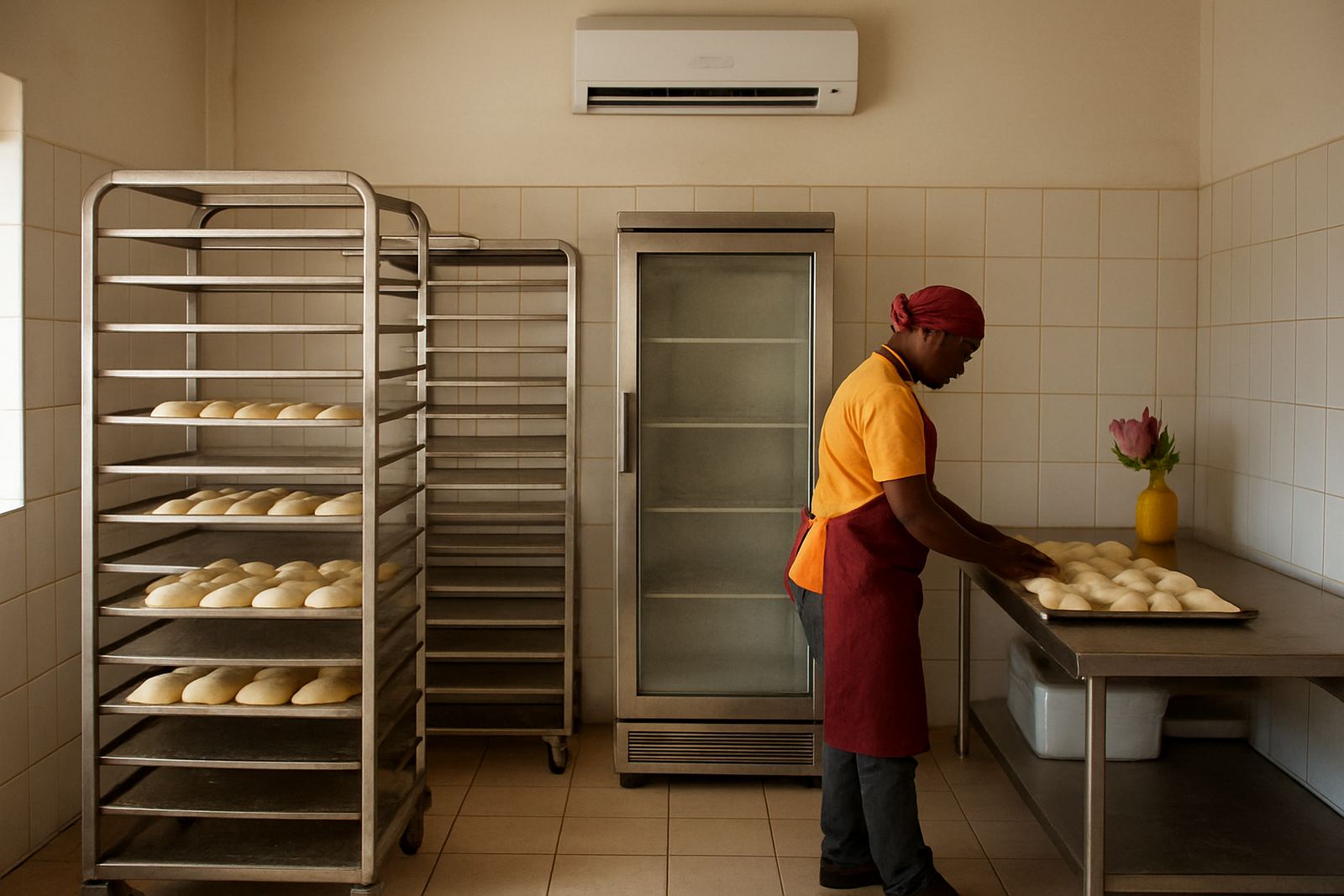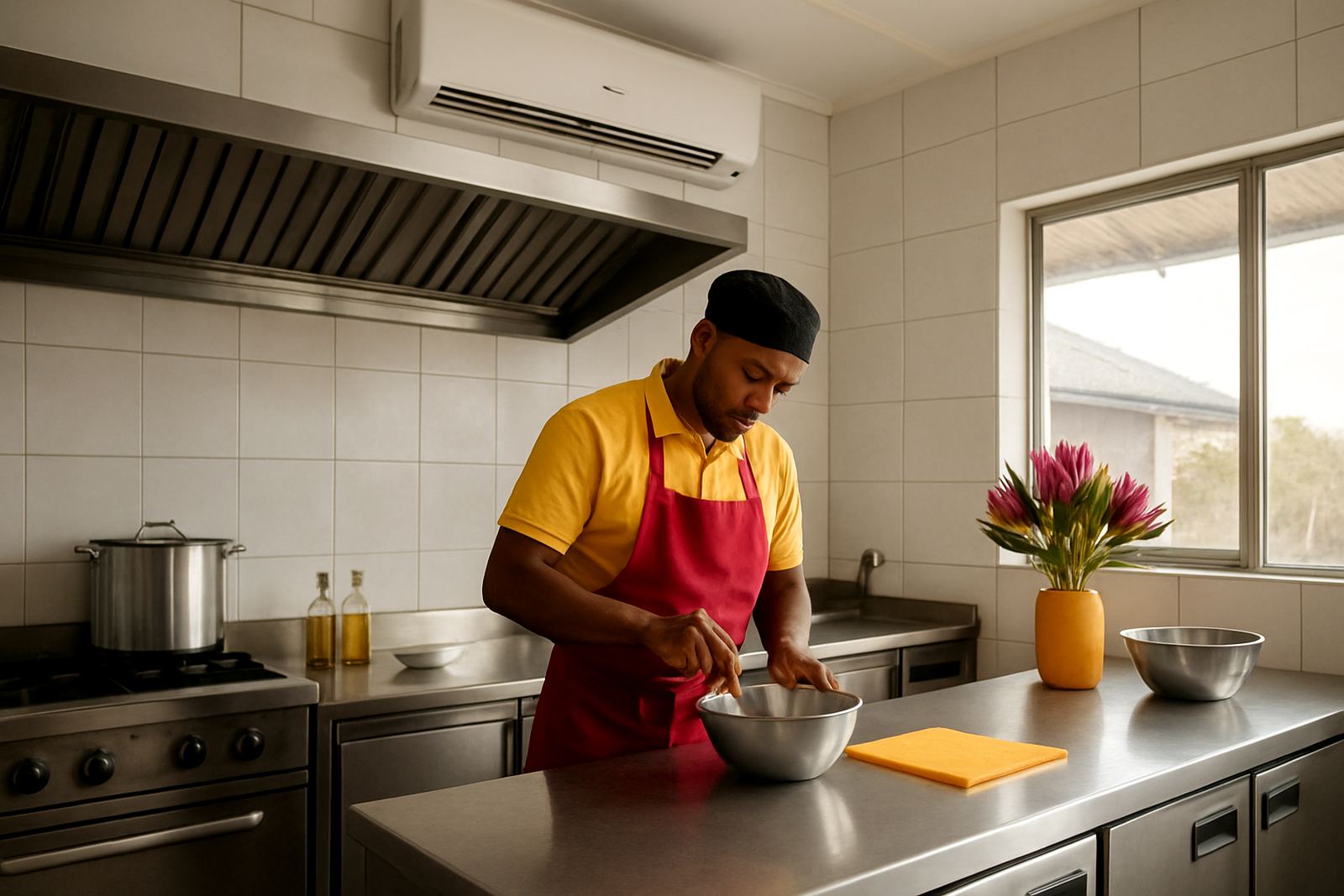
What cafe cooling has to handle every day
A cafe is not like a shop that opens and closes in a straight line. The fridges run hard from early morning, the milk gets used in bursts, pastry display units stay open to customers, and the room temperature changes every time the door opens. In summer, a small dining area can heat up fast. In winter, coastal humidity and damp mornings can still put strain on compressors, fans and controls.
We work with cafes that need a practical set-up, not an oversized system with high running costs. The aim is steady product temperature, clean air flow and equipment that can cope with load-shedding, busy weekends and long trading hours. In many cases the issue is not one big failure but a mix of small faults, a blocked drain, dirty coils, a weak seal or poor airflow around the cabinet.
Typical equipment in a cafe set-up
Most cafes use a mix of small and medium cooling equipment. The exact layout depends on whether the business is mainly takeaway, seated service, or a bakery-cafe with more stock on display. We service and maintain the kind of equipment that has to work all day without drawing attention to itself.
- Under-counter fridges and prep cabinets for milk, fillings and sandwich ingredients
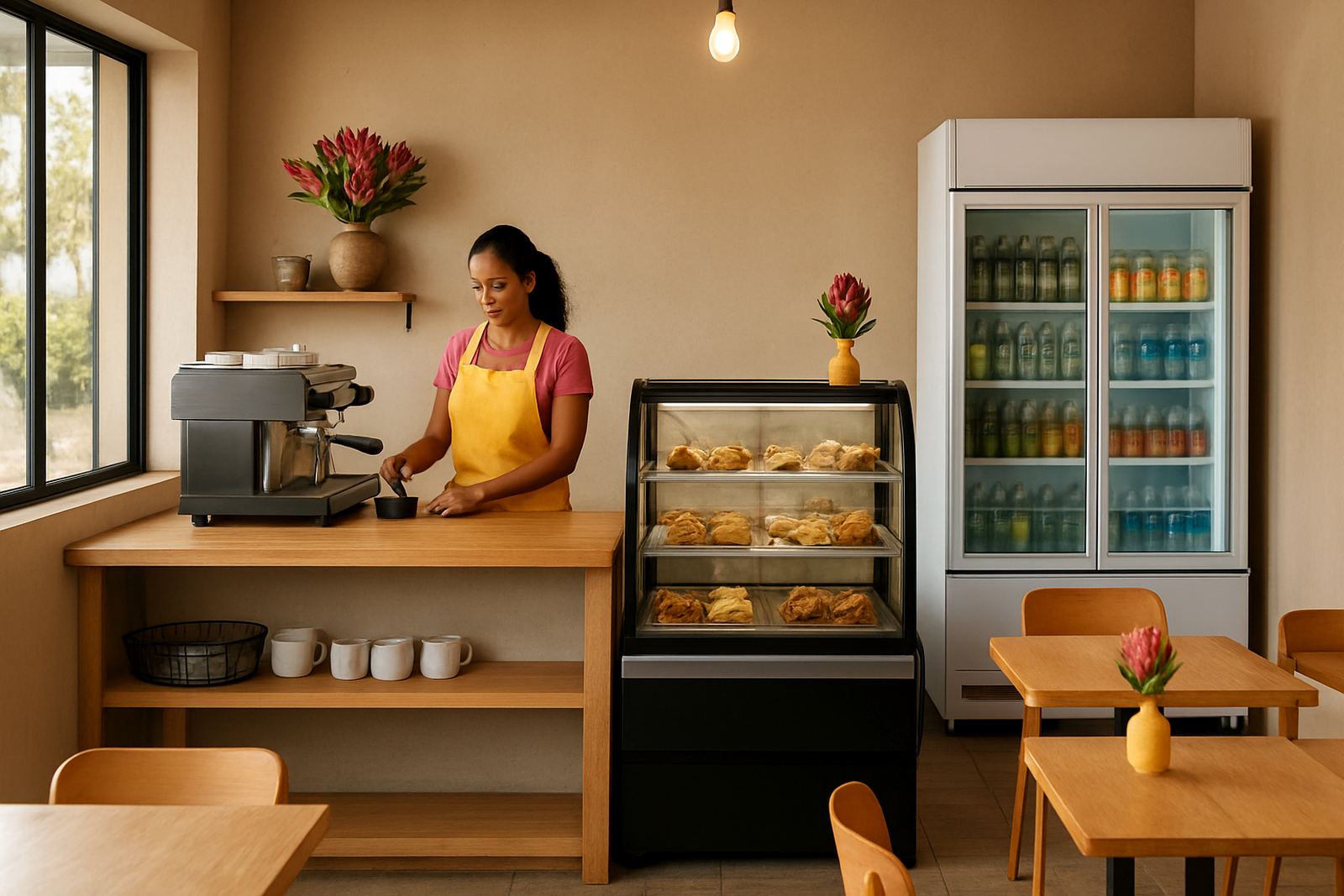
- Display fridges for cakes, pastries and chilled drinks
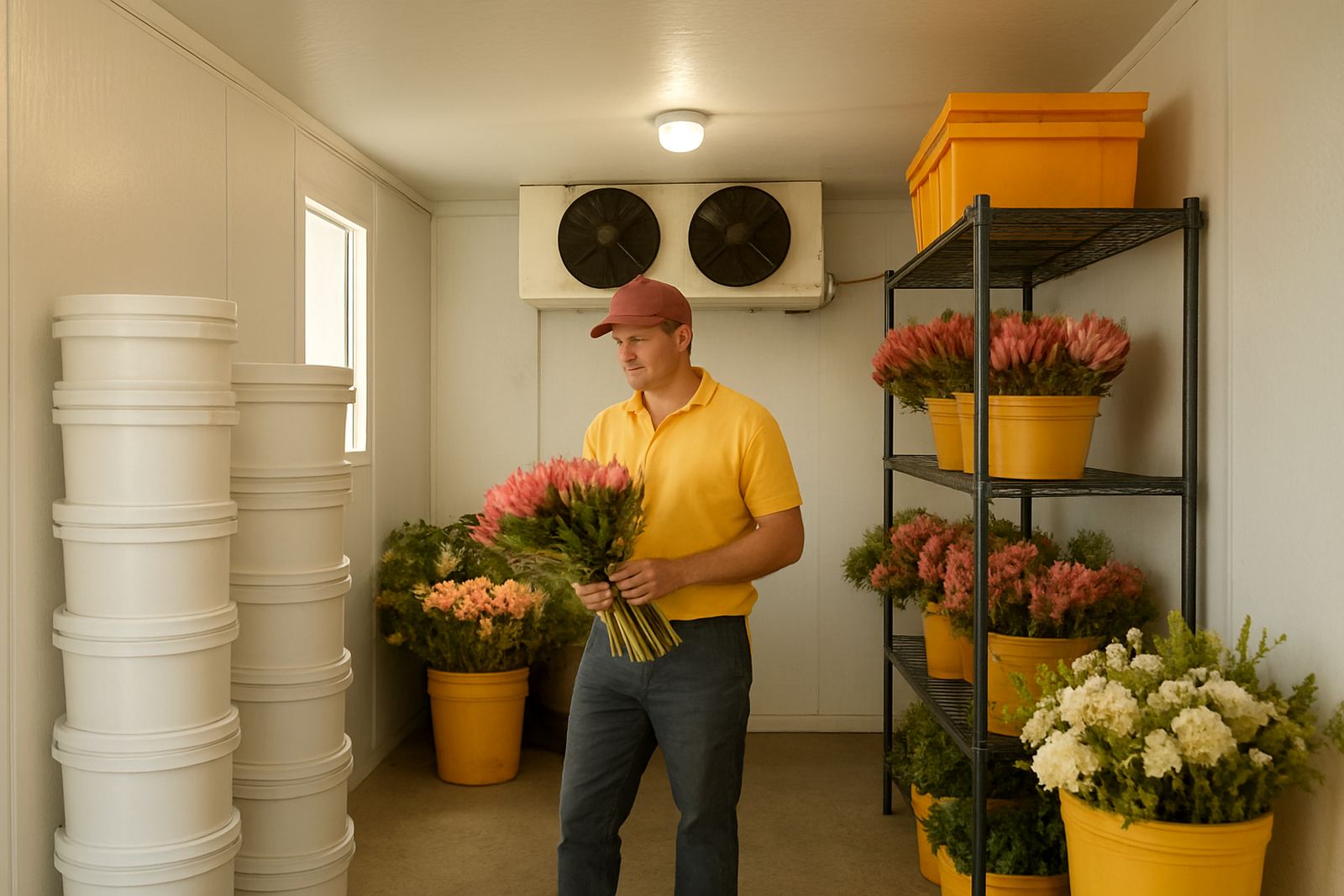
- Walk-in cold rooms for backup stock, dairy and frozen items
- Wall-mounted or cassette aircon units for customer areas and staff spaces
- Ice machines, where fitted, plus the pipework and drainage around them
- Temperature logging points for stock control and compliance records
If the cafe is in a coastal area like Cape Town, Blouberg or the West Coast, we also look at corrosion on condenser coils, brackets and drain parts. In wine farm settings around Stellenbosch and Paarl, dust, pollen and long pipe runs can create their own problems. A good service plan should match the site, not just the machine list.
Layout planning for counters, back rooms and seating
Good planning starts with heat and traffic. A cafe kitchen or service counter should allow staff to move quickly between milk storage, espresso area, prep fridge and waste bins without opening the same door ten times in a minute. If a display fridge sits too close to the oven or in direct sun, it will work harder and may never reach the right temperature.
We often advise on where to place aircon so it cools the room without blowing straight onto customers or onto open food. Airflow matters in small spaces. One unit in the wrong place can create a cold corner near the till and a hot spot by the window. For cold rooms, door position, shelving gap and floor drainage all matter too. If the room is used for deliveries, the door should open easily and seal properly, because a bad seal will waste power very quickly.
For new fit-outs or upgrades, allow space around each unit for service access. A fridge pushed hard against a wall may look neat, but it becomes difficult to clean and fix. That is where small issues turn into emergency call-outs later on.
Common faults we see in cafes
Cafes tend to show the same repair patterns again and again. Some come from normal wear, others from cleaning being done too quickly during a busy shift. A machine can seem fine in the morning and struggle by lunch once the ambient temperature climbs.
- Blocked drains causing dripping water under counters or into display units
- Dirty condenser coils that push up running costs and reduce cooling
- Damaged door seals letting in warm air and moisture
- Low gas levels from a leak, which leads to weak cooling
- Fans that run noisily or stop moving air properly
- Aircon filters clogged with dust from traffic, baking or nearby construction
Sometimes the fault is electrical rather than mechanical. After a power interruption, a system may not restart correctly, or the controls may need checking after repeated trips. During load-shedding we also see cafes that need startup checks so the fridge bank and room cooling come back online in the right order.
Maintenance that keeps trading steady
Planned maintenance is usually cheaper than waiting for a breakdown on a Saturday morning. A cafe cannot always close the counter while a display fridge is down, so the schedule should fit around trading hours and delivery times. We set up service plans for monthly, quarterly or seasonal work depending on the size of the business and how hard the equipment runs.
Typical maintenance includes coil cleaning, drain clearing, leak detection, temperature logging, fan checks and controls testing. For aircon, we check filters, drains, indoor blowers and outdoor unit condition. For cold rooms, we look at door hardware, insulation joints, evaporator condition and compressor performance. Before summer, a seasonal start-up is worth doing. Before a slower winter period, shutdown preservation can prevent damage where equipment will sit unused for weeks.
Charlene Adams handles contracts and scheduling, so a multi-site cafe group can keep service dates in order without chasing different people for each branch. That matters when a business has one site in Cape Town and another in Stellenbosch or Malmesbury.
Budget ranges for cafe cooling work
Cafe budgets vary a lot because the work may involve a single split unit, a small under-counter fridge, or a full cold-room service with several display cabinets. A call-out fault can be a minor fix, or it can lead to parts replacement if a leak or compressor issue has been left too long. It is best to budget for both routine care and unexpected repairs.
As a practical guide in the Western Cape, small servicing jobs may start from about R850 to R1 500 per unit, depending on access and scope. More detailed aircon servicing or fridge fault-finding often falls between R1 500 and R3 500. Cold-room work, leak repairs, controls problems and compressor-related faults can run from R3 500 upwards, and larger repairs may be higher once parts and labour are included. Planned maintenance contracts are usually better value over a year, especially if the cafe has more than one unit or multiple branches.
If a cafe is budgeting for a new or upgraded system, the best approach is to split the spend into three parts: equipment, installation and ongoing maintenance. That keeps the numbers honest and avoids the common mistake of buying the unit but not allowing for proper pipework, drainage and servicing.
Why Western Cape cafes call us for cooling support
We are based in Montague Gardens and work across Cape Town, the Winelands and the West Coast, including Stellenbosch, Paarl, Malmesbury and Vredenburg. For cafes, that local coverage matters because a faulty fridge or warm dining room cannot wait three days for attention. Some sites need a same-day call-out. Others need a clean maintenance schedule and a technician who understands what small food businesses actually use.
The team includes Morne Jacobus van Wyk, Anele Mbeki, Ruan Smit and Lutho Ndlovu, with Charlene Adams and Bianca Petersen handling coordination and client support. That mix helps when a cafe needs refrigeration repairs, aircon installation, cold-room servicing or help with temperature records and seasonal preparation. If your cafe is dealing with warm display fridges, weak milk storage or customer discomfort, we can work out the next step and keep the equipment practical for daily trade.
Send the details to callouts@kennycapewest.co.za and include the location, equipment type, and what the fault looks like. The more specific the notes, the quicker we can plan the visit.