Cooling for flowers starts at picking and packing
On a flower farm, the cooling problem starts earlier than most people think. Once stems are cut, heat build-up, condensation and slow moving stock can shorten vase life fast. That means your cooling has to suit the work flow, not just the room size. We work with farms that need quick pull-down after harvest, steady holding temperatures through the night, and reliable dispatch conditions before the truck leaves.
For cut flowers, one room can hold multiple jobs. You may have pre-cool space, chilled holding, a pack-out area, and a dispatch bay where workers are opening doors all day. If the temperature drifts even a few degrees, the damage shows later in the chain. We help farms in Cape Town, Stellenbosch, Paarl, Malmesbury and the West Coast keep those spaces within target, even when the weather changes quickly.
Typical equipment we see on flower farms
Most flower farms in the Western Cape use a mix of cold rooms and comfort cooling. The cooling plant may be split across pack sheds, dispatch rooms and small office or grading areas. When we are called out, the issue is often not one single fault but several small things: a blocked drain, low gas, dirty coils, worn fans or poor airflow around the room.
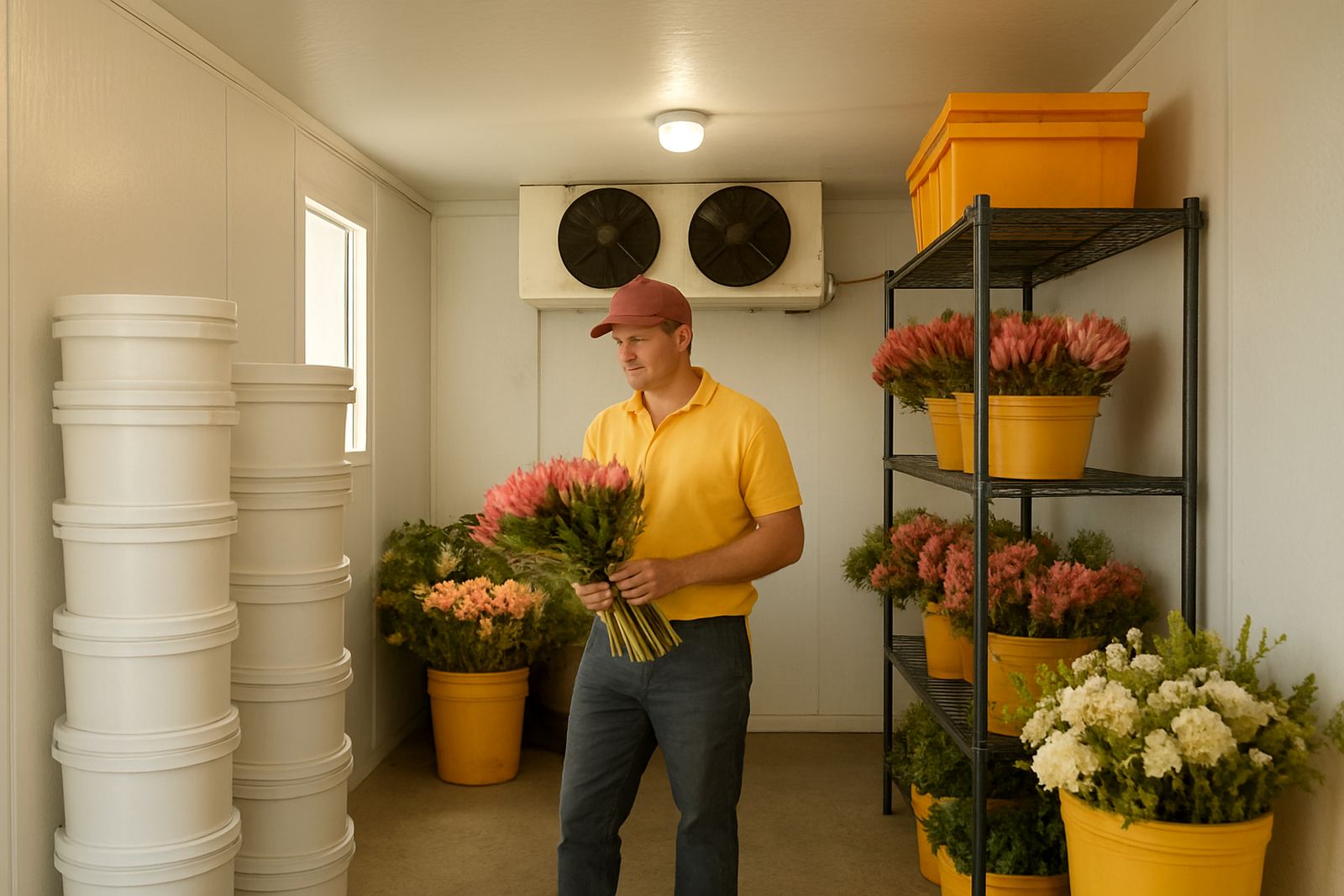
- Cold rooms for cut flower holding and overnight storage
- Small pre-cool rooms for newly harvested stock
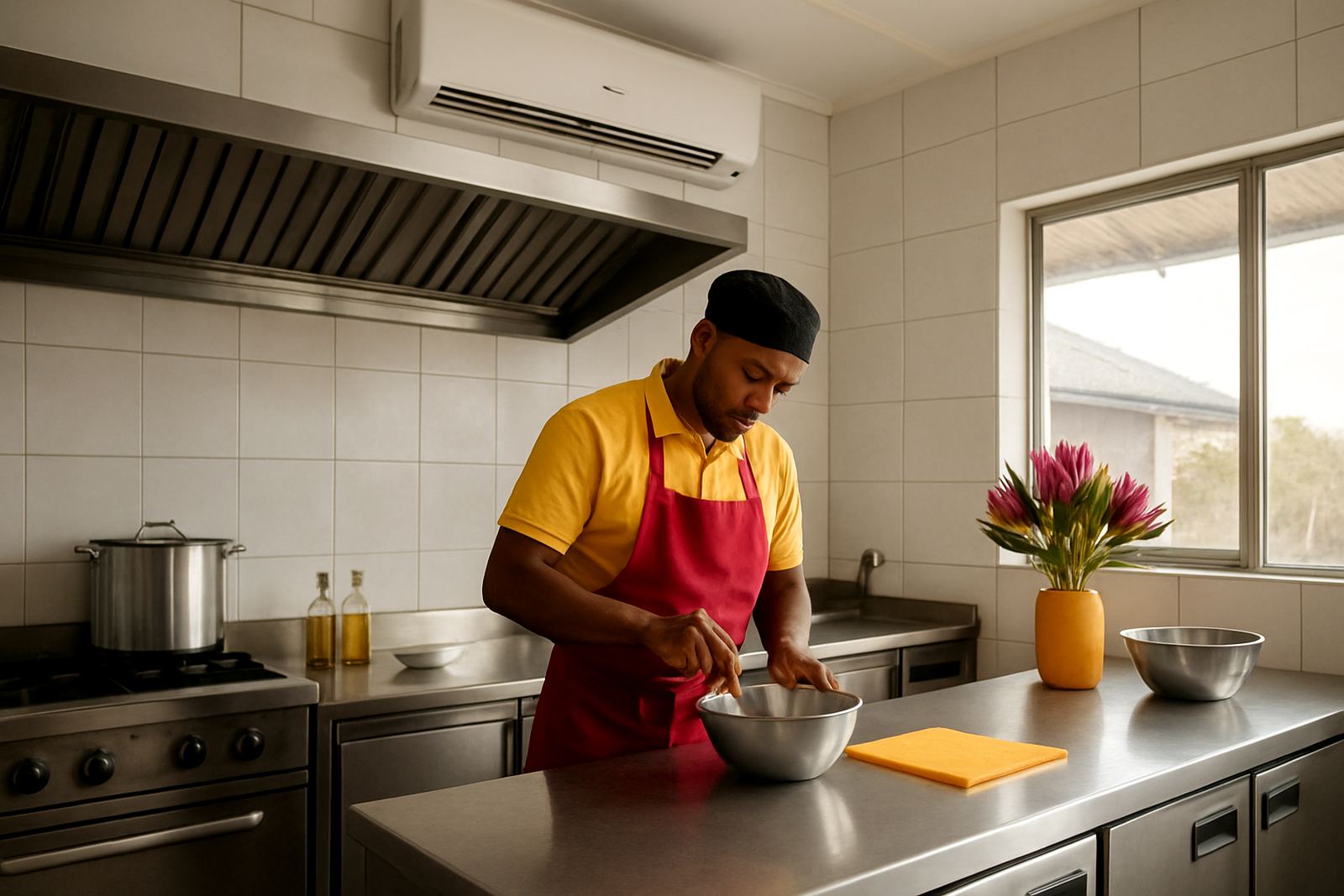
- Split air conditioners in packing offices and grading areas
- Condensing units and evaporators that need coil cleaning
- Drain lines that block with dust, algae and debris
- Temperature loggers and probes used for dispatch records
We also see systems working harder than they should because doors are left open, plastic strip curtains are damaged or the room is packed too tight against the evaporator. That kind of setup pushes electricity use up and puts strain on the compressor. In farms near the coast, salt air and damp conditions can also corrode fittings quicker than expected.
Layout advice for pack sheds and dispatch bays
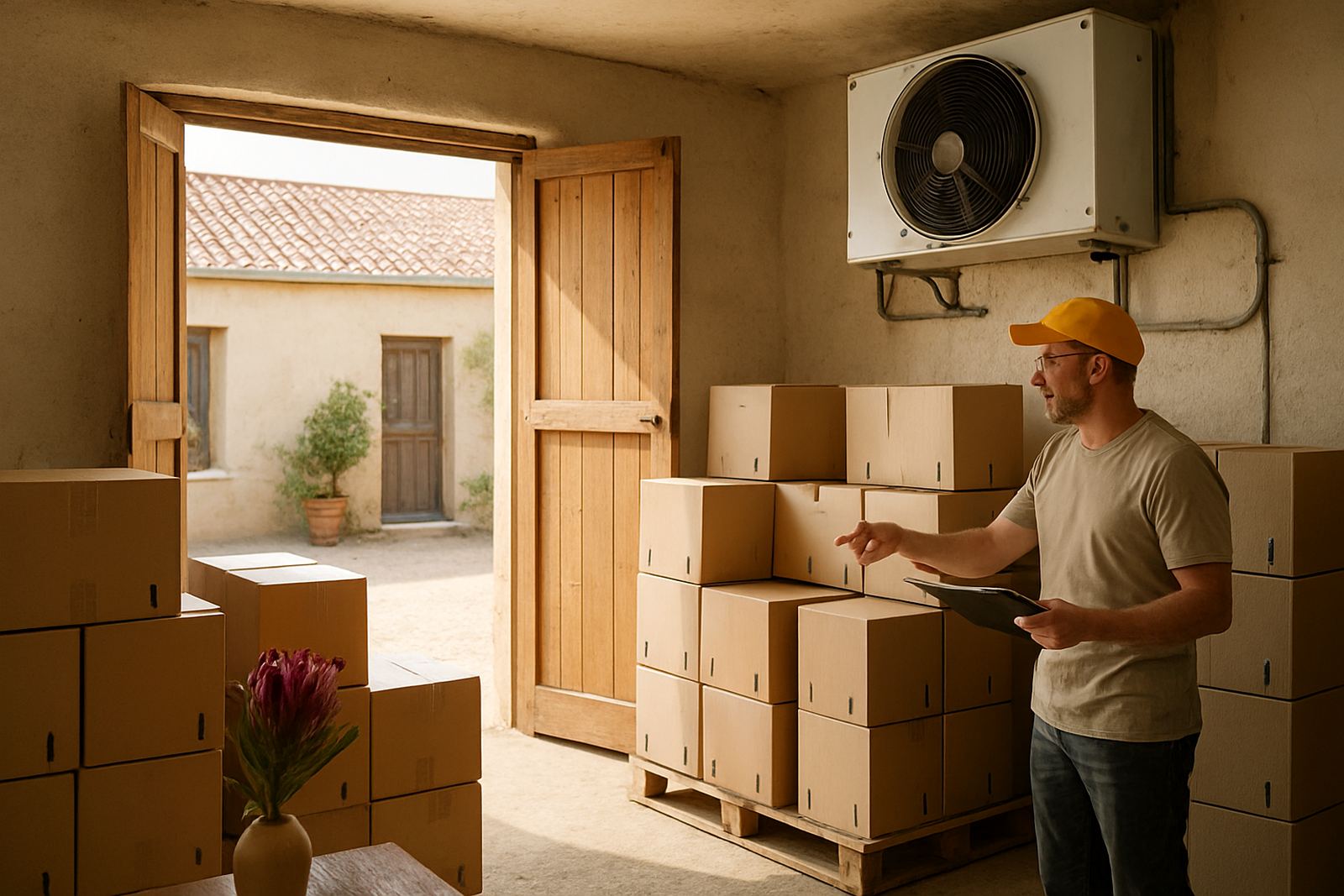
Good planning saves money before repairs ever start. For flower farms, the coldest room should not carry the highest traffic. If every person, trolley and carton passes through the same door, the temperature will swing all day. It is better to keep a clear route from receiving to cooling to dispatch, with the smallest possible door openings and enough space for air to move around the evaporator.
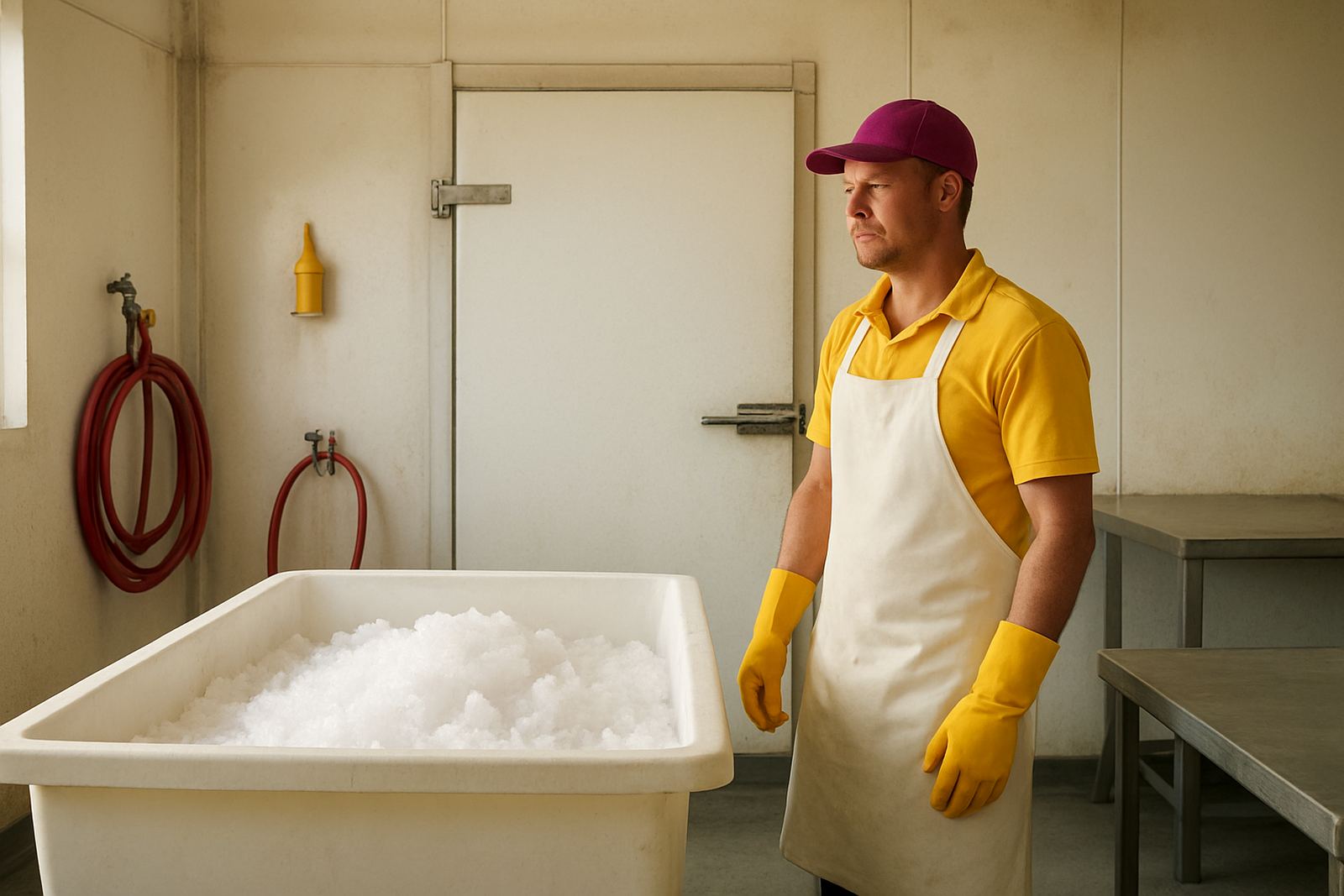
We often advise farms to separate wet work from cold storage where possible. Hose-down areas and flower processing tables should not sit too close to electrical panels or room doors. Airflow matters too. Boxes stacked too high against the walls can block return air, which makes the room look fine on paper but warm in the back corners. A simple check with temperature logging can show where product is sitting too long or where the room is losing cold during peak hours.
- Keep a clear aisle to the cold-room door for fast loading
- Do not stack cartons against the evaporator face
- Fit working door seals and check them monthly
- Use temperature logging for busy harvest and dispatch days
- Plan for load-shedding with safe start-up after power returns
Planned maintenance that prevents spoilage
Flower stock is too valuable to leave on a breakdown-only approach. Planned maintenance gives you a better chance of catching issues before they affect a dispatch run or a weekend harvest. For farms, the most useful routine work is usually practical rather than fancy: coil cleaning, drain clearing, checks on fan motors, refrigerant pressure checks and a close look at contactors, relays and electrical connections.
We also carry out seasonal start-up before the busy periods and shutdown preservation when a room or unit will sit idle. That helps if you have winter gaps, special planting cycles or temporary changes in production. Our maintenance contracts can be set around your picking calendar, so you are not paying for visits when the farm is quiet and then scrambling when the heat arrives. If a unit is already running hard, a few small corrections can buy you time before a major repair is needed.
Common mistakes we fix on the first visit
Many call-outs on flower farms come down to the same avoidable problems. A system may be technically running, but it is not holding the right temperature or it is taking too long to recover after a door opening. That is when stock starts to drift out of spec and the packing team has to work around the room instead of with it.
We often find:
- Dirty coils reducing cooling capacity and pushing compressor run time too high
- Blocked drains causing ice build-up and water around the floor
- Incorrect thermostat settings after staff changes or seasonal shifts
- Worn door seals letting warm air in during every trolley movement
- Poorly placed products blocking air circulation inside the room
- Missing temperature logs, making it hard to prove what happened during a fault
Some farms also try to use comfort aircon where a proper cold-room solution is needed, or the other way round. That leads to high running costs and uneven temperatures. Matching the equipment to the job matters more than size alone, and a quick site inspection usually shows where the real weakness is.
Repair and contract budgets in Rand
Budgeting for flower-farm cooling depends on room size, access, how old the equipment is and whether the fault is mechanical, electrical or refrigerant related. For a standard call-out in the Western Cape, farms should allow roughly R950 to R1 850 for the initial site visit, excluding parts. If the issue is after-hours or urgent, the cost can be higher depending on time and travel.
Typical work ranges we see include R1 200 to R3 500 for coil cleaning on smaller units, R850 to R2 400 for drain clearing and minor service work, and from about R2 500 upward for leak detection and repair, depending on the source and the amount of refrigerant involved. Maintenance contracts for small to medium farm sites usually start from around R2 500 per month and move up based on how many rooms, units and visits are needed.
For larger cold-room repairs, compressor replacements, control faults or temperature logging upgrades, the price can move well beyond that. We quote after inspection so you know what is urgent, what can wait and what should be budgeted for before the next harvest cycle. It is better to fix one weak point properly than keep patching the same fault every month.
Working with Kenny Cape West on farm sites
Kenny Cape West is based in Montague Gardens and works across Cape Town, the Winelands and the West Coast. Our team handles planned maintenance, emergency call-outs, cold-room servicing, aircon servicing, leak detection, temperature logging, coil cleaning, drain clearing, seasonal start-up and shutdown preservation. For flower farms, that means one contact point for the whole cooling side of the site, from pack shed to dispatch.
The team includes Morne Jacobus van Wyk, Anele Mbeki, Charlene Adams, Ruan Smit, Lutho Ndlovu and Bianca Petersen, so the work is not passed around between strangers. If you need help with a room that is warming up too slowly, a unit that trips during load-shedding, or a dispatch area that cannot hold the right temperature on warm days, we can assess the site and set a practical plan. Email callouts@kennycapewest.co.za for support or to arrange a visit.