Baking Heat, Butter and Fast Turnover Need Steady Cooling
A bakery is not a normal retail space. Ovens push heat into the prep room, mixers run for long periods, flour dust gets into filters, and doors open all day for deliveries and customers. In Cape Town, Stellenbosch, Paarl and along the West Coast, that mix means aircon and refrigeration have to cope with warm afternoons, coastal humidity and load-shedding. If the prep area runs too hot, butter softens early, creams do not hold, and staff start fighting the room instead of the clock.
We help bakeries with call-out repairs, planned maintenance and cold-room work for ingredient stores, proofing-adjacent areas and front shops. Some sites only need one split unit kept in shape. Others need a mix of wall units, ducting, a cold room and temperature logging for product control. We keep it practical and short on talk, because when a chiller trips at 05:30, what matters is getting the room back under control.
Typical Equipment We See In Bakeries
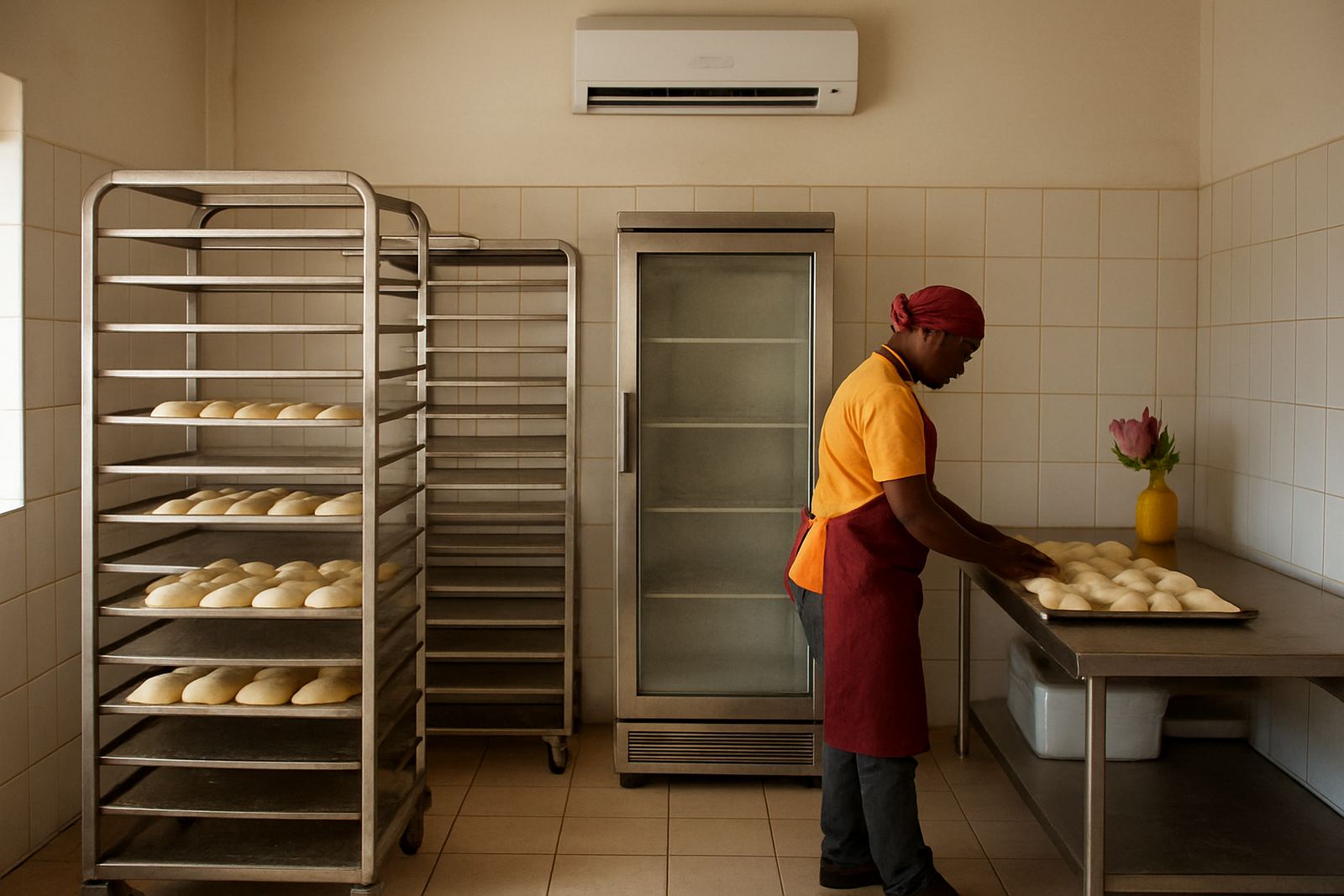
Most bakeries use a few different cooling points, not one big system. The exact setup depends on size, production volume and whether the site also sells over the counter. A small neighbourhood bakery may have a prep room unit and a display fridge. A larger plant can have multiple aircon points, a chilled ingredient store and a cold room for stock.
- Split aircon units for prep rooms, packing areas and offices
- Cold rooms for butter, cream, fillings and perishable stock
- Under-counter fridges and upright display fridges in the shop
- Condensers and evaporators that need regular coil cleaning
- Drain lines that block from flour, grease and general grime
- Temperature probes and loggers for stock control and audits
We also handle leak detection on systems that keep losing gas. If a unit needs regassing more than once, there is usually a leak, not bad luck. Finding it early saves product and lowers running costs.
How To Plan The Layout So The Heat Stays Where It Belongs
Good bakery cooling starts with layout. Try not to place the prep-room unit where it blows straight onto proofing racks or flour bins, because that can cause uneven temperature and drying. Keep condenser units where they can breathe, with space for service access and safe cleaning. On tight town sites in Cape Town or Paarl, that service clearance is often ignored until the first breakdown.
For shops, front-of-house cooling should not pull warm air from the doorway all day. If the entrance faces sun for most of the afternoon, you may need a better unit size, a curtain, or a simple change to the airflow pattern. In older buildings we often find the system was sized for a small tea room, then asked to cool a full bakery and retail space. That is when complaints start and the power bill climbs.
- Keep condensers out of direct flour dust where possible
- Leave access for filter changes and drain cleaning
- Separate hot processing areas from ingredient storage
- Use temperature logging for rooms with cream or dairy stock
- Plan for generator or inverter support during outages where needed
Common Problems We Find In Bakery Sites
Many bakery call-outs come from the same few faults. Filters block faster than expected because of flour and fine dust. Drain lines clog and water drips onto packing benches. Doors on cold rooms are left open too long during rush periods. Outdoor units overheat when they are packed into tight service yards with no air movement. On coastal sites, salt air also attacks coils and fasteners, so the system ages quicker than it should.
Another issue is seasonal demand. A system that copes in winter may struggle in summer, especially if the bakery adds more fridges for festive stock or launches a bigger pastry range. We see this in Malmesbury, Vredenburg and the Winelands where production rises sharply over peak periods. A quick service once a year is not enough when equipment is running from early morning to late evening.
If a unit smells musty or struggles after load-shedding, it may need coil cleaning, drain clearing or a proper seasonal start-up. If a room takes too long to pull down after shutdown, there may be fan damage, refrigerant loss, or simply dirt sitting where it should not be.
Maintenance That Fits Early Starts And Tight Trading Hours
Bakery maintenance has to fit the workday. Most teams start before dawn, so repairs and services need to be planned around production and cleaning. We offer maintenance contracts that cover seasonal start-up, shutdown preservation, planned checks and emergency call-outs. That helps reduce breakdowns during the hours when stock is busiest and margins are thinnest.
For bakeries, a good service visit usually includes filter checks, coil cleaning, drain clearing, electrical inspection, refrigerant pressure checks and general performance testing. Cold rooms should also be checked for door seals, fan operation and temperature stability. If there are repeated fault codes or unstable temperatures, we look at the whole system rather than only the visible symptom.
Charlene Adams coordinates contracts and visits so the work fits the site, while our technicians handle the mechanical side on the ground. That matters when the back door, shopfront and delivery bay all run on different schedules.
Budget Ranges For Bakery Cooling Work
Costs depend on unit size, access, fault type and how many systems are on site. A basic service on a single split aircon in a bakery prep area will sit in a different bracket from a cold room repair or a system with a refrigerant leak. For planning, many bakery owners like a rough range before they commit to work.
- Aircon service for one unit: often from about R850 to R1 800
- Cold room servicing: often from about R1 500 to R3 500
- Call-out repairs: commonly from about R950, plus parts if needed
- Leak detection and fault finding: often from about R1 200 to R2 800
- Maintenance contracts: priced by site size, system count and visit frequency
These are working ranges only, because a small shop in Montague Gardens is not the same as a larger production bakery outside Stellenbosch. We always prefer to quote after a proper look at the equipment and the layout. That avoids surprises and helps you plan around trading hours, stock levels and staff shifts.