What guesthouse managers usually ask us to fix
Guesthouses often run with a mix of bedroom units, passage units, small laundry areas and a kitchen or breakfast store that must all work on different schedules. One room may be empty for days while another gets heavy use, and that changing load is where a lot of problems start. A unit that cools fine in the morning can struggle by late afternoon if filters are blocked, gas is low, or the outdoor unit is baking in direct sun.
We are often called for units that trip on start up, blow warm air, drip onto bedding, or make a rattle that keeps guests awake. On the cold side, some guesthouses keep a small cold room or upright refrigeration for breakfast stock, milk, fruit, meat or prepped items. If that equipment runs off temperature, the loss is not just spoilage, it can mean a service issue before breakfast even starts.
Typical equipment in a guesthouse setup
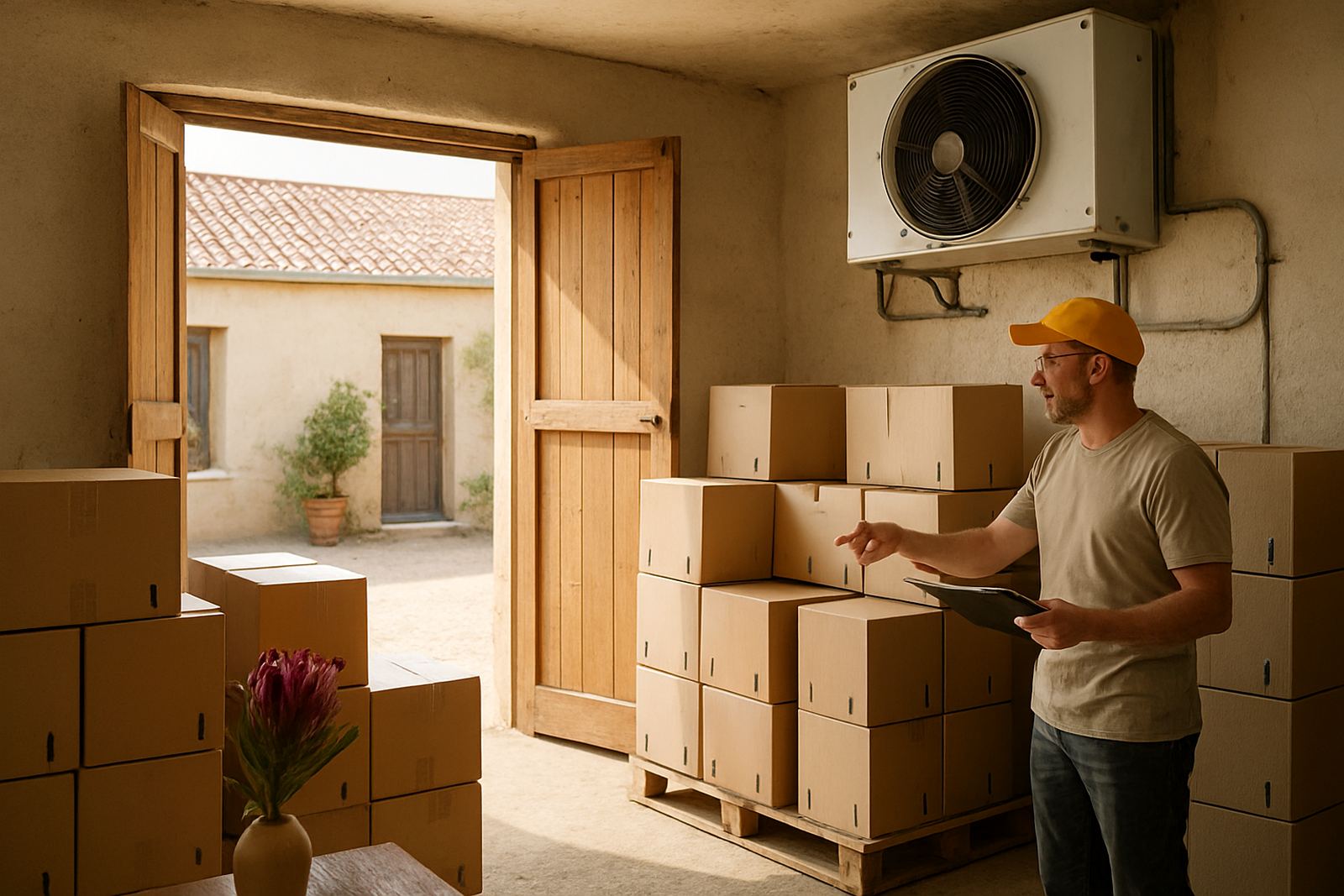
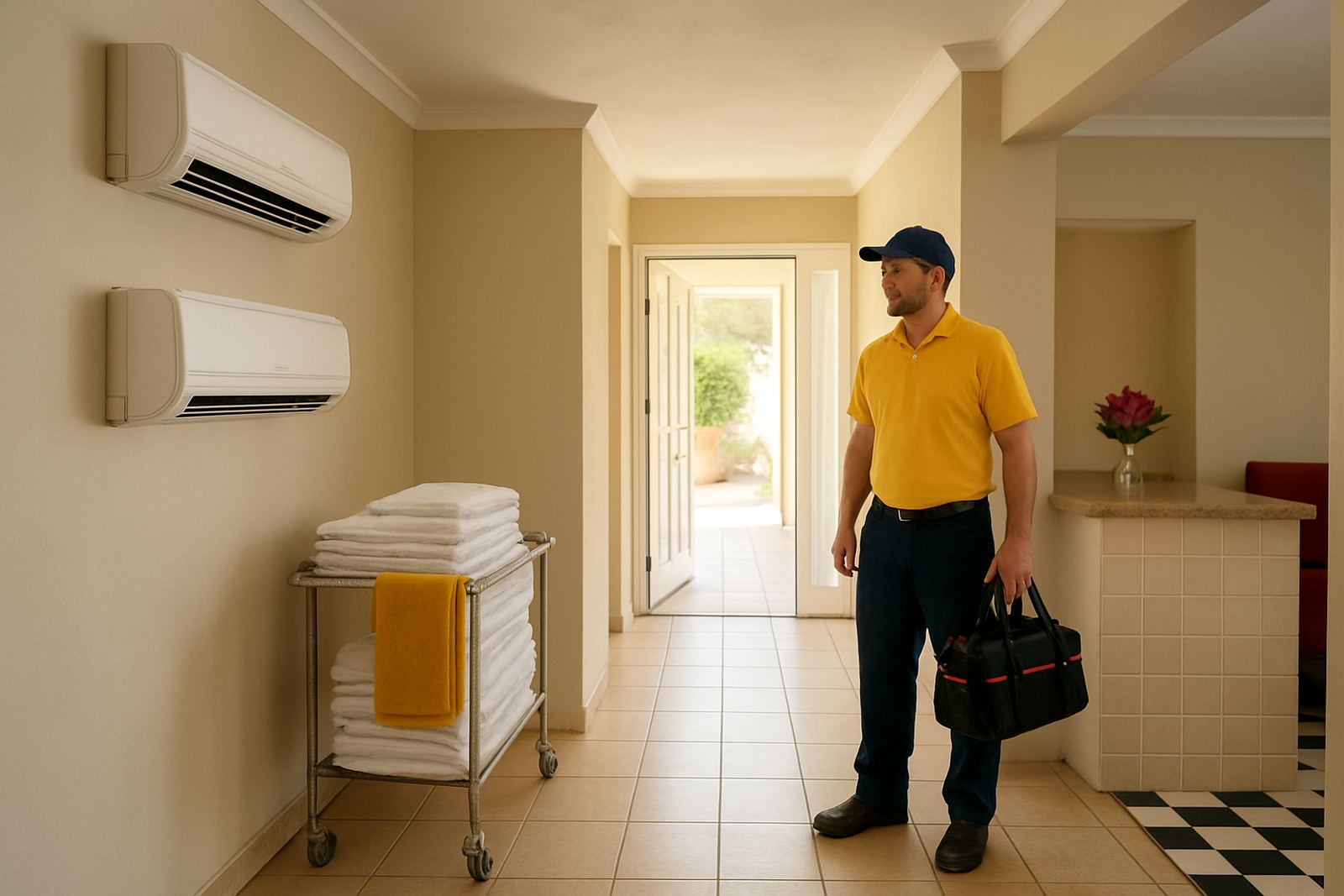
A small guesthouse may have 4 to 10 split aircon units, while larger properties can have 15 or more across rooms, lounge areas and offices. We also see ducted systems in common areas, wall mounted units in bedrooms, and a few older units that have had parts changed more than once. For cold storage, the common set-up is a compact cold room, a prep room fridge, or a freezer room for bulk items.
- Split aircon units in bedrooms and family suites
- Common area cooling for reception, lounge and dining room
- Cold room panels, doors and seals for food storage
- Thermostats, isolators and drain lines that need checking
- Temperature logs for stock rooms where records matter
In coastal towns, salt air can shorten the life of outdoor components if they are not cleaned and protected. In the Winelands, dust and pollen build up quickly. In both cases, a unit that is only serviced when it fails usually ends up costing more over a season.
Planning the layout so rooms stay comfortable
Good planning starts with where the sun hits, where guests sit, and where the outdoor units can breathe. We always look at the building first, because a bedroom facing west in summer can need far more cooling than a shaded room on the same corridor. Outdoor units need clear airflow, a firm mount, and enough access for cleaning and repairs without disturbing guests or staff.
For guesthouses near the coast, the outdoor position should also reduce exposure to sea spray where possible. In inland towns like Stellenbosch or Paarl, roof heat and dust can be the bigger issue. It helps to keep units grouped in a way that allows maintenance without crossing guest walkways or working in breakfast hours. That sounds simple, but it is often the difference between a quick service visit and a morning of disruptions.
- Keep outdoor units off tight corners and enclosed courtyards
- Allow space for coil cleaning and future part replacement
- Route drain lines where blockages can be cleared easily
- Put controls where staff can reach them without entering guest rooms too often
- Plan for load shedding and restart checks after power returns
Maintenance work that prevents bad guest reviews
Most guesthouse breakdowns give warning signs first. The room takes longer to cool, the aircon smells musty, the drain starts dripping, or the unit cycles on and off too often. Those are the jobs that fit neatly into planned maintenance. We clean coils, clear drains, check gas pressures, test electrical connections, and confirm that the thermostat is reading properly.
For cold rooms, we check door seals, fan operation, defrost cycles and temperature logging. If the room is used for breakfast stock or food prep, even a small temperature swing can be a problem. Charlene often arranges maintenance visits around occupancy, because a guesthouse cannot afford unnecessary noise at check in time. It is usually cheaper to service on schedule than to call out after a long weekend when there are no spare rooms left.
Common mistakes we see at accommodation sites
The most common mistake is waiting until a room is no longer cold enough before asking for help. By then the unit may have a blocked coil, a slow leak or a failed fan motor. Another one is switching units off for long periods and then expecting them to start perfectly at the next busy weekend. Without seasonal start up and shutdown preservation, systems can stick, leak or lose pressure while they sit idle.
We also see units hidden behind curtains, furniture or decorative panels, which cuts airflow and makes the compressor work harder. Drain lines are another issue. If they are not cleaned, they can back up into the room and stain walls, ceilings or bedding. In a few cases, there is simply no maintenance record at all, so nobody knows when filters were last cleaned or when gas levels were last checked. That is a simple admin gap, but it causes real repair costs.
- Running systems with blocked filters for months
- Ignoring weak cooling until the compressor overheats
- Letting outdoor units collect lint, salt and leaves
- Skipping temperature logs for the cold room
- Using one quick fix after another instead of tracing the cause
Budget ranges for guesthouse repairs and upkeep
Costs depend on the number of units, the property layout, and whether work is preventative or an emergency call out. For a single bedroom aircon service, a guesthouse might budget from about R850 to R1,600 per unit depending on access, height and what cleaning is needed. A full system repair can range from R1,200 for a minor issue to several thousand rand if parts, gas recovery or electrical work is needed.
For cold rooms and food storage equipment, basic servicing and temperature checks usually start higher because the systems are larger and more specialised. A small cold room call out may begin around R1,500 to R2,500, while leak detection, compressor work or control faults can move the figure up quickly. Planned maintenance contracts are often the better value for guesthouses with steady occupancy, because they spread the cost and reduce the chance of weekend failures. If the property is in a busy tourist area, a single outage can cost more than a year of maintenance, so it pays to budget properly.
How Kenny Cape West supports guesthouses across the Western Cape
We work from Montague Gardens and cover Cape Town, Stellenbosch, Paarl, Malmesbury and Vredenburg, with call outs across the Western Cape. Morne Jacobus van Wyk leads the business, with Anele Mbeki on refrigeration work, Ruan Smit on aircon installation, Lutho Ndlovu on cold room work, Charlene Adams coordinating contracts, and Bianca Petersen handling client support. That means one site can get help with room cooling, kitchen refrigeration and planned maintenance without juggling different suppliers.
For guesthouses, the best approach is usually a mix of scheduled servicing and fast response for the rooms that matter most. We can set up maintenance around occupancy, check temperature logging where needed, and keep the cold storage side ready for breakfast service and stock turnover. If a property is dealing with load shedding, humidity, or older equipment that has become hard to keep alive, we can look at the full site and recommend the next practical step.