Short-term cold storage when your fixed room is not enough
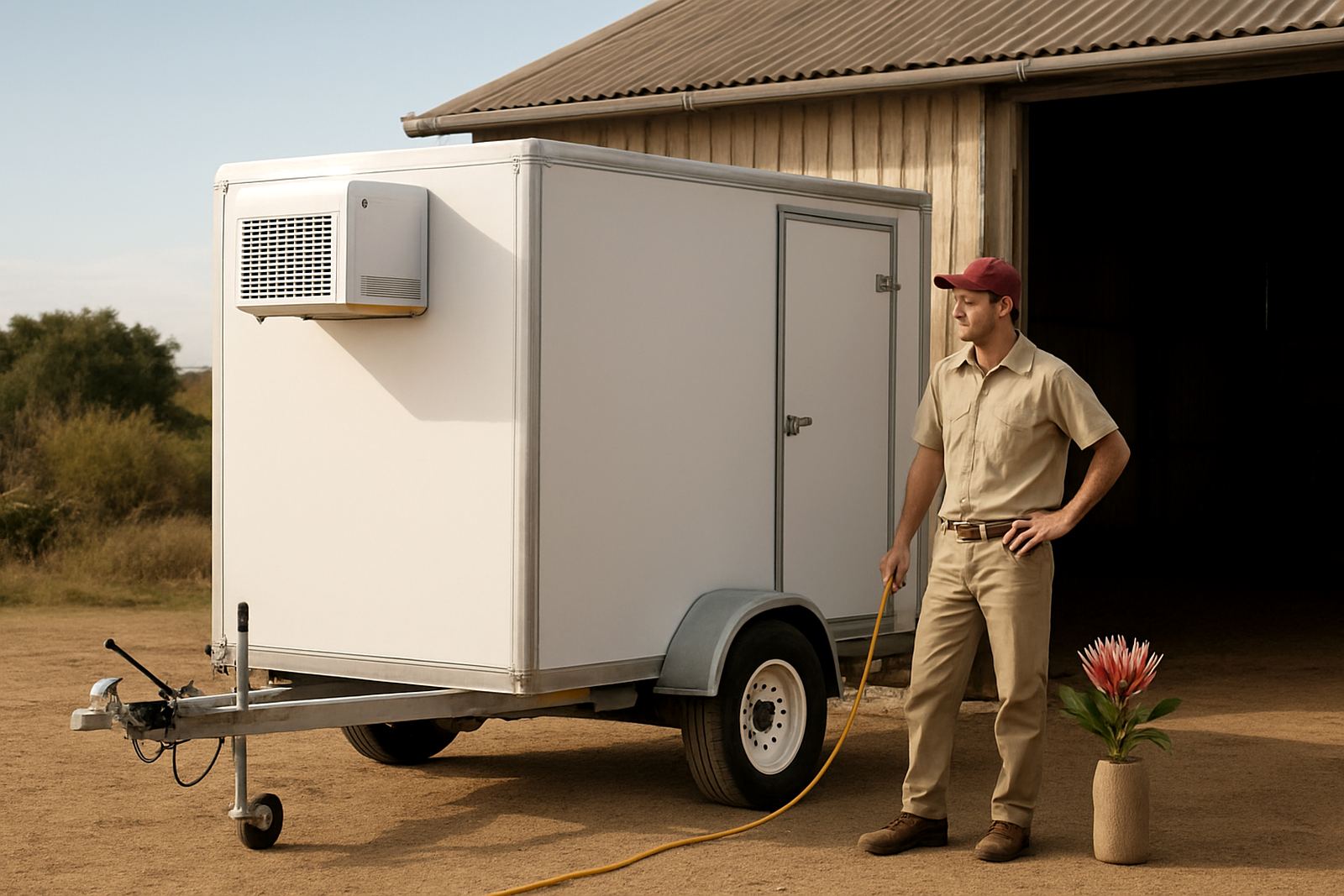
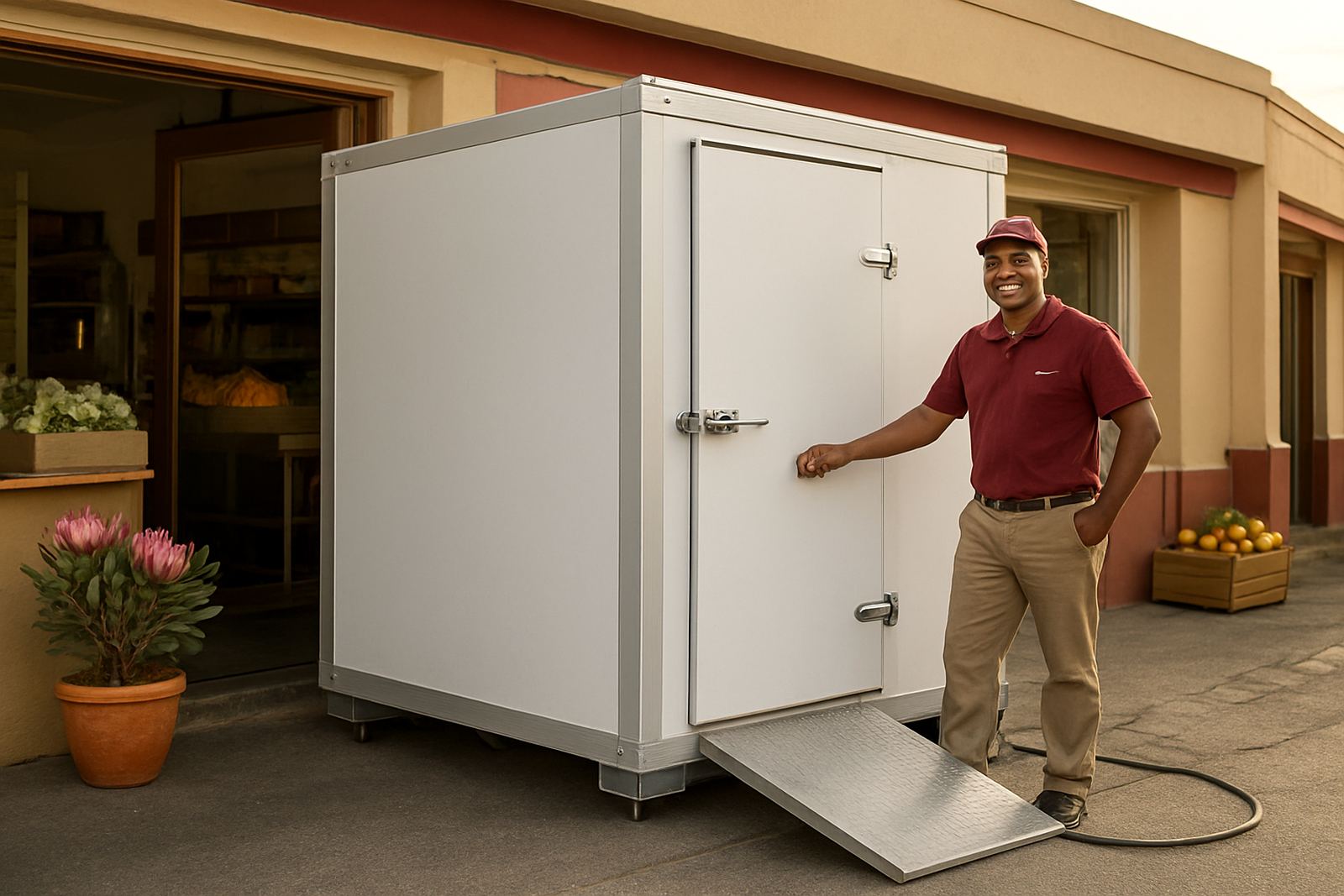
Portable cold room hire is a practical way to add chilled storage without building a permanent room or shutting down stock movement. It suits shops that need extra capacity over holidays, farms packing produce at harvest time, butchery overflow, and businesses that need emergency backup after a breakdown. Units are insulated, lockable and built for steady holding temperatures, with insulated panels and a floor designed for daily loading and unloading.
We supply short-term hire for planned peaks and urgent cover. That can be a few days while a main plant is repaired, or a longer hire through a summer run when temperatures climb and cold chain pressure increases. In the Western Cape, that matters in hot inland areas, humid coastal conditions and during load-shedding when backup planning is not optional.
Each hire unit is set up to suit the site, not the other way around. If access is tight, we plan for door width, floor space and delivery route before the unit arrives. If the site has frequent power cuts, we can talk through generator use or an alternate power plan so there are no nasty surprises later.
Sizes, temperature ranges and common setup options
Portable cold rooms come in a few size bands so you can match the room to the stock, not overpay for empty space. Typical options range from compact units for a few pallets up to larger rooms for bulk produce, cartons or mixed chilled goods. We will usually confirm the internal size, door position and loading needs before we book anything in.
- Compact hire units: suitable for emergency backup, small shops and limited stock overflow.
- Mid-size rooms: useful for restaurants, farm packshed work and seasonal holding of boxed goods.
- Larger rooms: better for farms, wholesalers and sites moving pallets or high turnover stock.
- Temperature control: commonly used for chilled holding around 0 to 5 degrees C, depending on the product.
- Access options: single door or wider access depending on loading gear and stock handling.
For fruit, dairy, meat, flowers and general chilled goods, the right temperature range depends on the product and holding time. We do not guess that part. A room that is too warm shortens shelf life, while one that is too cold can damage sensitive stock. If you need temperature logging, we can discuss that from the start so records are available for internal checks or customer requirements.
Where portable cold rooms work best
These units are well suited to retailers, farms, packhouses, caterers, hospitality sites and trading yards where stock volume changes through the year. In Cape Town and Montague Gardens, they are often used for extra retail or distribution cover. In Stellenbosch and Paarl, they help with harvest peaks and short-term stock holding. Along the West Coast, they are useful where supply chains stretch and repair times can be longer than expected.
Portable hire also helps when a permanent room is being serviced, upgraded or disinfected after an issue. It gives you breathing room while the main system is off-line. For businesses in exposed or coastal areas, it is often a good way to bridge through humid months when doors open often and condensate can become a problem.
Sites with limited indoor space can still use a portable room if the ground is level and access is planned. We can advise on space clearances, drainage needs and where the unit should sit so the doors open properly and staff can move stock without squeezing past each other. A little planning saves a lot of time later, especially on busy receiving days.
Installation, power supply and backup planning
Portable cold rooms need a level base, proper ventilation around the equipment area and reliable power. Most units are installed on firm ground, paving or a prepared slab. If the surface is uneven, we will say so upfront because poor levelling can affect sealing, drainage and door operation. Delivery access should also be checked for trucks, trailers and turning room.
Power requirements depend on the unit size and the compressor setup. In plain terms, the room needs a dedicated supply that can handle the starting load and steady running load. We always recommend checking the available supply before hire is confirmed, particularly on farms and older buildings where wiring may already be working hard. If you are using a generator during load-shedding, it must be sized correctly and stabilised enough to protect the equipment.
- Dedicated electrical circuit with suitable protection
- Safe cable routing to avoid damage and trip hazards
- Clear airflow around the condenser area
- Level base to support the frame and door seal
- Backup plan for load-shedding or power interruptions
We can help you work through these points before the room is dropped off. That keeps the handover quick and reduces stoppages after setup. If the site has a generator already, we can look at the practical side of changeover and usage so the unit is not left under-powered.
Care, cleaning and servicing during the hire period
Cold rooms work best when they are kept clean, closed and checked often. During hire, staff should avoid leaving the door open longer than needed, because warm air and moisture enter quickly and the unit has to work harder to recover. That pushes up running time and can affect product condition, especially in summer.
Basic care includes keeping the floor clear of spills, checking door seals, and making sure cartons do not block air movement. If stock is packed too tightly against the walls or evaporator area, the room cannot circulate properly and you may see uneven temperatures. We can advise on loading spacing for your products and layout.
Kenny Cape West can also assist with planned maintenance during longer hire periods. That may include coil cleaning, drain clearing, temperature logging, and checking for unusual noise, icing or temperature drift. If a problem starts to show, call it in early. Small faults are easier to sort before they turn into stock losses, and that is the honest truth of it.
What to check before you place an order
Before you book a portable cold room, it helps to have a few details ready. That makes it easier to quote correctly and avoids delays when the unit is due to arrive. If you are unsure, send what you know and we can fill in the gaps with you.
- What stock will be stored and at what temperature
- How long you need the hire for
- Available space for the unit and delivery access
- Power supply details and whether a generator will be used
- Whether you need temperature logging or a backup room
- Any loading equipment being used, such as trolleys or pallet jacks
It also helps to tell us if the hire is for emergency backup, seasonal overflow or a planned project. A cold room used for one week during a breakdown is handled differently from one used for a whole harvest period. We serve Cape Town, Montague Gardens, Stellenbosch, Paarl, Malmesbury and Vredenburg, and we can talk through the site conditions before dispatch. For orders and call-outs, email callouts@kennycapewest.co.za.
Key facts
| Product type | Portable insulated cold room hire |
|---|---|
| Hire period | Short term, planned or emergency backup |
| Typical temperature range | About 0 to 5 degrees C, depending on stock |
| Common uses | Shop overflow, farm produce, temporary backup, seasonal peaks |
| Power requirement | Dedicated electrical supply or properly sized generator backup |
| Service area | Western Cape, including Cape Town, Winelands and West Coast |