What a cassette aircon unit does in an open space
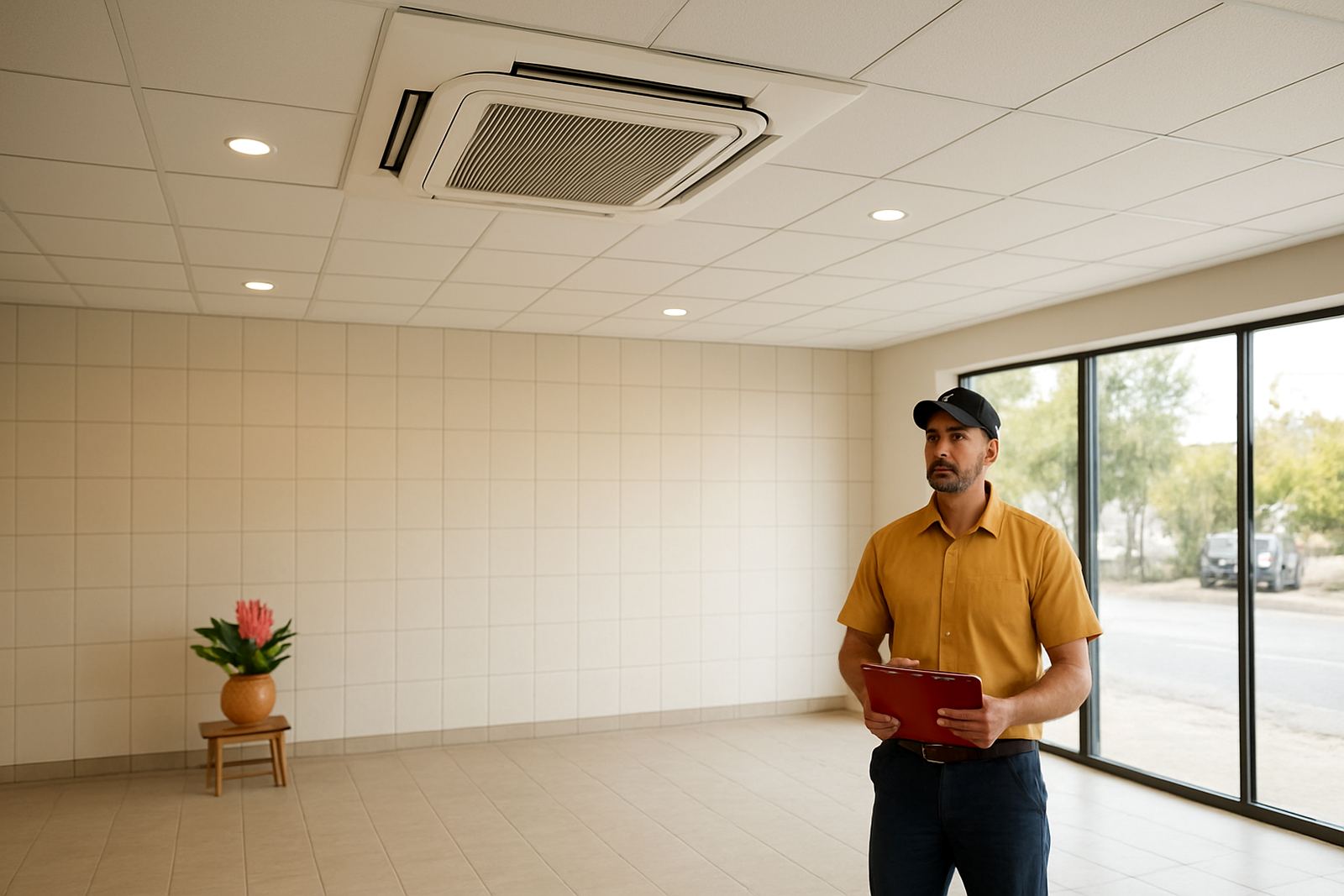
A cassette aircon sits in a ceiling void and blows conditioned air in multiple directions through a neat square face panel. That makes it a practical choice for retail floors, boardrooms, salons, showrooms and small offices where wall space is needed for shelving, windows or displays. Because the air is spread across the room, you avoid the hot and cold spots that can happen with a small wall unit trying to cool a larger area.
For Western Cape businesses, that even spread matters in summer when glass fronts heat up in the afternoon and in winter when enclosed spaces hold people, lighting and equipment heat. A correctly sized cassette can help keep staff comfortable and stock protected, without hanging low over the room. If you have a ceiling grid, a service passage or a gypsum ceiling with enough space above it, a cassette system is often the cleanest option.
Sizes, capacity ranges and layout choices
Most cassette systems are selected by cooling capacity, ceiling depth and the size of the room. Smaller commercial units may suit a single room or consulting area, while larger models can cover open retail floor space or a long office section. The right answer depends on ceiling height, glass area, insulation, occupancy and heat from fridges, servers or cooking equipment.
- Typical capacities: 2.6 kW to 14 kW for small to medium commercial spaces
- Common panel size: 600 mm x 600 mm for standard ceiling grids
- Higher-capacity options: larger body units for open-plan areas with stronger airflow
- Air direction: 4-way discharge on many models for even coverage
- Controls: wall controller, remote controller or programmable timer, depending on unit
When the room is long and narrow, or when shelving blocks circulation, two smaller cassette units may work better than one large one. That can also help with part-load operation, so you are not overcooling the space on mild days along the coast.
Where cassette aircon suits best in the Western Cape
Cassette systems are well suited to shops in Cape Town, reception areas in Montague Gardens, tasting rooms in Stellenbosch, offices in Paarl and service counters in Malmesbury or Vredenburg. They work well wherever customers or staff spend long hours under lights and foot traffic is steady. The ceiling-mounted format keeps the room tidy, which is useful in spaces where presentation matters.
In coastal towns, humidity can be high and that affects both comfort and equipment life. A unit that is sized properly and serviced regularly will cope better with moist air, dust from busy roads and salt exposure near the coast. In farm offices and light industrial spaces, cassette systems also help when doors open often and indoor conditions keep shifting through the day.
- Open-plan retail floors
- Small offices and meeting rooms
- Salons, clinics and client waiting areas
- Wine tasting rooms and hospitality spaces
- Light commercial workshops with clean ceiling voids
Installation needs, power supply and refrigerant lines
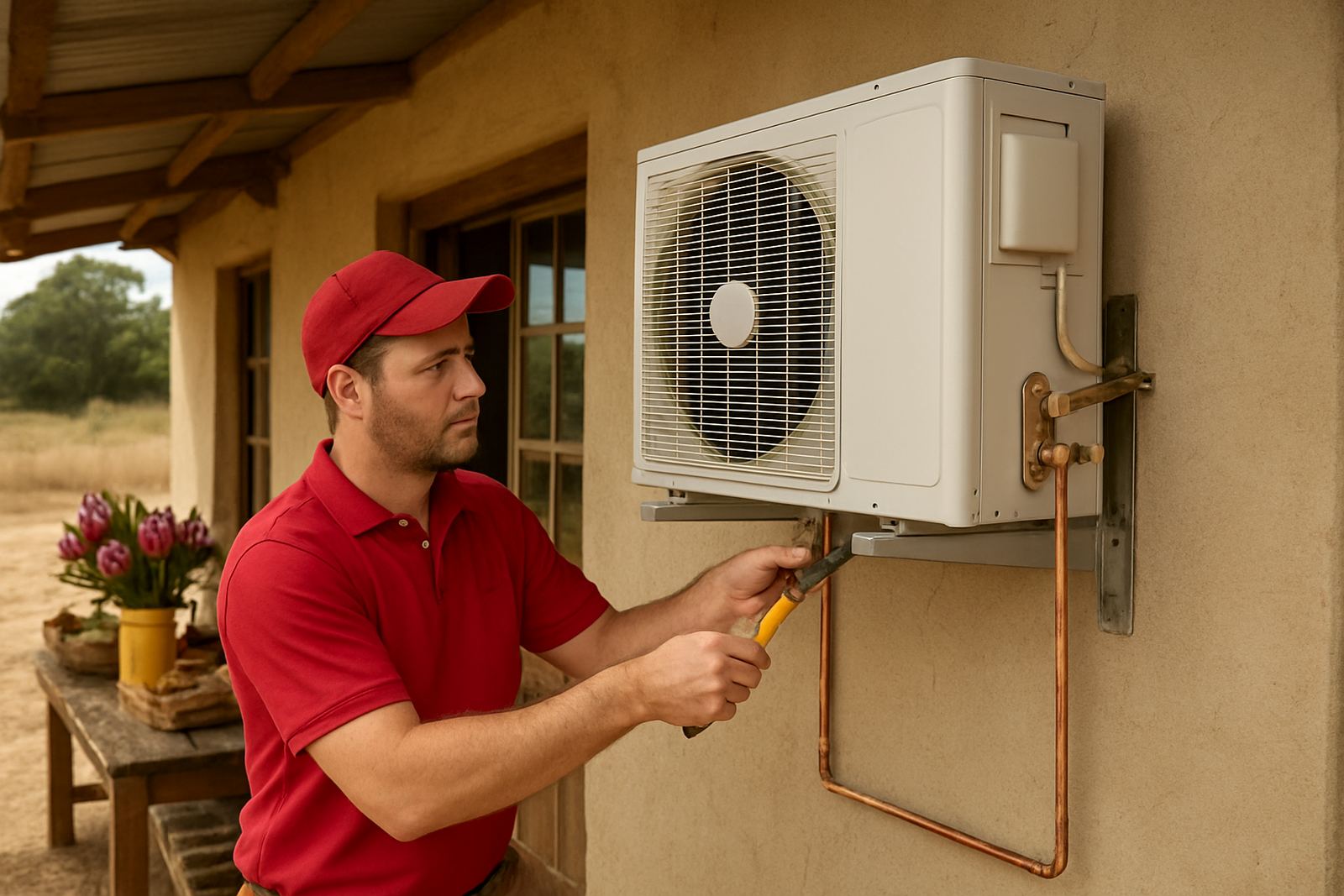
Before installation, the ceiling structure must support the indoor unit and leave enough clearance above the ceiling for pipework, drainage and access. The installer must also confirm that there is a suitable outdoor unit position with good airflow, safe service access and compliance with local noise and placement rules. If the site has a ceiling grid, the cassette opening must be set out accurately so the panel sits square and service panels remain reachable.
Power supply is a key point. Many commercial systems need a dedicated circuit, correct isolator placement and protection sized to the manufacturer’s electrical load. Cable length, pipe run and refrigerant charge all affect performance, so the install must be done to proper spec and tested before handover. On longer runs, especially in larger shops or split offices, refrigerant gas quantity and line sizing must be checked carefully, not guessed.
If the site uses backup power or sees load shedding, tell us early. Some systems can be set up to restart cleanly after outages, but the electrical supply and control settings need to be planned for it. A poor restart sequence can trip the system or leave it running against unstable voltage, which causes nuisance faults and extra wear.
How to keep a cassette system running properly
Cassette units need regular care if you want steady airflow and reasonable electricity use. The filters collect dust first, then the coil starts to lose heat transfer and the drain can begin to block. In damp Western Cape conditions, a dirty drain tray can smell, drip or overflow onto stock and ceilings, so servicing is not something to leave until midsummer.
We handle planned maintenance, coil cleaning, drain clearing, seasonal start-up and shutdown preservation. For businesses with after-hours trading or stock that is sensitive to temperature, maintenance contracts help keep a record of when the unit was cleaned, tested and checked for faults. That record is useful if you need to show a pattern of service before a warranty claim or insurance query.
- Clean or replace filters on schedule
- Wash indoor coils and check fan operation
- Clear drain lines and confirm proper water fall
- Check refrigerant pressures and search for leaks
- Inspect electrical terminations and controller function
- Test temperature pull-down after cleaning
What to check before you order a cassette system
Before you order, measure the room properly and note ceiling height, roof space and any beams, bulkheads or lights that may interfere with the unit. Check how many people use the space, how often doors open, and whether there are heat loads from deli cases, ovens, servers or direct sun. Those details decide whether a unit should be small and quiet or larger with stronger airflow.
It also helps to confirm the exact power supply, the route for pipework, and where the outdoor unit can be mounted without causing problems for neighbours or staff movement. Ask about access for future servicing too, because a cassette that is impossible to reach ends up costing more over time. If you are replacing an old unit, take note of the existing refrigerant type, drain arrangement and whether the ceiling opening can be reused or needs adjusting.
For order accuracy, keep these details ready:
- Room length, width and ceiling height
- Ceiling type and available void depth
- Glass frontage, shading and sun direction
- Existing electrical supply and breaker size
- Preferred controller position
- Service access for cleaning and repairs
Cassette aircon support from our Western Cape team
Kenny Cape West is based in Montague Gardens and supports businesses across Cape Town, Stellenbosch, Paarl, Malmesbury, Vredenburg and nearby areas. Our team can assist with call-out repairs, leak detection, temperature logging and servicing on cassette systems used in retail and light commercial spaces. We also work on cold rooms and related refrigeration equipment, which is useful when a site has both customer-facing aircon and stock cooling on the same premises.
If a cassette unit is noisy, dripping, short cycling or not cooling evenly, it usually pays to book a proper inspection before the fault gets worse. Anele Mbeki handles technical fault-finding, Ruan Smit supports installer work, Lutho Ndlovu covers cold-room related requirements, and Charlene Adams coordinates contracts and call-outs. For maintenance or new work, email callouts@kennycapewest.co.za and give the room size, location and any issue you are seeing. That makes it easier to plan the job and bring the right parts first time.
Key facts
| Product type | Ceiling cassette air conditioning unit |
|---|---|
| Typical capacity range | 2.6 kW to 14 kW, subject to room load |
| Air discharge | 4-way airflow on many models |
| Indoor fitment | Standard 600 mm x 600 mm ceiling grid on common units |
| Refrigerant system | Split system with refrigerant pipework to an outdoor unit |
| Best use | Open-plan retail, light commercial and office interiors |