What a door heater cable does in a freezer room
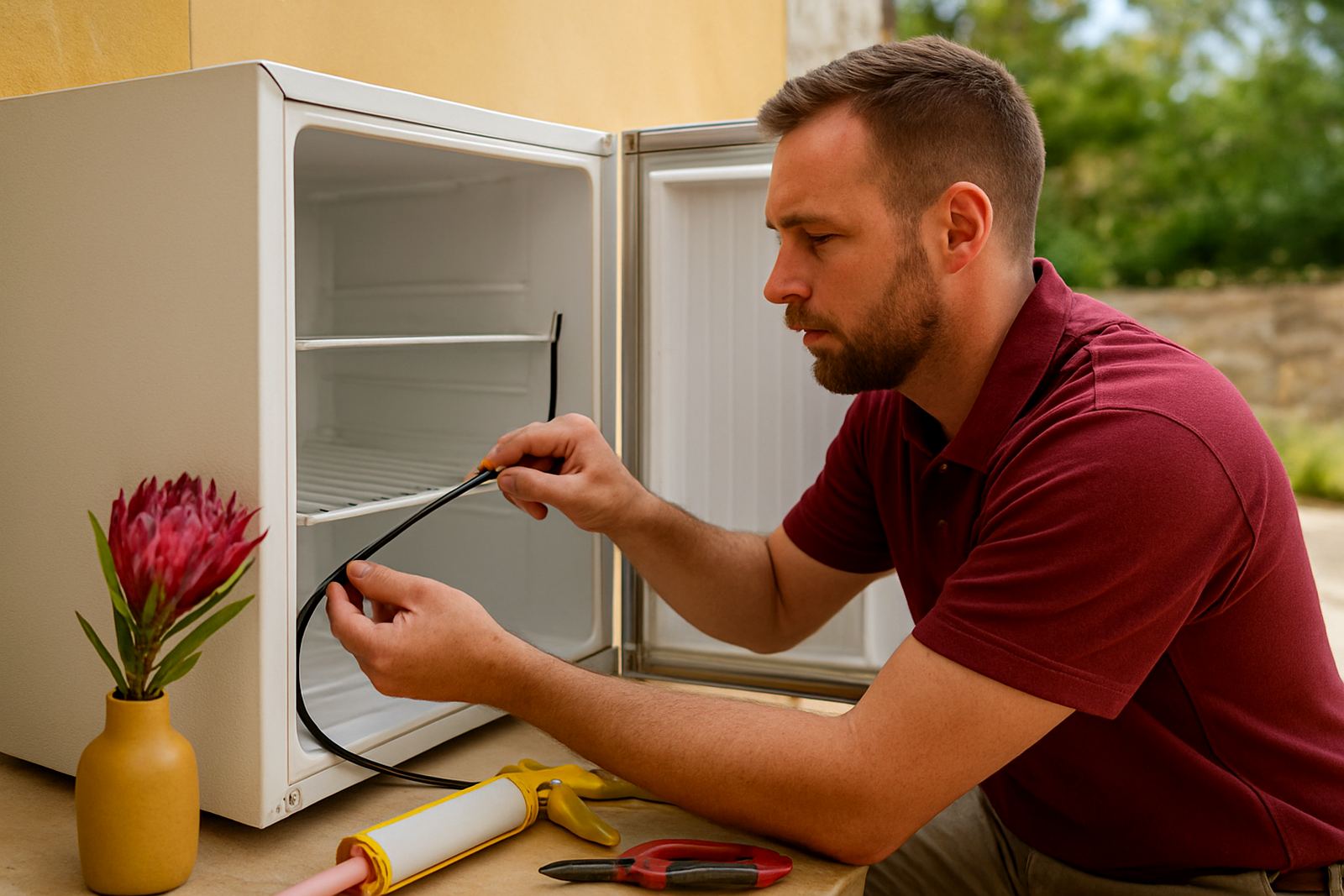
A door heater cable is fitted around the door frame or in the frame channel to add gentle heat where cold air and moisture meet. In Western Cape conditions, especially where the air changes between wet coastal weather, warm afternoons and long cold nights, that small amount of heat can stop condensation from turning into frost at the frame.
It is used on freezer doors, cold-room doors and some insulated access doors where the seal must stay dry and flexible. When the frame freezes, doors can stick, gaskets can tear and staff end up forcing the door open. That creates more wear, air leakage and temperature swings inside the room.
This is not a full heating system for the room. Its job is local protection at the door line, usually alongside the correct door closer, gasket, threshold and a working defrost cycle. On busy shop backrooms, butchery stores and farm cold rooms, it can save time every day and reduce nuisance call-outs for doors that will not close properly.
Where it suits shops, farms and storage rooms
Door heater cable is commonly used in freezer rooms that are opened many times a day or where humidity is high. That includes fresh produce stores, meat rooms, flower coolers, pack houses, restaurants, bottle stores and farm storage areas that need steady temperatures.
It is especially useful where a room sits near an external wall, loading bay or roller shutter, because cold air leakage and damp air entering the area can make the door frame sweat. In places like Cape Town, Paarl, Stellenbosch, Malmesbury and Vredenburg, the mix of coastal moisture and dust can make door seals work harder than expected.
- Freezer rooms with regular staff traffic
- Cold rooms near loading doors or wash-down areas
- Stores with frequent frost on the frame or sill
- Rooms where door seals harden in winter
- Facilities that need stable access during load-shedding recovery
If a room already has water pooling at the door or ice forming on the threshold, a heater cable may be part of the fix, but not the whole answer. The root cause can also be poor sealing, bad drainage, incorrect door alignment or a defrost setting that is not matched to the actual usage.
Sizes, ratings and practical options
Heater cable is normally supplied in measured lengths and cut or selected to suit the door opening and frame route. The size you need depends on the door perimeter, the frame type and whether the cable sits in a groove, behind a trim or around the full outer frame. On some installations the cable is only required on the jambs and top section, while other rooms need a complete loop.
Typical options include different wattages per metre, insulation types and termination styles. For freezer doors, the cable must be sized carefully because too little heat will not stop freezing and too much heat can waste power and warm the seal area more than needed. We look at the door size, room temperature and door usage before recommending a suitable option.
- Common supply voltage: 230 V AC
- Typical cable loading: selected to suit frame length and freezer duty
- Sheath options: moisture-resistant and low-temperature rated
- Finish options: loose cable, pre-formed lengths or framed installation route
- Use range: freezer doors, cold-room doors and anti-sweat frame protection
For a small walk-in freezer, a shorter run may be enough. For larger cold-room doors on farms or distribution stores, the cable length and fixing method must be planned so heat is spread evenly and service work remains easy later on.
Installation, wiring and power needs
Door heater cable must be installed neatly and fixed where it will not be crushed by hinges, handles or door movement. The cable is generally connected to a suitable control point so it operates only when needed, or according to the room’s design. In many cases it is linked to the freezer control panel or a thermostat arrangement that prevents unnecessary running.
It needs a stable electrical supply and correct protection at the board. That means proper isolators, safe cable routing, and a circuit that is sized for the load. If the freezer room runs through load-shedding, the heater cable should not be guessed into a shared circuit with other high-demand equipment. Poor wiring can lead to nuisance trips, weak heating or overheated joins.
No gas supply is needed. It is an electrical accessory, so the main requirements are correct voltage, compliant wiring and access for future inspection. On some sites, especially coastal ones, we also check for corrosion at the terminals, loose glands and moisture entry into junction boxes because salty air can shorten the life of a poor connection.
When fitting a new cable, the door seal, closer and frame condition should be checked at the same time. If the door is hanging low or the latch is out of line, the heater cable may do its job and still not stop icing completely.
Care, servicing and signs the cable is failing
Door heater cable needs occasional inspection, not constant attention, but it should be included in planned maintenance. During a service visit we check continuity where possible, look for damaged insulation, test for loose ends and confirm the cable is heating as intended. We also inspect whether the frame is still dry and whether any frost pattern points to another fault.
Signs that the cable may be underperforming include repeated ice at the same corner, sweating on the frame, cracked sealant around the groove, tripping at switch-on or a door that becomes hard to open in cold weather. If the cable is visible and has gone stiff, discoloured or flattened, it may need replacement rather than patching.
- Keep the frame clean and free of heavy dirt build-up
- Do not drill into the frame near the cable route
- Check for water entry after wash-downs
- Inspect terminations during seasonal start-up
- Include the cable in shutdown preservation where rooms are idle
On farms and in retail stores, a simple monthly look by staff can catch early problems. If the room has had a power outage, flood water or repeated door impact, the cable should be checked before the next busy period starts.
What to check before you order one
Before ordering a door heater cable, measure the door opening and note where the cold bridge is forming. It helps to know the clear opening size, frame depth, door type and whether the cable must run around the full frame or only on selected sides. Photos of the door, hinges and threshold can save time on site.
You should also confirm the room temperature, the room’s use pattern and whether the door is opened by staff many times per hour. If the freezer is in a humid area or close to an outside entrance, the cable spec may need to be stronger than for a dry backroom. Check whether the site already has a controller, thermostat or spare circuit available.
- Door width and height in millimetres
- Freezer or cold-room operating temperature
- Where the icing or sweating appears
- Available supply voltage and circuit details
- Whether the door frame has a cable channel already
If you are replacing an old cable, keep the failed part if possible. The length, end connection and route often give useful clues. For new rooms, it is better to plan the heater cable together with the door seal and frame layout rather than add it after the room starts icing up.
Western Cape support for cold-room repairs and maintenance
Kenny Cape West works from Montague Gardens in Cape Town and supports freezer and cold-room equipment across Cape Town, the Winelands and the West Coast. We handle call-out repairs, planned maintenance, coil cleaning, leak detection, drain clearing, temperature logging and seasonal start-up or shutdown work for commercial sites and farms.
For door heater cable faults, new supply, replacement or inspection, we can look at the full door set-up, not only the cable. That matters when a room is losing cold through a bad seal, a blocked drain or a frame that is already warped. A heater cable should support the system, not hide a bigger issue.
If you need help with a freezer door that keeps icing over or a cold-room frame that sweats every winter, send the details through to callouts@kennycapewest.co.za. Include the town, room size, door photos and the temperature you are trying to hold so we can work out the right solution.
Key facts
| Product type | Anti-condensation and anti-freeze heater cable for freezer door frames |
|---|---|
| Voltage | 230 V AC typical |
| Application | Freezer doors, cold-room doors and insulated access frames |
| Use temperature | Designed for low-temperature refrigeration environments |
| Installation | Fixed to frame route or channel, connected to suitable control and protection |
| Service areas | Cape Town, Montague Gardens, Stellenbosch, Paarl, Malmesbury, Vredenburg |