What a data logger does on site
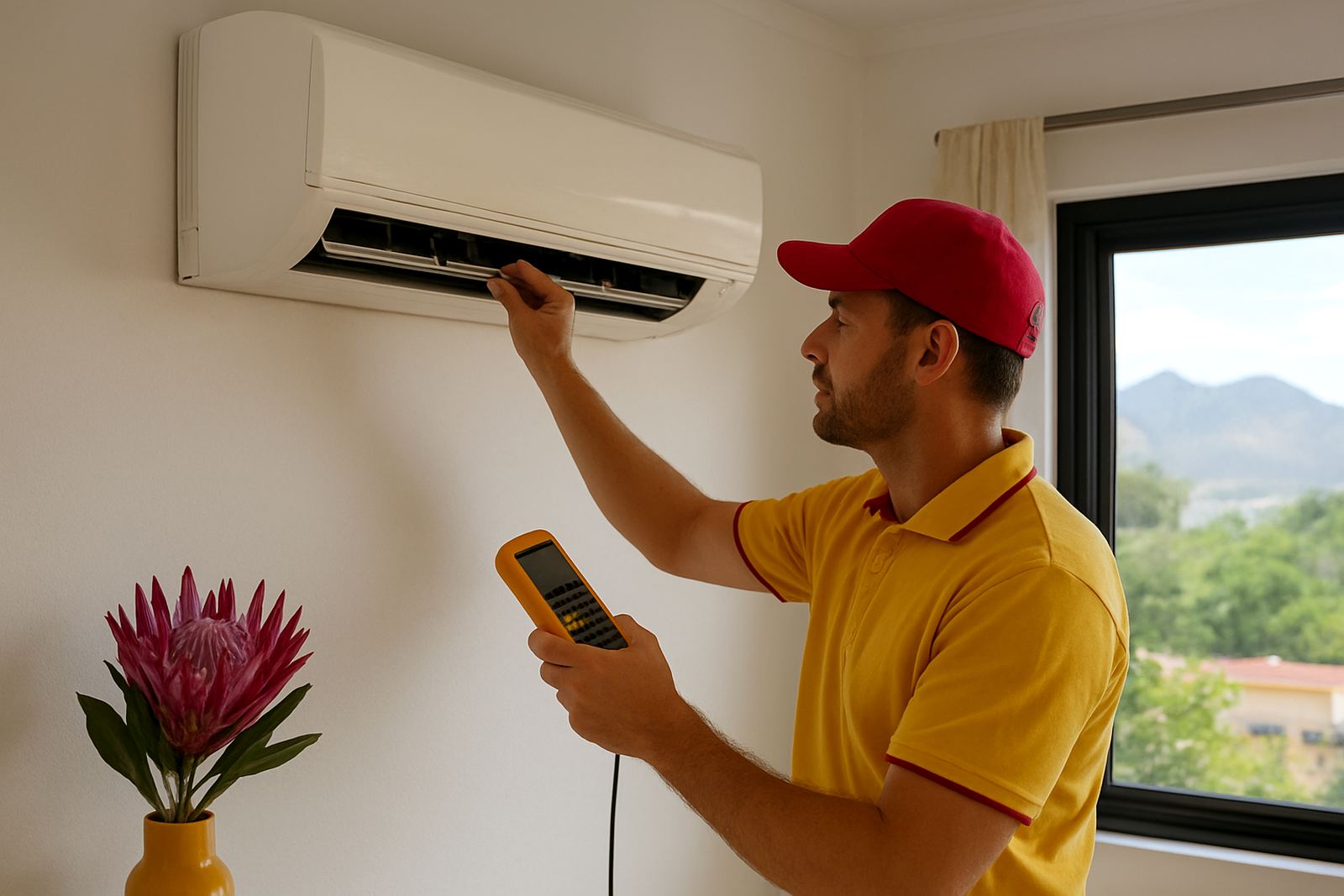
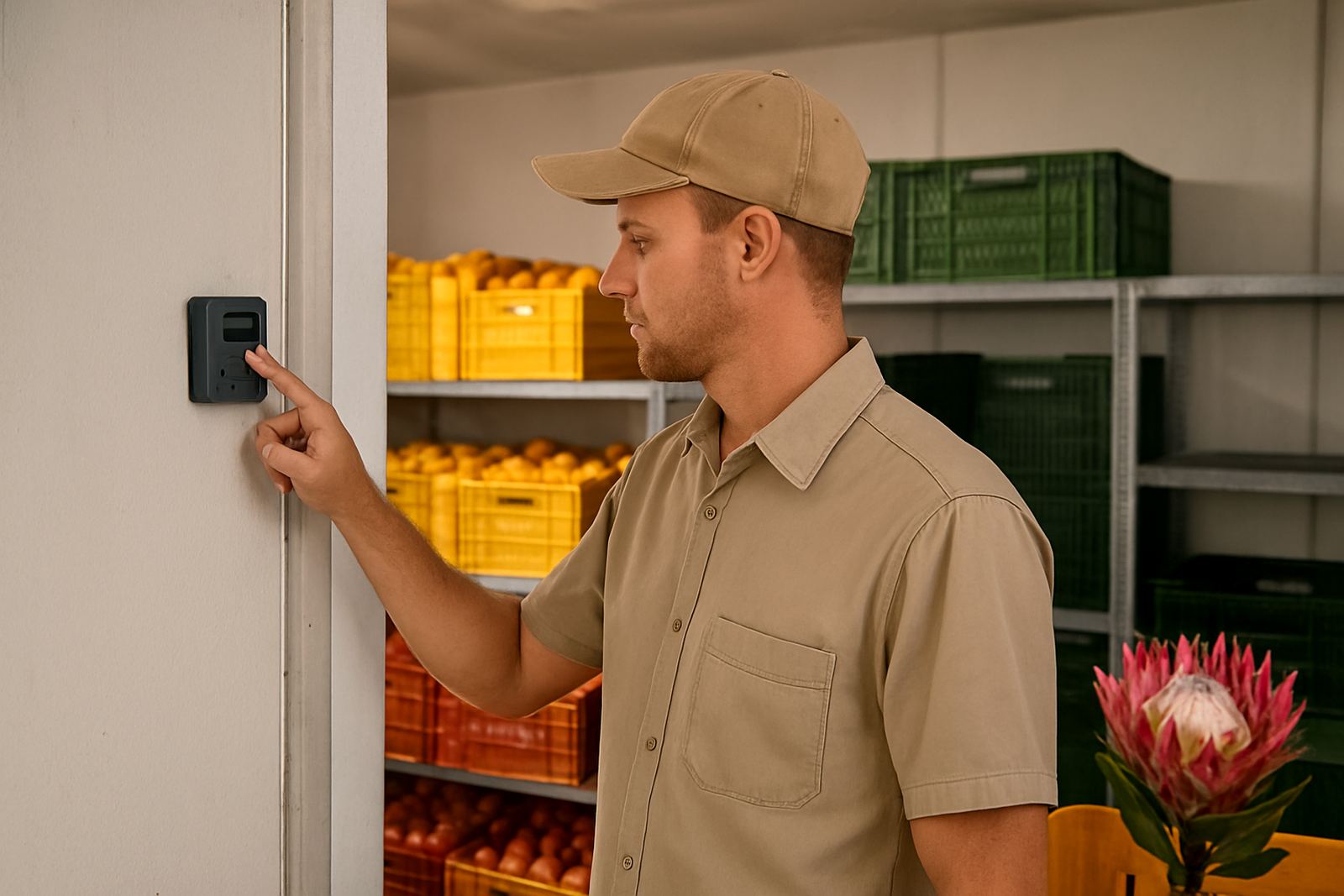
A data logger is a small monitoring unit that records temperature at set intervals and stores the readings for later review. In cold rooms, butcheries, dairies, wine farms and retail fridges, it gives a proper history of conditions during power cuts, door faults, blocked coils or compressor problems. That history matters when a client asks why stock softened, ice built up, or a room drifted out of range overnight.
For shops and farms in the Western Cape, the main value is proof. You can show when a room stayed stable and when it did not. That helps with internal checks, temperature logs for audits, and deciding whether a repair was a one off event or a repeating fault. It also helps when load-shedding, generator changeover or a tripped isolator causes a quick but costly temperature rise.
Sizes and logging options to match the job
Data loggers come in compact battery units for a single fridge or cold room, as well as multi-channel units that monitor more than one point at the same time. Some models use a built-in probe and others take remote probes for return air, product area or ambient monitoring. A few can be linked to door contacts or alarm outputs, depending on what the site needs.
- Single-point logger for one room or cabinet
- Multi-point logger for two to four zones
- Remote probe setup for hard-to-reach points
- Memory size from short-term checks to long-term records
- Screen display, indicator lights, or hidden logger for scheduled downloads
For most smaller sites, a simple unit with a clear display is enough. Larger cold stores in Paarl, Stellenbosch or Malmesbury often need more than one probe so the operator can compare room temperature against product area temperature and spot uneven airflow. If the site has frequent opening and closing, a faster logging interval is useful because it shows the sharp drops and recovery time more clearly.
Where data logging fits best in Western Cape conditions
These units suit places where temperature matters every hour of the day. That includes fruit packing areas, restaurant prep rooms, bottle stores, farm packhouses, medical storage rooms, fish and meat cold rooms, and commercial aircon zones that must stay within set limits. Coastal humidity near Cape Town and the West Coast can also make records useful because moisture affects coils, doors and insulation over time.
On farms outside Vredenburg or in the Winelands, data loggers are often fitted where power interruptions, door cycling and seasonal changes put extra strain on the system. The logger shows whether a room is recovering slowly after a cut, or whether a fan motor, gas charge or thermostat is not doing its job. That kind of evidence saves time when a technician is on site and needs to decide what to check first.
- Cold rooms for food storage and dispatch
- Under-counter and upright fridges in shops
- Prep rooms and stock rooms with strict temperature limits
- Aircon zones where comfort and equipment protection matter
Installation, power and what the site needs
Most data loggers are simple to install and do not need major work, but the location matters. The sensor should sit where it will read true conditions, not right in front of a door, fan discharge or sunlit panel. In cold rooms, we usually place the probe where air circulation is steady and the cable is protected from forklifts, crates and washdown hoses.
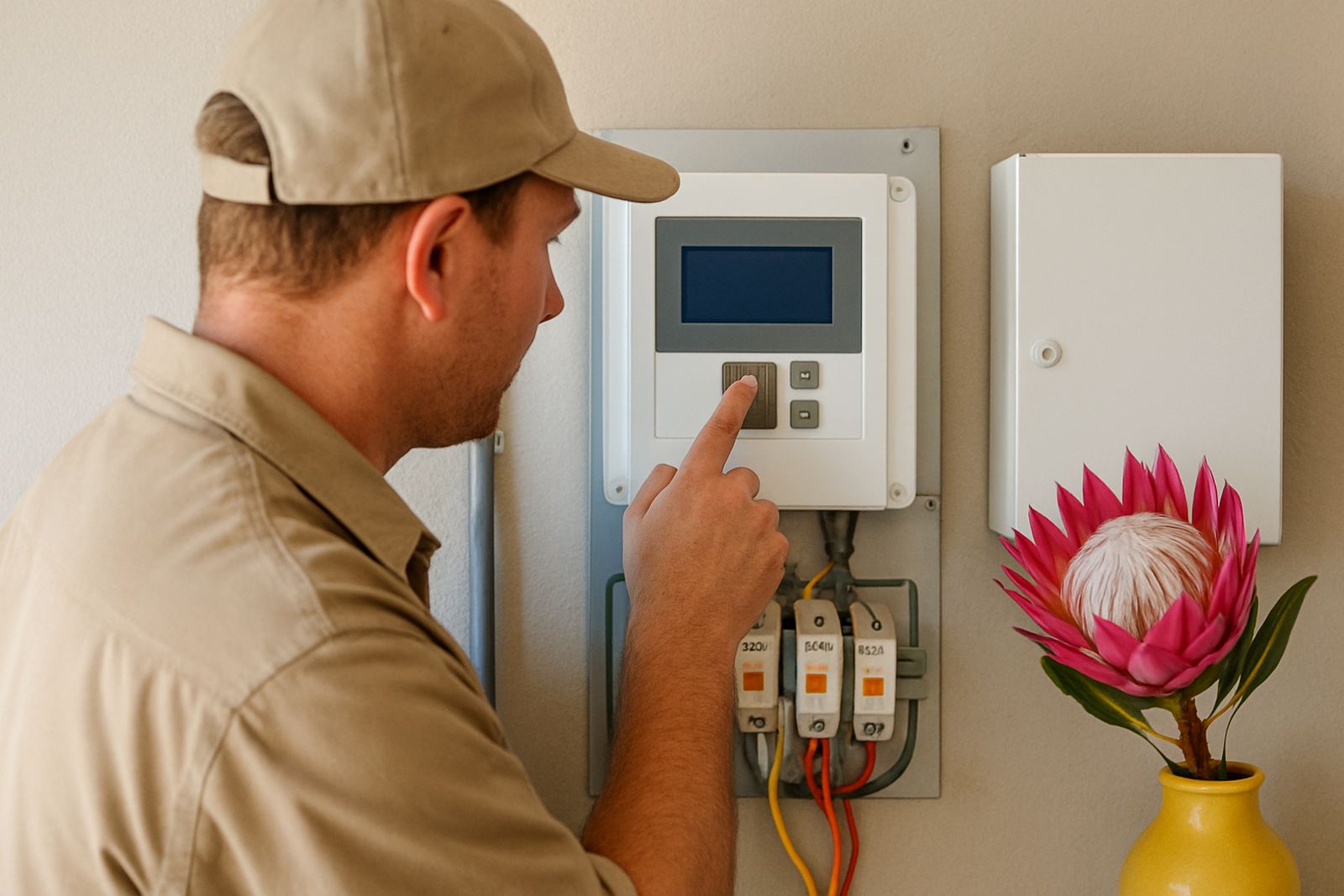
Many units run on internal battery power and can log for months or longer, depending on the sampling interval. Others need a low-voltage supply or a hardwired connection to an alarm panel or controller. If the site already has backup power for load-shedding, the logger should be checked against that supply too, because a power event can still interrupt a recorder if the wiring is not right.
For installation, we also check access for downloading the records. If the unit is tucked behind shelving or above a ceiling panel it becomes difficult to service later. Good placement now makes later checks quicker and prevents a lot of small headaches.
Care, servicing and record keeping
A logger should be checked as part of normal maintenance, especially where a cold room is used daily. Battery condition, probe placement, cable wear and clock accuracy all matter. If the time is out by an hour, the record is still useful but it can confuse fault tracing when a team is comparing it with load-shedding schedules or shift handover notes.
We recommend checking the unit whenever the cold room gets coil cleaning, drain clearing or seasonal start-up attention. That way the logger records sit alongside the rest of the service history. On busy sites, a monthly review is practical and gives early warning of repeated warm-up periods, short cycling or defrost problems. A unit that looks fine on the wall can still be drifting, so the log is the proof.
- Confirm date and time are correct
- Check battery condition or power feed
- Inspect probe mounting and cable strain
- Download and file the records regularly
- Replace damaged probes before readings start to drift
What to check before ordering
Before ordering, measure the space and decide what you need to prove. A single temperature point may be enough for a small fridge, but a cold room with product movement often needs more than one reading point. You should also know whether the site needs a visual display, an alarm contact, or only a record that can be downloaded later.
Check the operating range, memory size, probe length and how often the logger will sample. Fast intervals give more detail, while slower intervals can cover a longer period. If the site is in a humid or washdown area, ask for a unit and probe arrangement that can handle that environment. For outdoor or plant-room positions, the enclosure should suit dust and moisture better than a basic indoor unit. If you are unsure, our team can work out what fits the room and the compliance requirement, no fuss.
For sites in Cape Town, Montague Gardens, Stellenbosch, Paarl, Malmesbury and Vredenburg, we can match the logger to the refrigeration system and the way the business actually runs. That means fewer gaps in the record and less guesswork when there is a complaint or a temperature event.
Key facts
| Product type | Temperature data logger for refrigeration and aircon monitoring |
|---|---|
| Recording range | Typically -40°C to +85°C, model dependent |
| Sampling interval | From 1 minute to 60 minutes, set to site needs |
| Memory capacity | From short-term checks to multi-week or multi-month records |
| Power supply | Battery operated or low-voltage powered options |
| Probe options | Built-in sensor, remote probe, or multi-probe setup |