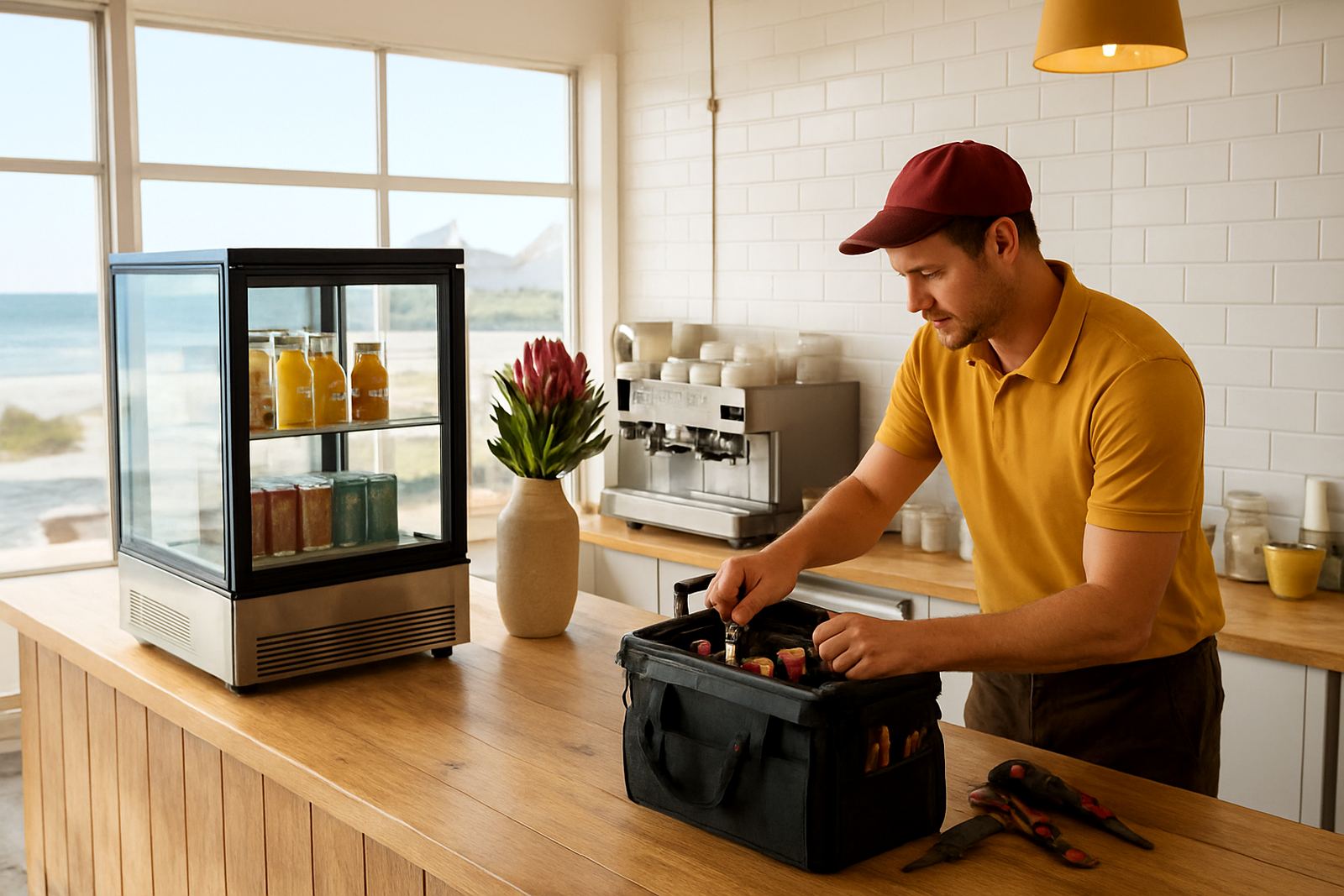
Holiday trading pressure in a small coastal café
The client was a seaside café in Yzerfontein that relies on chilled drinks, dairy, desserts and prep ingredients moving quickly from the back area to the front counter. The owner called because the main display fridge was running warm and the second undercounter unit had started cycling too often, which meant product was not holding steady through the day.
The timing was the issue. A long weekend was coming up, the café had stock already delivered, and the town was expecting heavier visitor traffic. In a place like Yzerfontein, where supply runs are not always immediate and tradespeople may be booked out, losing even one trading day can mean wasted product and a very messy week.
We treat these jobs as practical refrigeration work first. Keep product safe, restore temperature control, and make sure the unit can cope with door openings, salt air and higher customer numbers.
What the owner reported and what we checked first
The brief was straightforward: find the fault quickly, stop further product loss, and get the front counter fridges ready before the weekend. The owner had noticed weaker cooling, longer run times and some water pooling under the cabinet. There was also a faint compressor hum that did not sound normal, so we knew this was not just a cleaning job.
On site we checked the operating temperatures, door seals, evaporator condition, condenser condition, fan operation, drains and the electrical start components. Coastal kitchens can load a lot of moisture into the air, and that tends to show up fast in blocked drains, iced coils and overworked fans. We also looked at the placement of the cabinets because counter fridges tucked too close to a wall can struggle when the weather turns hot.
- Front counter display fridge, approx 1.8 m cabinet length
- Undercounter prep fridge, single-door format
- Observed warm product zone at the upper shelf line
- Drain tray showing standing water and residue build-up
Repairs completed before the weekend rush
We found a combination of restricted airflow and a failing electrical component on the main unit, with the second fridge suffering from a blocked drain and heavy coil dirt. The compressors were not beyond repair, but they were being pushed harder than they should have been. That is the sort of fault that can start small and then turn into a complete breakdown on the worst possible day.
Our team cleared the drain lines, washed the coils, cleaned the fan areas and checked the contactor and start parts. We replaced the failed component, reset the operating controls and re-tested both units under load. After that we watched the pull-down cycle and the temperature stability to make sure the fridges were not just starting, but actually holding cold properly.
- Drain clearing and residue removal
- Coil cleaning and fan compartment clean-out
- Electrical fault tracing and component replacement
- Temperature pull-down and stability check
- Final test with product load in place
Timeline and site constraints
This was completed over one working week from first call to final sign-off, with the on-site repair done well before the holiday weekend. The quick turnaround mattered, but so did the working conditions. The café needed to keep serving, there was limited back-of-house space, and we had to work around food handling times without getting in the way of service.
We also had to plan for power interruptions and fluctuating voltage, which are not unusual in seasonal trading periods. For that reason we tested the units after the repair and again after a short run-in period. It is one thing to repair a fridge, it is another to leave a client confident that it will stay up through load-shedding and a full day of door opening.
Because this is a coastal town, we paid extra attention to corrosion points, drain fall and seal condition. That is often where smaller cafés get caught out, especially when fridges are close to the prep area and the salt air moves in through open doors.
Results at the counter
By the end of the job both fridges were holding temperature again and the owner could restock with confidence. The display cabinet recovered faster, ran quieter and stopped throwing excess water into the tray. The undercounter unit also began cycling normally instead of running flat-out, which reduced strain on the compressor and gave the kitchen a steadier prep point.
The bigger result was trading continuity. The café went into the long weekend with chilled stock ready, no last minute scramble, and no need to remove product from the sale area. For a small hospitality business, that is what matters most. Less waste, less stress, and no emergency decision-making at closing time.
- Cabinets back in service before holiday trading started
- Stable holding temperatures across the day
- Lower risk of product spoilage
- Cleaner drains and reduced water pooling
What we would do again for a similar café
If we were called back to the same site, we would repeat the same approach: fast fault finding, full cleaning of air paths and drains, component testing, and a proper load test before signing off. For café fridges in Yzerfontein, we would also recommend a planned maintenance check before peak season, because salt, dust and heavy foot traffic all shorten equipment life if they are ignored.
For front counter fridges, the most useful follow-up is usually not complicated. Check seals every month, keep the condenser clear, make sure the drain is open, and log temperatures during busy periods. If the cabinet sits near a door or window, it may also need a small re-positioning to reduce heat gain and moisture ingress. These are the small things that save money later.
Kenny Cape West handles refrigeration and aircon work across Cape Town, the Winelands and the West Coast, from call-out repairs to maintenance contracts and cold-room work. For cafés, shops and farms, our focus is simple: keep the cold side working when trading depends on it.
Project facts for the record
This job involved a seaside café in Yzerfontein with front counter fridge equipment that had to be repaired ahead of a holiday trading weekend. The owner needed the units stable, the drains cleared, and the temperature control checked before stock went to waste. We completed the work in one week and handed back equipment that was ready for service.
It was a good example of why small refrigeration faults should be handled early. A warm cabinet, a blocked drain, or a tired start part can look minor for a day or two, then suddenly become a full shutdown when the shop is at its busiest. Quick response, practical repair work, and proper testing made the difference here.
Key facts
| Project type | Front counter fridge repairs |
|---|---|
| Town | Yzerfontein, Western Cape |
| Client type | Café with holiday weekend trading pressure |
| Work completed | Fault finding, component replacement, drain clearing, coil cleaning, temperature testing |
| Timeline | 1 week from call to sign-off |
| Key risk factors | Coastal humidity, heavy door opening, load-shedding, limited on-site space |