What the butchery needed in Goodwood
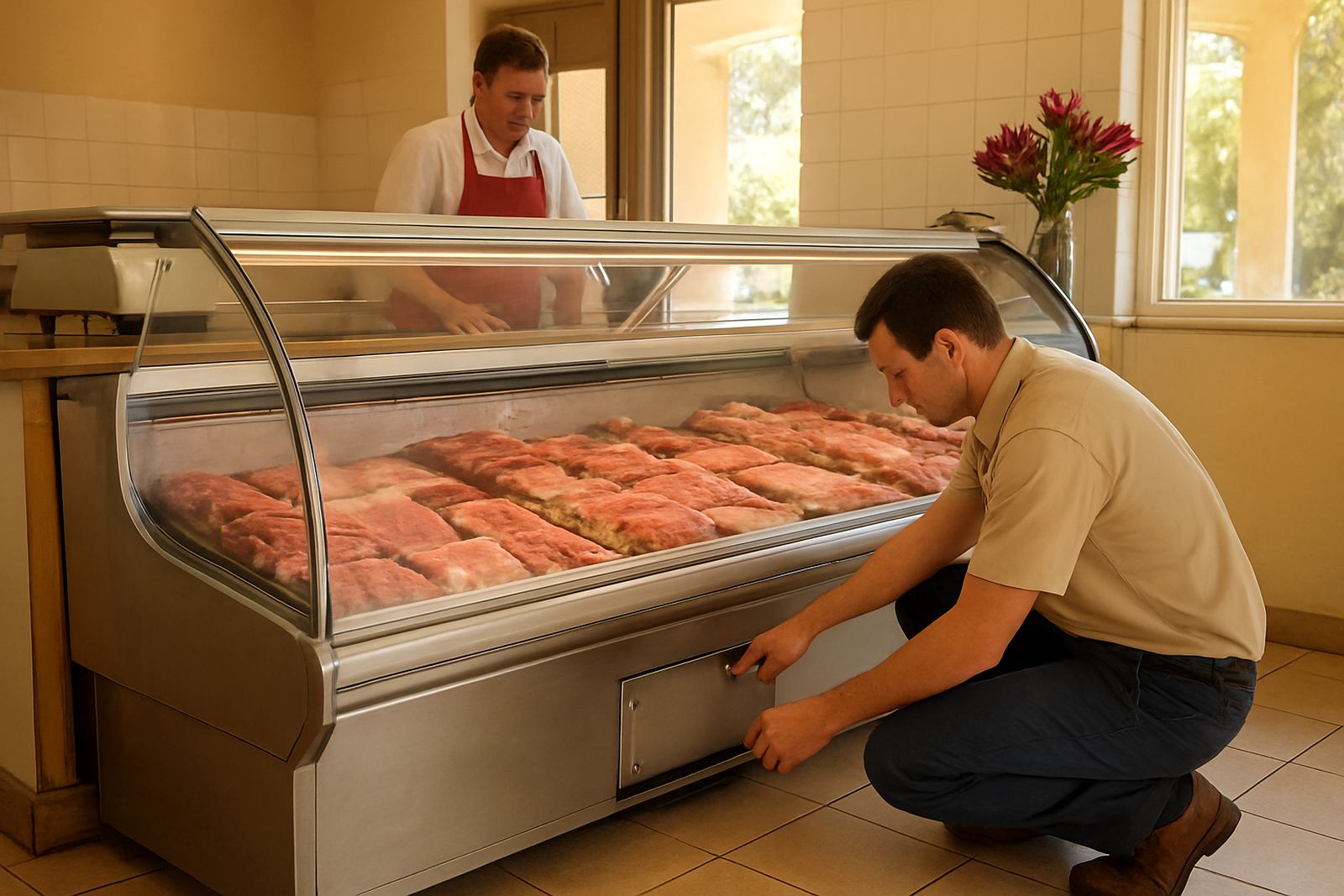
The client was a busy butchery in Goodwood serving walk-in retail customers and small trade orders. Their serve-over counter had started cycling badly, holding temperature unevenly and drifting up during the hotter parts of the day. The team could still trade, but meat display, stock rotation and staff confidence were being affected.
We were asked to trace the fault, stabilise the counter and get it back into service without disrupting trading hours. The shop did not want a daytime shutdown, and there was no room for a long wait while spoilage risk grew. In plain terms, the brief was to find the cause, fix what could be fixed on site, then confirm the cabinet would restart properly for the evening shift.
- Type of site: retail butchery with serve-over display
- Town: Goodwood, Cape Town
- Service focus: fault tracing and trading continuity
- Access window: after-hours call-out
Site limits that shaped the work
Goodwood shops often run long trading hours, and this one was no different. The counter had to stay closed up for most of the day and the work had to happen around staff cleaning, packing and serving. We also had to work with a live retail environment where door openings, warm product loads and frequent use can make a refrigeration fault look worse than it really is.
Another constraint was the local summer heat. In Cape Town and the northern suburbs, a serve-over unit can struggle when ambient temperatures climb, especially if the condenser is dust-loaded or airflow is poor. Load-shedding adds another layer too, because a counter that is already weak may not restart cleanly after power returns. We planned the visit around that reality and kept the job focused on a proper restart, not just a quick reset.
- Work carried out after close of trade
- Checked for airflow restriction around the cabinet and condensing section
- Considered restart behaviour after power interruption
- Allowed for high ambient temperatures and daily product loading
Fault tracing, cleaning and restart work
We started with a full visual inspection, then moved through the main operating checks: supply voltage, controller response, temperature pull-down and the condition of the evaporating section. The fault presented as a unit that would start but not settle properly, with temperature variation along the display run. That can point to several things at once, so we worked methodically instead of guessing.
Our technician cleaned the air side components, cleared the drain path and checked for ice build-up that could choke performance. We inspected the fans, wiring terminations and the control settings, then monitored the cabinet through a restart cycle. Where the issue was linked to dirty coils and restricted heat rejection, the improvement was immediate. Where settings needed adjustment, those were corrected and rechecked against the product holding range.
Because this was a food retail counter, we treated temperature stability as the main priority. Once the cabinet was back in a usable operating band, we ran a final check before handover and confirmed the counter was ready to stay in service overnight.
- Electrical and control checks on the counter circuit
- Coil cleaning and airflow restoration
- Drain clearing to prevent water build-up and icing
- Night-time restart check with temperature monitoring
Specs and practical details we worked to
The project was handled as a short, targeted service job rather than a strip-down replacement. That suited the site because the aim was to protect trade and avoid unnecessary downtime. The cabinet was a serve-over meat display counter used for daily retail sales, so the work had to respect product handling, hygiene routines and the shop's closing window.
Key facts on the job were straightforward. The call-out was completed in Goodwood, the same evening the fault was reported. We allocated a senior refrigeration technician, with support from our client admin team for scheduling and handover notes. The restart was completed before the next trading day, and the counter remained under observation during the first shift back. The shop did not need a long closure, which was the main ask from the start.
- Site type: butchery serve-over display counter
- Area: Goodwood, Cape Town
- Attendance: after-hours emergency call-out
- Completion: same-night restart and verification
- Coverage: refrigeration fault tracing and cabinet servicing
- Support: temperature logging and handover notes
What changed after the repair
Once the counter was cleaned, checked and restarted, temperature hold became steadier and the staff had a clearer picture of what to watch during service. The cabinet was no longer drifting in the same way, and the display line could stay consistent through the busiest part of the evening. That gave the butchery confidence to keep trading without moving stock around every few minutes.
The client also had less risk around product quality. When a serve-over unit is unstable, you end up with repeated door opening, extra handling and unhappy staff. Fixing the fault early meant less waste and fewer emergency decisions. It also reduced the chance of a full breakdown during a hot spell or after a power interruption, which is exactly when these counters tend to fall over.
For us, the practical result was a clean handover and a working counter the next morning. That is the standard we aim for on food retail jobs in the Western Cape: keep the product safe, keep the shop open and make the fault clear enough that the client can plan the next step.
What we would repeat on the next similar job
We would do this one the same way again. Start with after-hours attendance, isolate the real fault before parts are assumed, clean the heat exchange surfaces, clear the drains and verify the restart under operating conditions. On butchery counters there is no value in a rushed guess if the cabinet needs to hold meat at trade temperatures by the next morning.
For shops in Goodwood, Cape Town and the broader Western Cape, our approach stays practical: quick call-out response, honest fault tracing and a proper restart check. If the same site were to call us again, we would also recommend a short maintenance plan that includes seasonal start-up, coil cleaning and temperature logging. That helps catch weak performance before the counter starts drifting and avoids unnecessary loss during busy weeks or load-shedding periods.
- Repeat the after-hours attendance model
- Use temperature logging on restart week
- Schedule coil cleaning before the hotter months
- Check drains and fan operation during planned maintenance visits
Key facts
| Project | Goodwood butchery counter fault tracing and night-time restart |
|---|---|
| Location | Goodwood, Cape Town |
| Client type | Retail butchery with serve-over display counter |
| Timeline | 1 week from call-out to verified restart |
| Work done | Fault tracing, coil cleaning, drain clearing, control checks, restart verification |
| Outcome | Counter returned to trading with steadier temperature holding and less risk of spoilage |