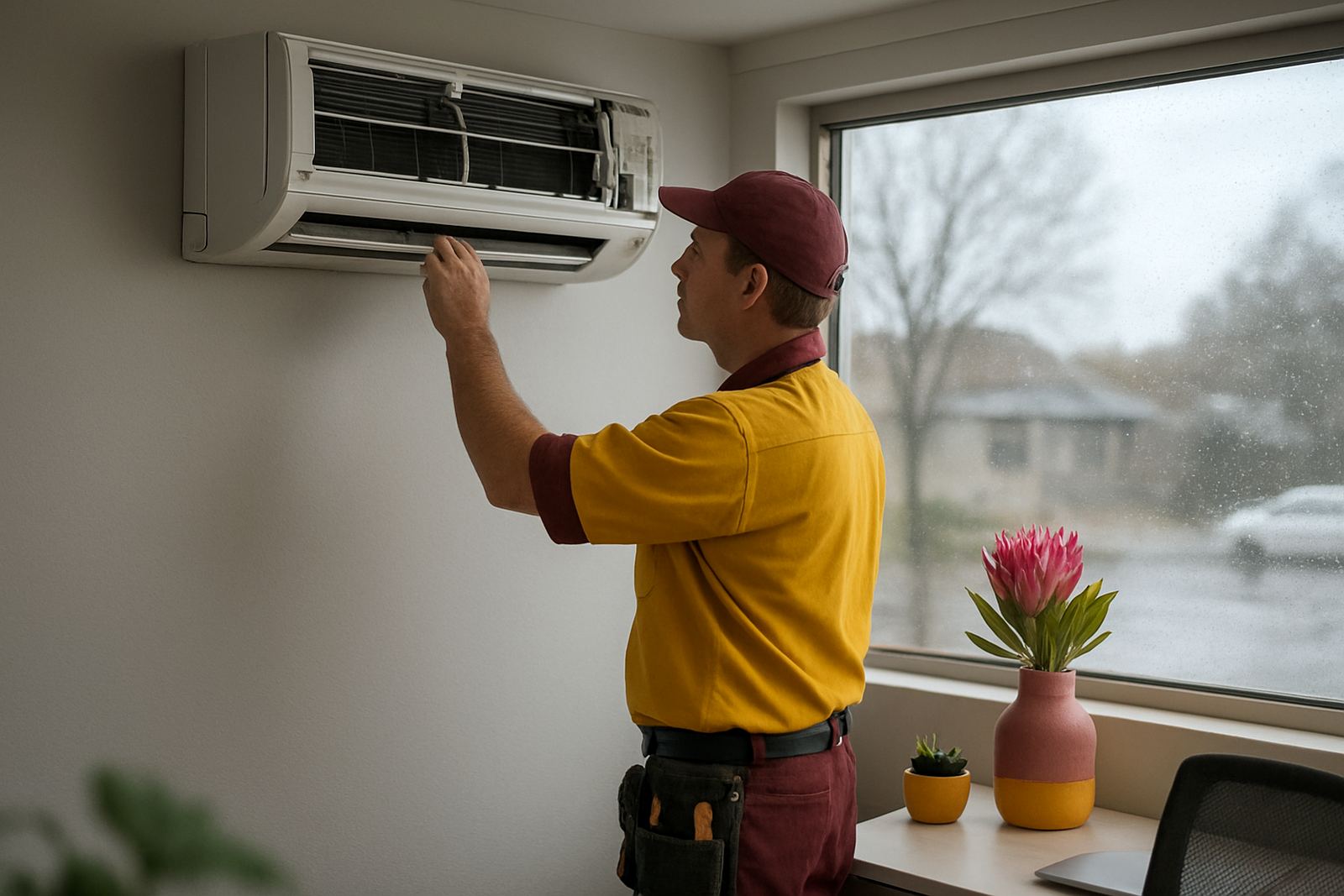
Why winter gives you better timing for aircon work
When the heat drops, most people switch the aircon off and forget about it until the first warm spell. That is exactly when small faults get missed. A unit that has been limping through summer may still cool, but it can be using more power, draining poorly, or carrying dirt deep in the coil. Winter gives a technician time to check the system properly without disrupting customers, staff or tenants.
For shops, small offices and homes around Cape Town, Stellenbosch, Paarl and the West Coast, winter service also helps you avoid the summer scramble. Once the first hot week arrives, call-out work piles up fast. Planned servicing in June or July is simpler to schedule, and if a worn capacitor, blocked drain or low gas charge shows up, you can deal with it before the unit is needed every day.
What a proper winter service should cover
A proper service is more than a quick wipe-down. The indoor and outdoor units should be opened, checked and cleaned so the system can run as intended when it is switched back on. On many Western Cape properties the issue is not a major failure, just a build-up of dust, fine lint, salt air and moisture related grime that slowly chokes performance.
- Cleaning of indoor filters and evaporator coils
- Inspection of the outdoor condenser for dust, leaves and corrosion
- Drain clearing to stop dripping, smells and ceiling stains
- Check of fan motors, electrical connections and controls
- Leak detection where cooling performance has dropped
- Temperature logging for units that protect stock or produce
If the system is used for a cold room, the checks become even more important. Shops and farms cannot afford temperature swings. A small fault can spoil product, trigger complaints or force an emergency call-out after hours. It is better to spot the issue while there is still time to plan the repair.
How winter service helps with power cuts and restart problems
Load-shedding changes the way aircon systems behave. After repeated stops and starts, weak parts tend to show themselves. Winter is a good time to test restart performance, look for tripping issues and confirm that the unit comes back on properly after an interruption. On older systems, a simple restart fault can turn into a longer shutdown if it is ignored.
It also helps to check settings and operating habits. Some clients leave units off for months, then expect them to run at full capacity on the first warm afternoon. That can expose a blocked drain or weak fan that went unnoticed during the cold spell. A winter service makes the first start-up easier and gives you a better chance of trouble-free use when temperatures rise again.
A local example from the Winelands
We often see this with shops and guest houses in Stellenbosch and Paarl. One unit may be cooling the front area while another is only used for a few hours each day. Because the weather is mild, the fault is easy to ignore. Then summer arrives, the building fills up, and the same unit is suddenly asked to work long hours in hotter conditions.
A scheduled winter visit can catch the problem early. For example, a blocked drain line might only show up as a faint damp patch now, but by summer it could become a leak over stock or finishes. Likewise, a coil that is packed with dirt may still operate, just not efficiently. Cleaning it in winter reduces strain and can help keep running costs steadier. That matters when electricity budgets are already tight.
What business owners should arrange before the season turns
If you manage a shop, warehouse, farm office or family home, winter is a good time to make a short list and work through it before the first hot spell. Do not wait for the full breakdown. A planned visit is usually quicker and less disruptive than an emergency call-out, especially when technicians are already busy across Cape Town, Montague Gardens, Malmesbury and Vredenburg.
- Book servicing before the end of winter, not after the first heat wave
- Keep access clear around indoor and outdoor units
- Tell the technician about any strange noise, smell or weak cooling
- Ask for a check on drains, coils and electrical connections
- For cold rooms, keep a note of any temperature variation or alarm event
It also helps to keep records. A simple service history shows when the last clean was done, whether there was a leak, and if the system needed a part. That makes future maintenance easier to plan and can save time when a fault recurs.
Why early maintenance is usually cheaper than waiting
Most aircon problems start small. A dirty coil becomes poor airflow. Poor airflow leads to longer running times. Longer running times push up electricity use and wear out parts sooner. By the time a unit stops completely, the fix is often more expensive and the disruption is already there.
Winter servicing is usually the sensible choice because it spreads the work out and gives the system a better chance of lasting the full season. For homes, it means less stress when the next heat arrives. For businesses, it means fewer interruptions, cleaner units and less chance of losing a trading day to a preventable fault. If the equipment serves a cold room or product storage area, the timing matters even more. A planned check now can save a very awkward call later.
At Kenny Cape West, we handle planned maintenance, emergency call-outs, cold room servicing and aircon work across the Western Cape from our base in Montague Gardens. Winter is the right time to sort out the small things while there is still room to plan them properly, rather than waiting until everyone wants the same technician on the same day.