Why an aircon starts to smell inside the room
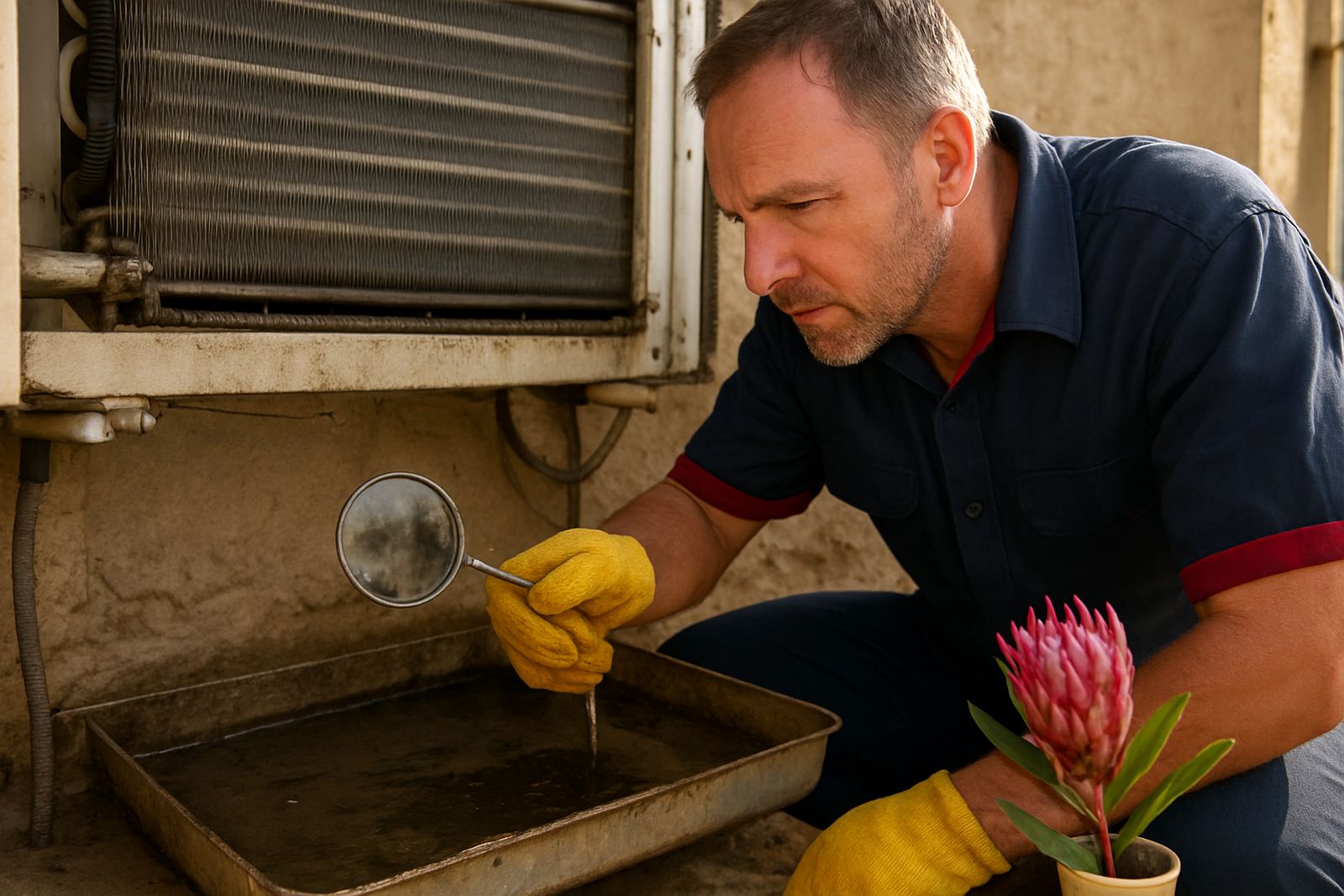
Most indoor unit odours come from what is happening inside the casing, not from the room itself. The unit pulls warm air over a cold coil, so any dust, grease, pollen or damp trapped there can hold smell and spread it every time the fan starts. If the drain line is slow, water sits in the tray and the smell gets stronger.
In Cape Town and the coast the air often carries more moisture, so the inside of an aircon can stay damp for longer. In a shop that runs the system for long trading hours, or a small office that closes up over the weekend, that moisture has time to mix with dirt and odour builds up. A unit can smell musty, sour, dusty or even like wet socks, depending on what is growing or trapped inside.
One thing to note is that a smell does not always mean the gas is low. Gas issues can affect cooling, but odour usually points first to cleaning, drainage or airflow. That is why a proper check starts with the indoor unit, the filter, the drain and the coil, then moves to the rest of the system if needed.
The most common causes we see on call-outs
On service calls from Montague Gardens to Paarl and Stellenbosch, the same few faults keep coming back. Some are simple, some need proper stripping and cleaning. The good news is that most are fixable before they turn into bigger repair work.
- Dirty filters that trap dust, pet hair and cooking fumes
- Blocked or slimy drain pipes that leave standing water in the tray
- Dust build-up on the evaporator coil, which holds smells and slows airflow
- Mould or bacterial growth where the unit stays damp for long periods
- Dirty fan wheels that throw odour back into the room every time the unit starts
- Cooking grease in units near takeaway counters or staff kitchens
Sometimes the smell is strongest when the unit starts, then it fades after a few minutes. That often means the fan wheel or coil needs cleaning. If the smell stays constant, and especially if you see water dripping indoors, the drain line or tray is often part of the problem too.
What cleaning usually solves the problem
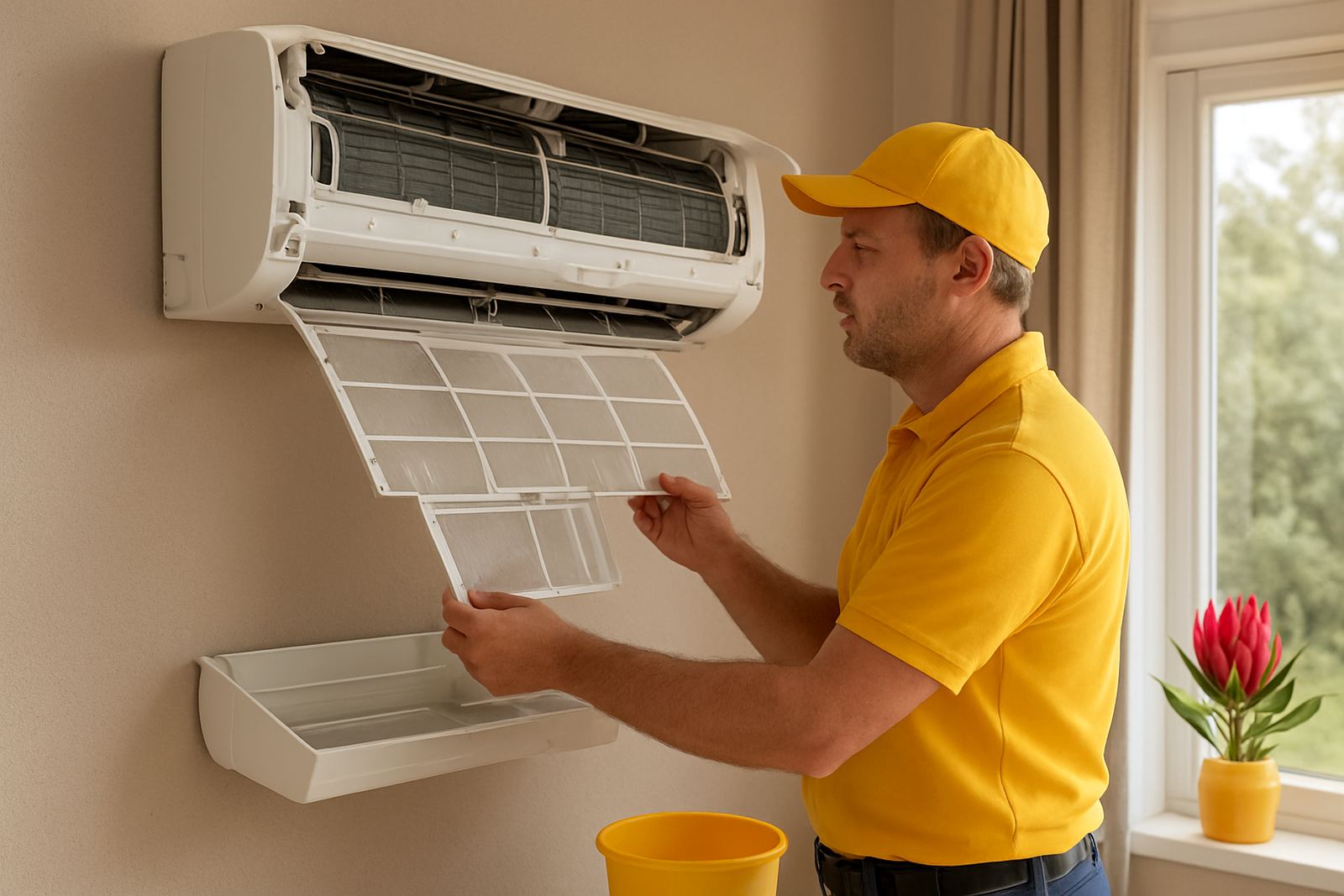
For most smelly indoor units, a proper clean does more than wiping the outside cover. The filters need to be washed, the coil cleaned, the drain cleared and the fan path checked. In many cases the unit should be opened enough to get to the parts where dirt and moisture actually sit. A quick spray on the front grille wont fix an odour that is living deeper inside the machine.
Where the smell comes back every few weeks, the system may need planned maintenance rather than one-off cleaning. That is common on coastal homes, restaurants, salons and small retail spaces where the unit runs hard through summer. It is also common when a property has had load-shedding and the unit has been switched off and on often, because the stop-start cycle can leave moisture sitting in the tray.
- Filter cleaning to restore airflow and remove trapped dust
- Coil cleaning to clear dirt from the cold surface
- Drain clearing to stop stagnant water and overflow
- Fan wheel cleaning to remove the source of repeated odour
- Temperature and airflow checks to make sure the unit is cooling properly after cleaning
When a bad smell means something else is wrong
Not every odour is just dirt. A burnt smell can point to electrical trouble, a sharp chemical smell can point to a leak or cleaning residue, and a rotten smell may mean something is trapped inside the casing or drip tray. If the smell is stronger near the outdoor unit as well, the fault may be wider than the indoor side alone.
These signs need a technician rather than more spraying. If a unit is tripping, not cooling, or making noise with the smell, switch it off and have it checked. Running a dirty or damaged unit can pull more power and push the fault from a simple clean into a parts repair.
In commercial spaces, this matters for staff comfort and customer impression too. A shop in Vredenburg once reported a sour smell that got worse by midday. The indoor unit had a blocked drain and a dirty fan wheel, plus the filter had not been cleaned for months. After cleaning and a drain clear, the odour was gone and the unit stopped dripping over the floor tiles.
Why the Western Cape climate makes odours worse
Western Cape conditions can make smells appear sooner than many owners expect. Coastal humidity in places like Cape Town and Malmesbury keeps internal parts damp. Winelands dust and pollen can load filters quickly. On farms and in sheds, airborne particles from stock feed, soil and packaging can settle into the unit and hold odour. In summer, long daily run times make the problem build up faster.
That is why aircon servicing in this region should not be left until the unit fails. Seasonal start-up before the hot spell, then a clean mid-season if the unit is running every day, helps keep smells down. For premises that shut for winter, shutdown preservation can also help by clearing moisture and dirt before the system sits unused.
For homes, the same advice applies if the bedrooms stay closed most of the day. A unit that runs only at night can still smell because the moisture does not get the chance to dry out fully after use.
What to check before you call for service
There are a few practical checks owners can do safely before booking a call-out. These will not solve every issue, but they can help narrow down where the smell is coming from.
- Check whether the smell starts when the unit first switches on or only after a while
- Look for water marks under the indoor unit or on the wall
- See if the filter is visibly dusty or grey
- Notice whether the smell is musty, burnt, greasy or chemical
- Confirm if the same smell comes from more than one indoor unit
If more than one unit smells the same, the cause may be in the building’s air, the service routine, or a common drainage issue. If only one room smells, the problem is usually local to that indoor unit. Either way, it helps to give the technician the smell type and when it happens, because that saves time on site.
A practical approach for shops, homes and farms
The best fix is not guessing, it is proper inspection and cleaning by someone who works on the full system. At Kenny Cape West, we handle planned maintenance, emergency call-outs, coil cleaning, drain clearing, temperature logging and cold-room work across Cape Town, the Winelands and the West Coast. For aircon odours, the aim is to find the source, clean it properly and check that the unit is draining and cooling as it should.
For shops and offices, maintenance contracts help keep filters and coils on schedule. For farms and storage areas, the same approach helps stop odours turning into airflow problems that affect stock or staff comfort. If a unit has been smelling for a while, it is better to deal with it early rather than wait for the next hot spell when every aircon in the building is needed at once.
When a unit smells clean after service, that is usually because the dirt, moisture and blockage have finally been removed. If it smells again soon after, there is likely a deeper issue in the drain, fan wheel or installation that needs a closer look.