What usually stops a freezer door from closing fully
When a freezer door feels like it is fighting you, the fault is often mechanical before it is electrical. A door can stick because ice has built up around the frame, a tray or crate is pushing against the inner liner, or the hinges have dropped slightly over time. On older upright freezers, the door may also sit out of line after repeated hard slams or after being moved across a tiled floor.
In coastal areas such as Cape Town and Vredenburg, humidity can make frost build faster if the door is opened often. That frost then catches the seal and the door stops pulling shut evenly. In farm stores around Paarl and Stellenbosch, dust and product movement can cause the same problem. It only takes a small gap for warm air to get in and moisture to follow.
- Ice on the seal or around the frame
- Door gasket that has gone hard, split or twisted
- Hinges worn or loose
- Food packs, boxes or baskets blocking the closing path
- Cabinet not level after moving or cleaning
How to check the seal before the freezer starts warming up
The rubber seal is the first thing to check. Close the door on a strip of paper at several points around the edge, then pull it gently. If the paper slides out easily in one area but not another, the seal is not gripping evenly. You can do the same with a thin bank note, although a paper strip is often enough for a quick test.
Look closely for hairline splits, flattened corners and grime. Grease from hands, sugar syrup from bakery stock and salt air near the West Coast can all shorten the life of the gasket. Wipe the seal with warm water and mild soap, then dry it fully. Do not use sharp tools to lift ice because one slip can cut the rubber and turn a small fault into a full gasket replacement.
- Check all four sides of the seal, not just the latch side
- Make sure no label, bag tie or packaging film is caught in the door
- Feel for cold air leaking around the edge after the door shuts
- Inspect the seal for mould, cracks and hard spots
Ice build-up and why it makes doors stick
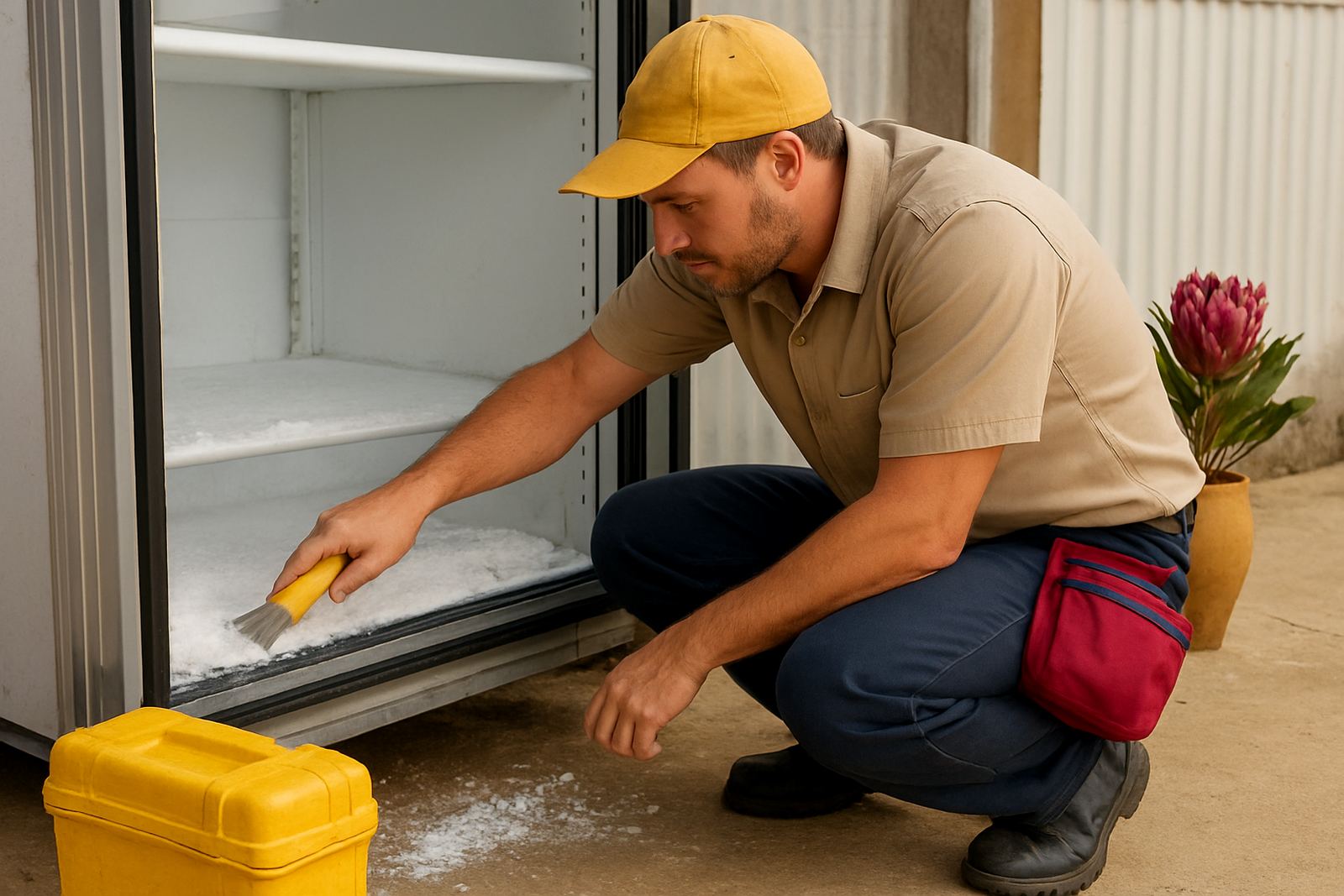
Ice is one of the most common reasons a freezer door will not close properly. It builds up when warm air enters often, when the door is opened for long periods or when a drain is blocked and moisture freezes back inside the cabinet. In a busy shop, the door may get opened dozens of times an hour, so a small fault becomes a daily problem.
Sometimes the issue starts with poor defrosting. If the evaporator area frosts heavily, the ice can push on liners and shelves, making the door sit proud at the edge. A blocked drain can also leave water pooling at the bottom which then freezes into a ridge. If you are seeing repeated ice near the base or along the top edge, there is usually a cause beyond normal wear and tear, not just a dirty door.
For call-outs, our technicians often find that the door itself is fine but the cabinet is effectively iced into a misfit. A proper service will check the cause of the frost, the heater cycle where fitted, the drain path and the condition of the hinge points.
When the hinges, frame or floor level are to blame
Not every sticking door is about the seal. A freezer can sit slightly twisted if it was moved after a delivery, if the floor settled, or if one foot is carrying more weight than the others. On a tiled back room floor, that small shift can be enough to make the door swing open or shut by itself, or close unevenly. Once the frame is out by a few millimetres, the gasket will not meet the cabinet face squarely.
Check whether the unit rocks when you press the top corners. If it does, the door may be under strain every time it closes. Loose hinges can also show up as a drooping handle side, rubbing paint or a gap at the top corner. In some cases the hinge pins are worn and the door has to be lifted slightly to close cleanly. That is a sign the hardware needs attention rather than more force from staff.
If a door has been slammed repeatedly, the latch area can bend enough to leave the door sitting just off line. It often starts with a slight click, then gets worse week by week.
Simple checks staff can do before booking a repair
There are a few practical checks that can be done safely before calling for service. Keep them basic and do not try to strip the cabinet down. If the freezer is holding stock, work quickly so product stays cold.
- Clear the area around the door and remove anything blocking the swing path
- Check that shelves, baskets and crates are seated properly
- Look for frost ridges on the frame or bottom edge
- Verify the cabinet stands level and does not wobble
- Wipe the seal clean and test the grip with paper
- Listen for a hiss of air or a repeated slap as the door shuts
If the freezer is in a shop, assign one person to keep the door clear during busy periods. In a farm store, make sure staff do not pack stock so tightly that the door has to press against it to close. A freezer door that is forced every day will fail quicker than one handled properly.
When to call for maintenance or emergency help in the Western Cape
If the door still will not close after the basic checks, or if the freezer is frosting up again within days, it is time for a technician. A misaligned door can lead to temperature rise, wasted power and spoiled stock. In a dairy room, a butcher's cold room or a small retail freezer, the risk grows quickly because the unit has less time to recover once warm air gets in.
We work from Montague Gardens and cover Cape Town, Stellenbosch, Paarl, Malmesbury and Vredenburg. That helps with call-outs for shops, farms and cold-room users that need a fast response rather than waiting until the end of the week. Planned maintenance can also pick up worn hinges, tired seals and blocked drains before they become a full shutdown. If the freezer has already started thawing, do not keep opening the door to check it, close it and get help.
For businesses on load-shedding backup, a door fault can be worse because the cabinet has less reserve when power returns. A good service visit will check the closing issue and the unit's overall condition so the same fault does not keep coming back.
Keeping freezer doors closing properly after repair
Once the fault is fixed, a few habits will help the door stay right. Clean seals regularly, keep the floor under the unit clear and avoid overfilling the cabinet. If the freezer is used for seasonal stock, ask for a shutdown preservation check before long idle periods so the seal, drain and hinges are not left with moisture sitting in them.
For businesses with multiple units, temperature logging and routine checks make it easier to spot a door that is starting to fail. A freezer that is running longer than usual or frosting unevenly is usually giving early warning. Catching it early is cheaper than replacing stock, and much easier than dealing with a collapsed seal on a Friday afternoon.
If a freezer door is sticking, the problem is rarely one thing only. Ice, wear, alignment and handling all play a part. The sooner it is checked, the less chance there is of warmer temperatures creeping in.