Wine cellar cooling built for local storage conditions
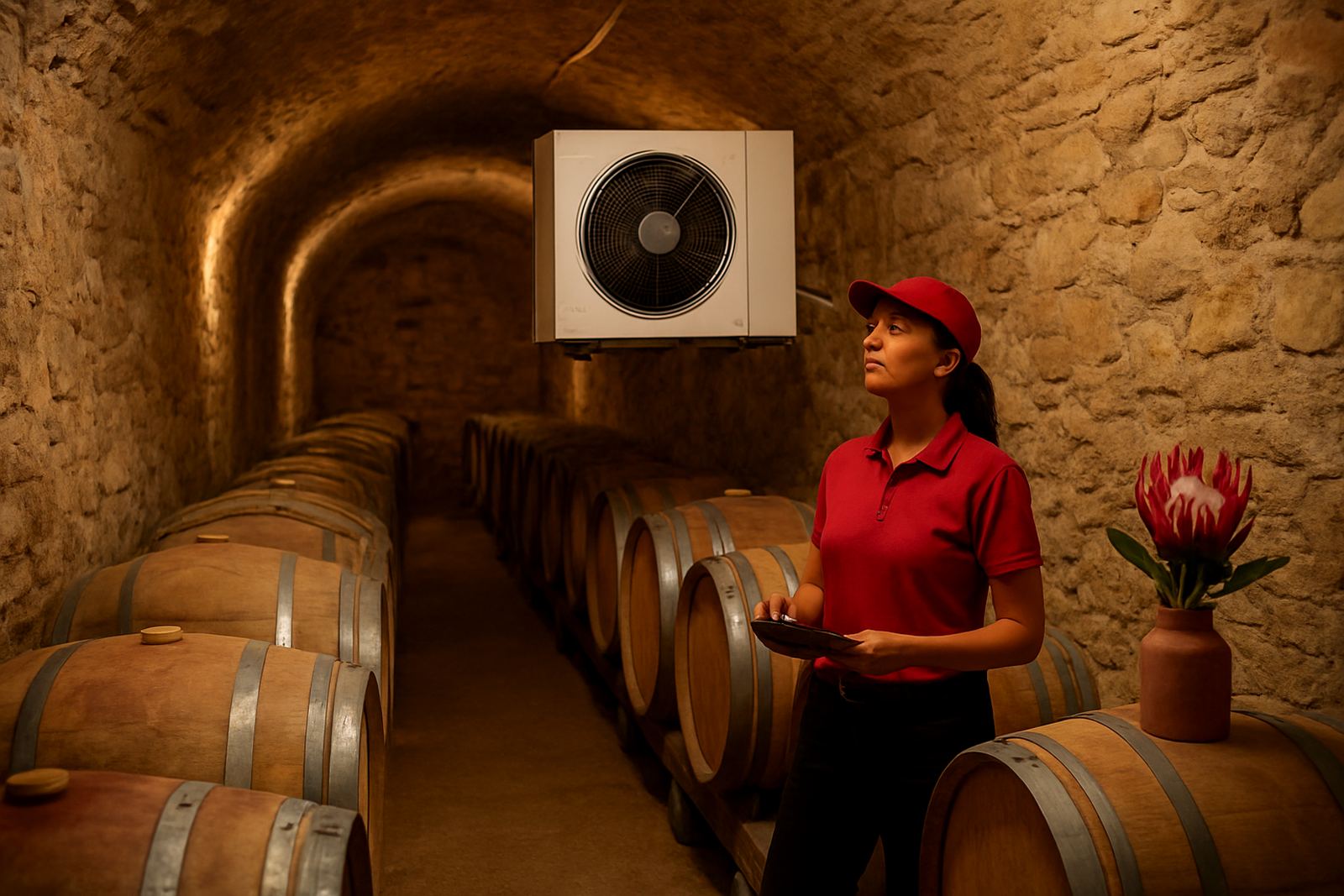
Wine cellar cooling keeps bottles at a steady temperature where ordinary aircon is not enough. A cellar room needs controlled cooling, even air movement and proper humidity handling so the stock does not dry out or swing hot and cold through the day. In Cape Town, the Winelands and along the West Coast, summer heat, coastal moisture and load shedding can all affect a room quickly, so the system has to be chosen properly.
We work on cellar storage rooms for shops, guest houses, tasting rooms and farm buildings. Some rooms only need a compact wall-mounted unit. Others need a split system with remote condenser position, or a ducted setup for better air distribution. The right fit depends on room size, insulation, glass area, how often the door opens and whether the room is used for display as well as storage.
System sizes and options for small rooms to larger stock areas
Wine cellar cooling is usually supplied in a few practical sizes rather than one universal unit. For a compact cellar, a smaller unit may suit a room of about 8 to 15 m² if the insulation is in good order. Medium rooms often need a higher capacity system for 15 to 30 m². Larger stock rooms or cellars with glass doors, lighting and frequent access may need a more carefully sized split or ducted system. A room with poor insulation can need a bigger unit than the floor area suggests, so we check the full set-up before quoting.
- Wall-mounted self contained units for smaller cellars
- Split systems for better noise control and condenser placement
- Ducted options for even air spread in long or awkward rooms
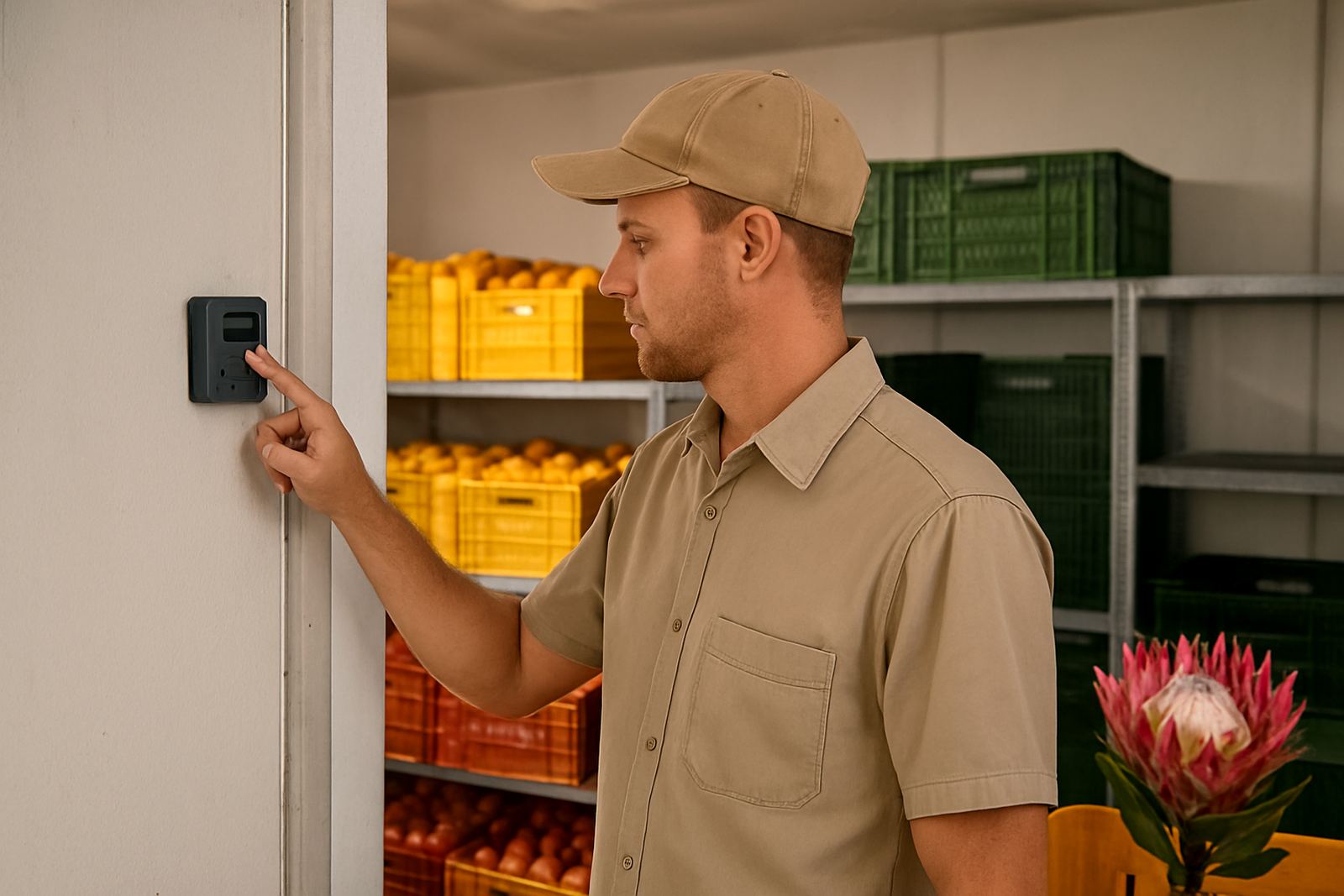
- Controls with adjustable set point and differential
- Remote temperature probe options for better reading of the stored space
For tasting stock rooms, the aim is not just cold air. It is stable air. That means short cycling must be avoided and the airflow has to reach the corners without blowing directly onto bottles or labels. If the room also holds packaging or point-of-sale stock, we can separate the cooling load from the storage layout where possible.
Where wine cellar cooling suits best
This type of cooling suits retail bottle rooms, cellar storage under restaurants, tasting room back stock areas, farm cellar spaces and locked storage rooms on estates. It also works well in mixed-use premises where the room is built into a building and needs a neater finish than a basic cool room would give.
We often recommend it where the room stays closed for long periods, but the door is opened regularly for stock picking or tastings. In Paarl, Stellenbosch and Malmesbury, summer afternoons can push room temperatures up fast, so a system with correct reserve capacity makes a real difference. In coastal areas like Cape Town and Vredenburg, corrosion resistance and regular cleaning matter as much as cooling output.
- Wine shops and bottle stores
- Guest houses and tasting rooms
- Farm cellar storage and back-of-house stock rooms
- Restaurant cellars and managed drinks stores
- Private collection rooms and archive spaces
Installation, power supply and gas considerations
Installation starts with the room build. We look at insulation thickness, vapour barrier condition, door seals, floor gaps and where warm air may be entering. If the room leaks air, the cooling plant works harder and running costs go up. A proper install also needs enough space around the evaporator and condenser for servicing, otherwise routine cleaning becomes difficult and the unit will struggle in peak heat.
Most cellar systems run on standard single phase or three phase power depending on the capacity. We confirm the available supply before ordering, because a unit that is too large for the supply can trip, especially when the grid dips or after load shedding. Refrigerant pipe work must be correctly sized and pressure tested, and the gas charge must match the final pipe length. If the installation is extended or moved later, the charge and oil return need to be checked again. On some sites we also plan for a backup strategy so the room does not climb too far during outages.
We keep the installation practical for local conditions. That means considering coastal humidity, salt exposure near the West Coast, and the need for service access in tight store rooms. It also means neat drain routing so condensation does not drip where stock is handled.
Temperature, humidity and daily care
Wine storage works best when the room stays steady rather than constantly chasing a low temperature. The thermostat should be set to the storage target, then monitored for drift. Most cellar rooms sit around 12 to 14 degrees C for general storage, but the best setting depends on the stock and how the room is used. Humidity is also important. If the room is too dry, corks and labels can suffer. If it is too wet, you may get mould, damp odours and corrosion on fittings.
Routine care is simple but it must be done regularly. Filters should be cleaned, the drain kept open, and the evaporator coil checked for dust and sugar residue from the surrounding room. On premises close to the coast or in dusty farm yards, the condenser needs a clean more often. A blocked coil or poor airflow can raise the room temperature slowly, then the problem only shows up when stock is already at risk.
- Check the set point weekly
- Keep door seals tight and undamaged
- Clear dust from grilles and filters
- Watch for standing water under the unit
- Log temperature readings for trade and stock records
Servicing, call-outs and what to check before you order
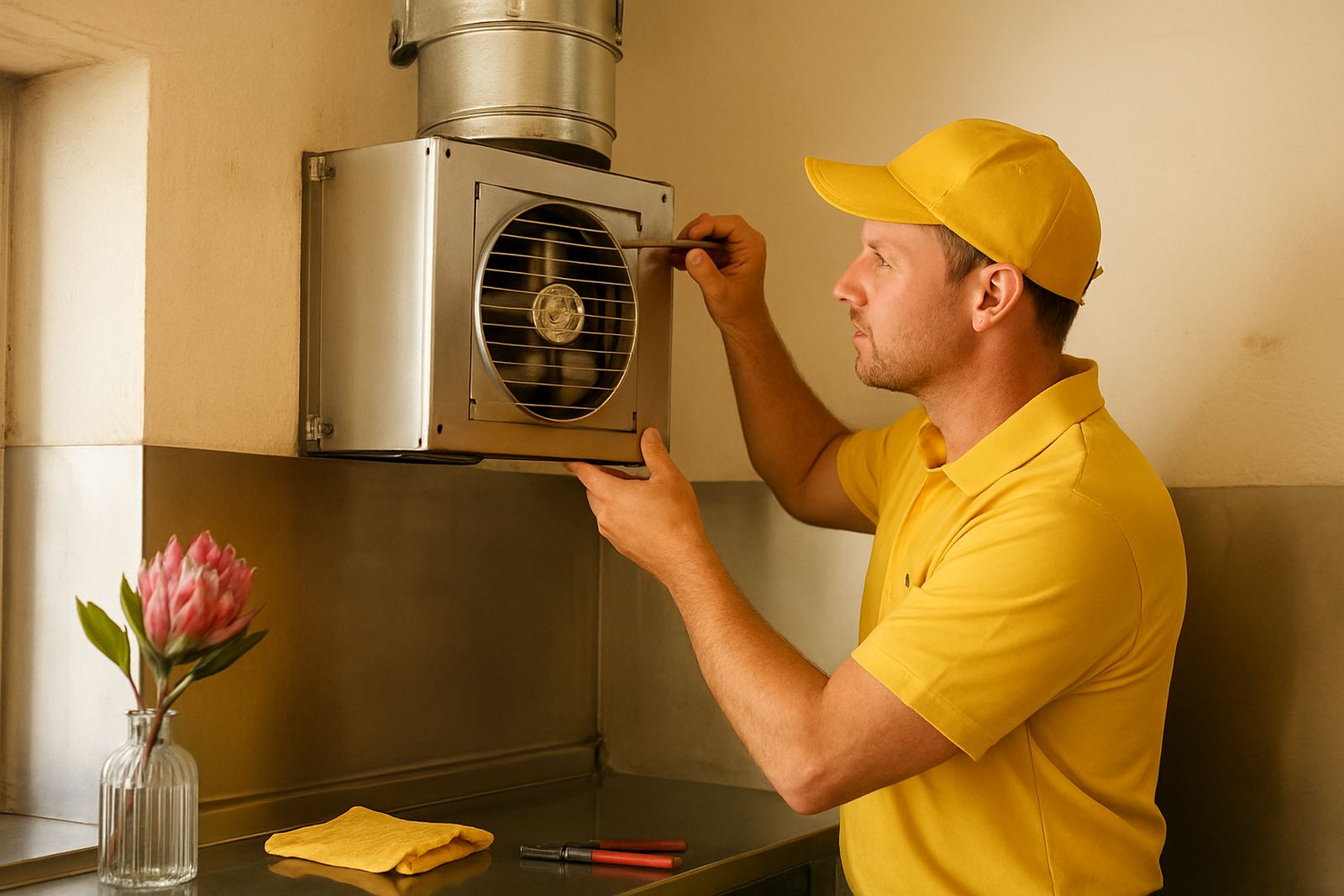
Kenny Cape West handles planned maintenance, emergency call-outs, leak detection, coil cleaning, drain clearing and temperature logging for cellar cooling systems. We also do seasonal start-up before the warmer months and shutdown preservation if a room will be idle for a period. For shops and farm sites, this helps avoid surprise failures at month end or before a tasting event.
Before ordering, check the room measurements, insulation type, number of glass panels, door size, power supply, and whether the unit needs to cool only storage or also a tasting stock room. Let us know if the site has frequent door openings, high ambient heat, or limited service access. If there are old repairs on the room or signs of water staining, mention that too. It saves time and the job goes cleaner, sorry cleaner than trying to fix it after delivery.
We are based in Montague Gardens and work across Cape Town, Stellenbosch, Paarl, Malmesbury, Vredenburg and surrounding Western Cape areas. For cellar cooling that needs proper sizing and ongoing support, we can quote from the room details and arrange a site visit where needed.
Key facts
| Cooling application | Wine cellar storage, tasting stock rooms and small cellar rooms |
|---|---|
| Typical room size | About 8 m² to 30 m², with larger rooms by design review |
| Temperature range | Common storage set point around 12 to 14 degrees C |
| Humidity control | Managed by correct airflow, insulation and service condition |
| Power supply | Single phase or three phase, depending on capacity |
| Main maintenance points | Filters, coils, drains, gas charge, thermostat and door seals |