What drain clearing covers on aircon and cold room systems
Drain clearing is more than poking a line open and moving on. We deal with condensate drains on split aircon units, packaged refrigeration equipment and cold room evaporator drains where water has backed up, frozen, or started leaking into ceilings, walls and floor finishes. In Western Cape conditions, dust, salt air and high humidity often combine with algae, slime and fine debris to cause repeat blockages.
Our work is aimed at the cause of the blockage, not only the visible overflow. That means checking the drain tray, outlet point, fall on the pipe run, traps where fitted, insulation around cold sections and any signs of airflow issues that are leading to icing. Where needed we also inspect for cracked trays, loose joints and poor gradient that keeps water sitting in the line.
- Split aircon condensate drains
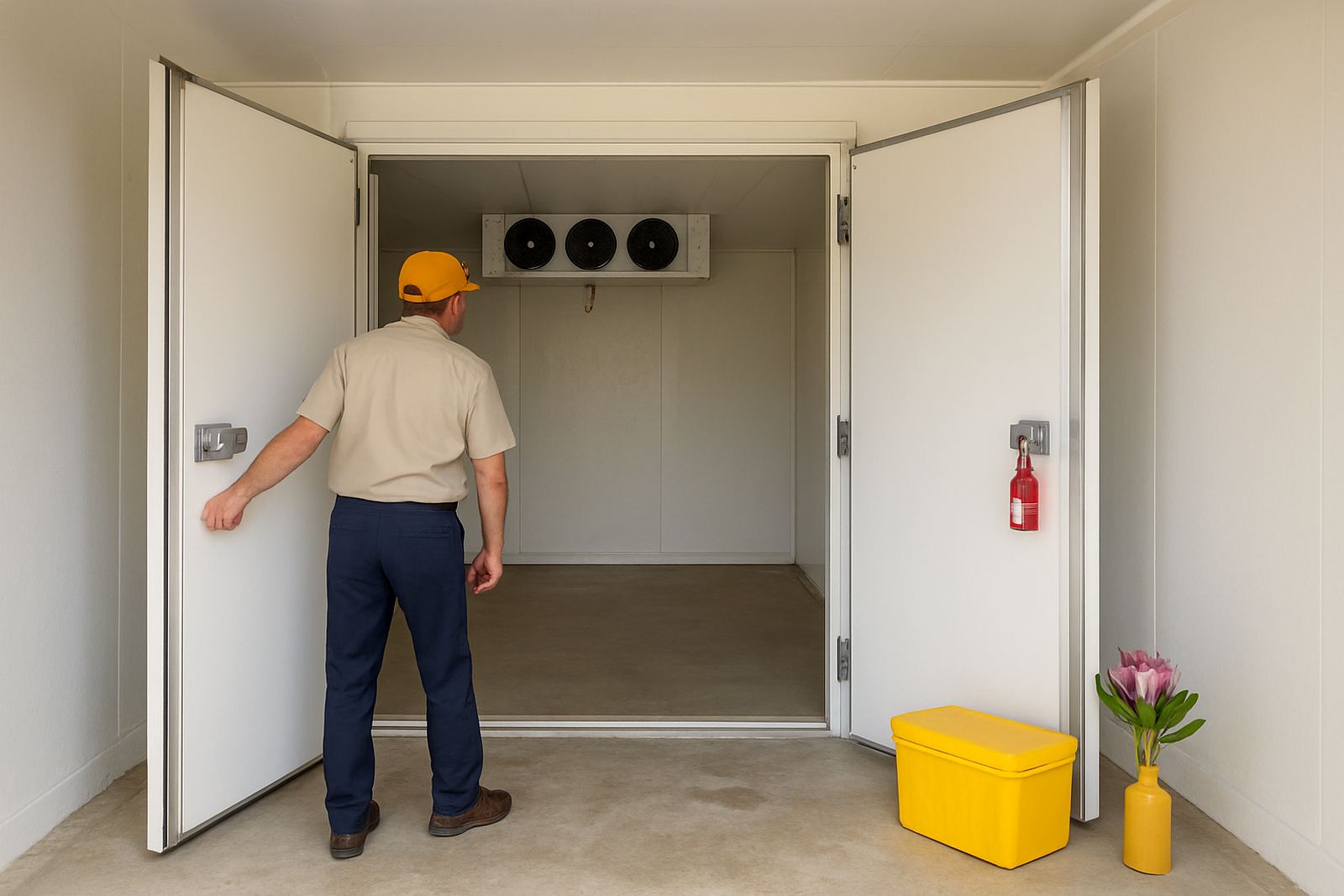
- Cold room evaporator drain points
- Overflow paths and water damage areas
- Ice build-up linked to blocked or poorly pitched drains
- Drain hygiene issues causing smells or staining
Signs your drain line needs attention
Most drain problems give warning before a full leak starts. Shops often notice water dripping from the indoor unit or a wet patch below the ceiling. Farms and packhouses may see icing on the evaporator, damp floors near the cold room door, or a persistent smell that comes back after cleaning. If the system is running in a load-shedding cycle, a dirty drain can make the restart mess worse because the unit may sit with melted water longer than usual.
Call us if you notice any of the following:
- Water overflow from indoor units or cold room panels
- Repeated icing on coils or around the drain tray
- Gurgling, slow draining, or visible backing up
- Drips after switch-on following a power interruption
- Staining on ceilings, walls, cartons or stored stock
- Hygiene concerns near food handling or storage areas
In coastal towns such as Cape Town and Vredenburg, salt and moisture can harden into stubborn residue, so a line that looked clear last month may already be forming a blockage again. Catching it early saves patch repairs and avoids repeat call-outs.
Our drain clearing process on site
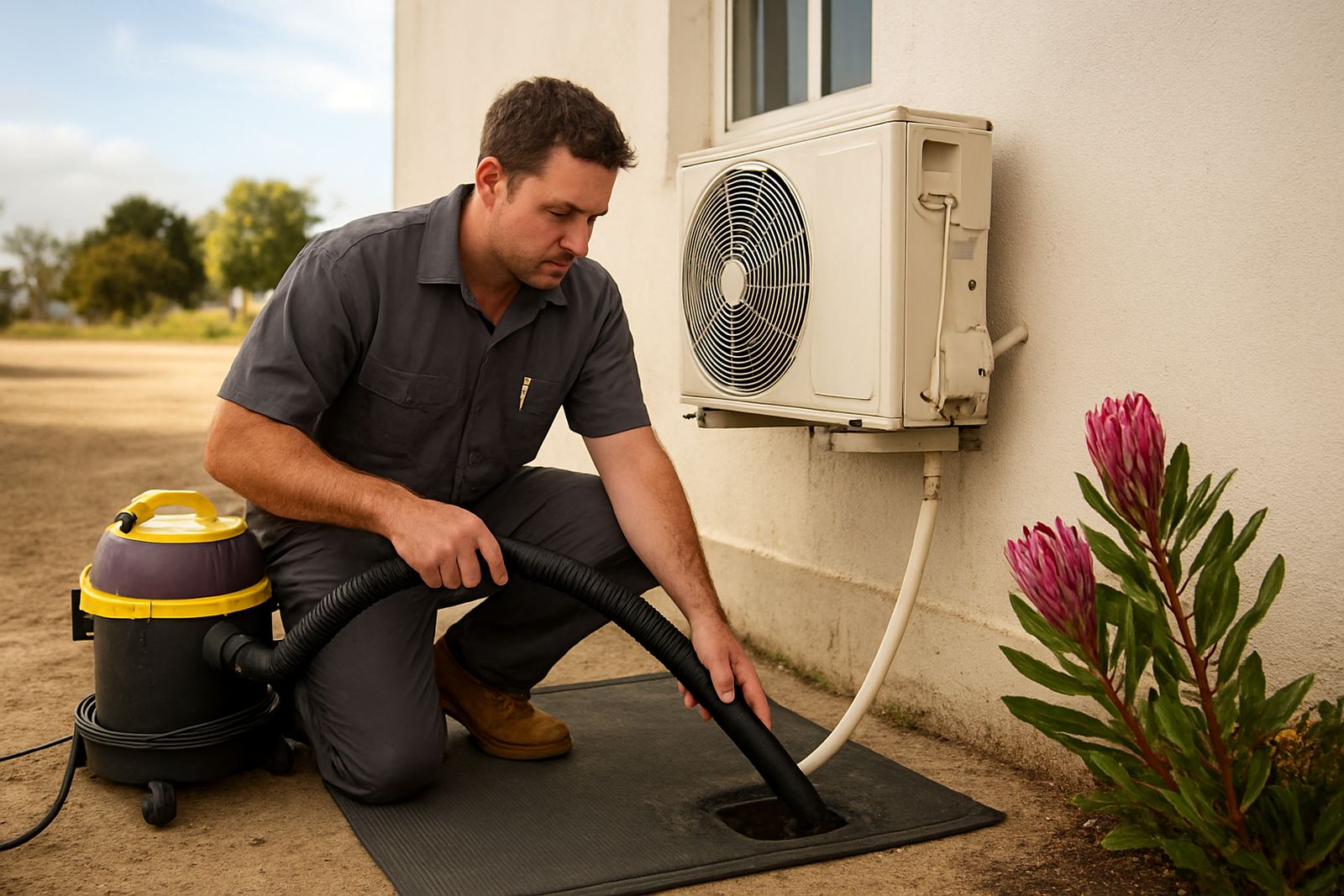
We start by tracing the drain from the unit to the discharge point so we know where the fault sits. Our technician checks the tray, tests the fall, clears the line with suitable equipment and confirms that water is moving freely under working conditions. If there is ice, we allow for safe thawing and inspect why the coil is freezing in the first place, because clearing a drain without correcting the cause can lead to the same fault returning.
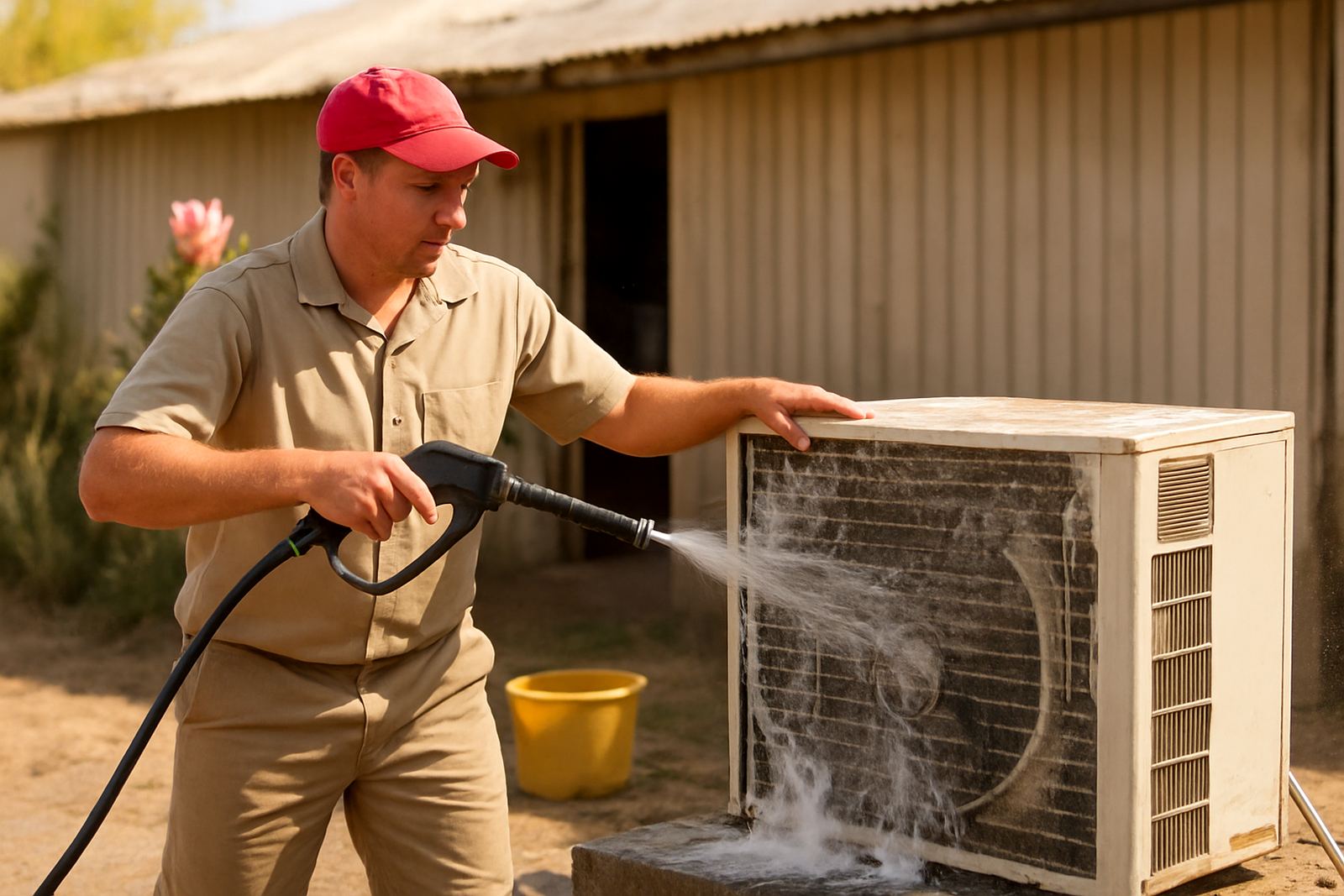
When the blockage is chemical-like slime, dust compacting or fine scale, we may flush the line and clean the accessible sections. Where the drain has a long run or poor gradient, we will advise on corrective work. If insulation is missing or damaged on cold sections, condensation can form outside the pipe and give the impression that the drain itself is still leaking.
- Visual inspection of tray, pipe route and outlet
- Blockage removal and flow testing
- Drain flush and hygiene clean where appropriate
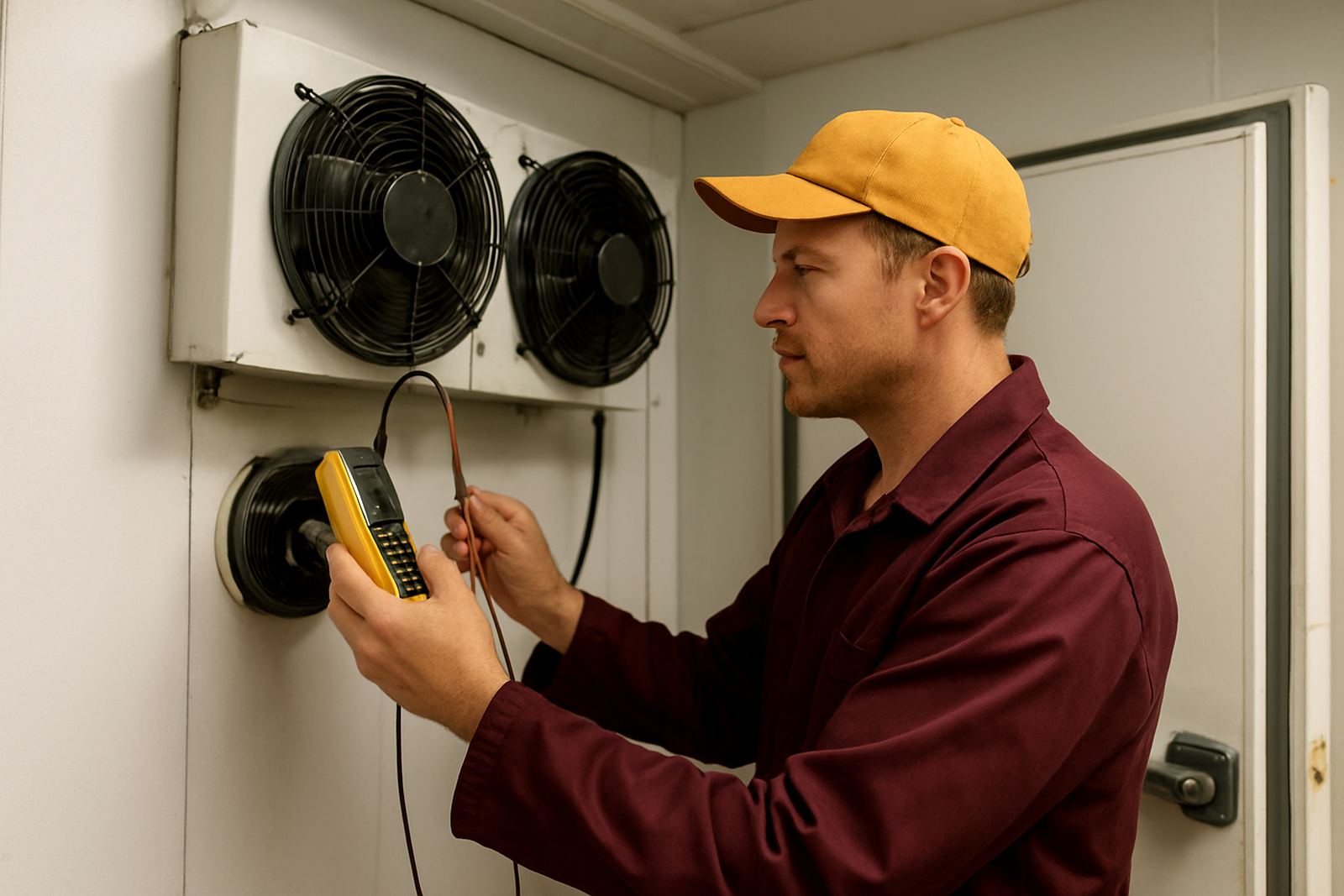
- Check for icing, poor slope and air leaks
- Corrective advice for recurring faults
Turnaround for call-outs in Cape Town, the Winelands and the West Coast
For emergency overflow or hygiene related drain faults, we prioritise call-outs in Cape Town, Montague Gardens and nearby industrial areas, then Stellenbosch, Paarl, Malmesbury and Vredenburg depending on the day’s route and site access. In many cases we can attend the same day for active leaks, especially where stock, ceilings or cold room product is at risk. For maintenance visits, we book jobs into planned routes so that shops and farms can avoid disruption during trading hours or packing times.
Access matters. If a unit is mounted above a ceiling void or in a tight plant area, please tell us before the visit so we can bring the right tools and allow enough time. If the drain is on a cold room running during busy storage periods, we try to work around product movements and loading windows. That keeps the job neat and avoids unnecessary downtime.
We also work with businesses that need a report after the visit for their records, especially where the drain fault affected a food storage area or caused a compliance concern.
Pricing approach and what affects the final cost
Drain clearing is normally priced according to access, fault type and whether the job is a simple unblock or a corrective repair. A short, easy-to-reach condensate line costs less than a long concealed drain that needs tracing, testing and partial strip-down. After-hours emergency work, roof access, ceiling opening, replacement insulation and repeat visits can also affect the total. We quote clearly before proceeding so you know whether the job is a once-off fix or part of a bigger issue.
We do not quote blind on recurring overflow problems because the cheapest option is not always the correct one. If a drain has been cleared several times in the past year, we will look at the pipe fall, tray condition and equipment cleanliness before recommending the next step. That approach keeps costs under control over time, rather than paying for the same blockage again and again.
- Once-off call-out pricing for urgent blockages
- Maintenance rates for sites on a contract
- Separate pricing for corrective repairs and access work
- Clear approval before any extra work starts
Maintenance intervals that stop repeat blockages
For most aircon sites we recommend drain checks at least twice a year, usually before summer and again after the busiest cooling period. Shops with dust, foot traffic or kitchens may need more frequent attention. Cold rooms, packhouses and farm storage sites often do better on quarterly inspections, especially where temperature changes, washdown routines or heavy use create more condensate and debris.
If your premises are near the coast or you have units exposed to dust from roads, yards or open loading bays, the drain line can need attention more often. A quarterly clean may sound frequent, but it is usually cheaper than repairing a water-damaged ceiling or losing product due to a leak. We can tie drain clearing into Planned Maintenance, Coil Cleaning and Seasonal Start-Up so the system is checked as one job instead of three separate visits.
During shutdown periods we can also check preservation steps on idle equipment, including draining, cleaning and sealing up exposed points where insects, dust and moisture can get in.
Why Western Cape sites use us for drain faults
Kenny Cape West works from Montague Gardens and services businesses across Cape Town, the Winelands and the West Coast. That helps when a site in Paarl needs a practical response, or a cold room in Malmesbury starts overflowing just before loading. Our team handles refrigeration and aircon drain faults daily, so we understand the difference between a simple blockage and a symptom of a larger system issue.
We know the local conditions too. Coastal humidity, summer dust, winter damp and power interruptions all change how condensate behaves. A drain line that seems fine in dry weather can fail once the system runs longer, or after a restart following load-shedding. That is why our service is built around inspection, cleaning, correction and maintenance, not just a quick unblock and leave.
Key facts
| Service area | Cape Town, Montague Gardens, Stellenbosch, Paarl, Malmesbury and Vredenburg |
|---|---|
| Typical systems | Split aircon units, cold rooms, evaporators and condensate lines |
| Common fault sizes | 6 mm to 32 mm drain lines, depending on the unit and pipe run |
| Response type | Same-day where available for overflow, icing and hygiene issues |
| Maintenance interval | Twice yearly for aircon, quarterly for busy cold rooms or dusty sites |
| Team contact | callouts@kennycapewest.co.za |